





Amazon, Microsoft, and Google under investor pressure to disclose site-specific data center water and power consumption — more than a dozen shareholders ask for transparency ahead of annual investor meetings
More than a dozen shareholders are filing resolutions ahead of this spring's annual meetings.
Get Tom's Hardware's best news and in-depth reviews, straight to your inbox.
You are now subscribed
Your newsletter sign-up was successful
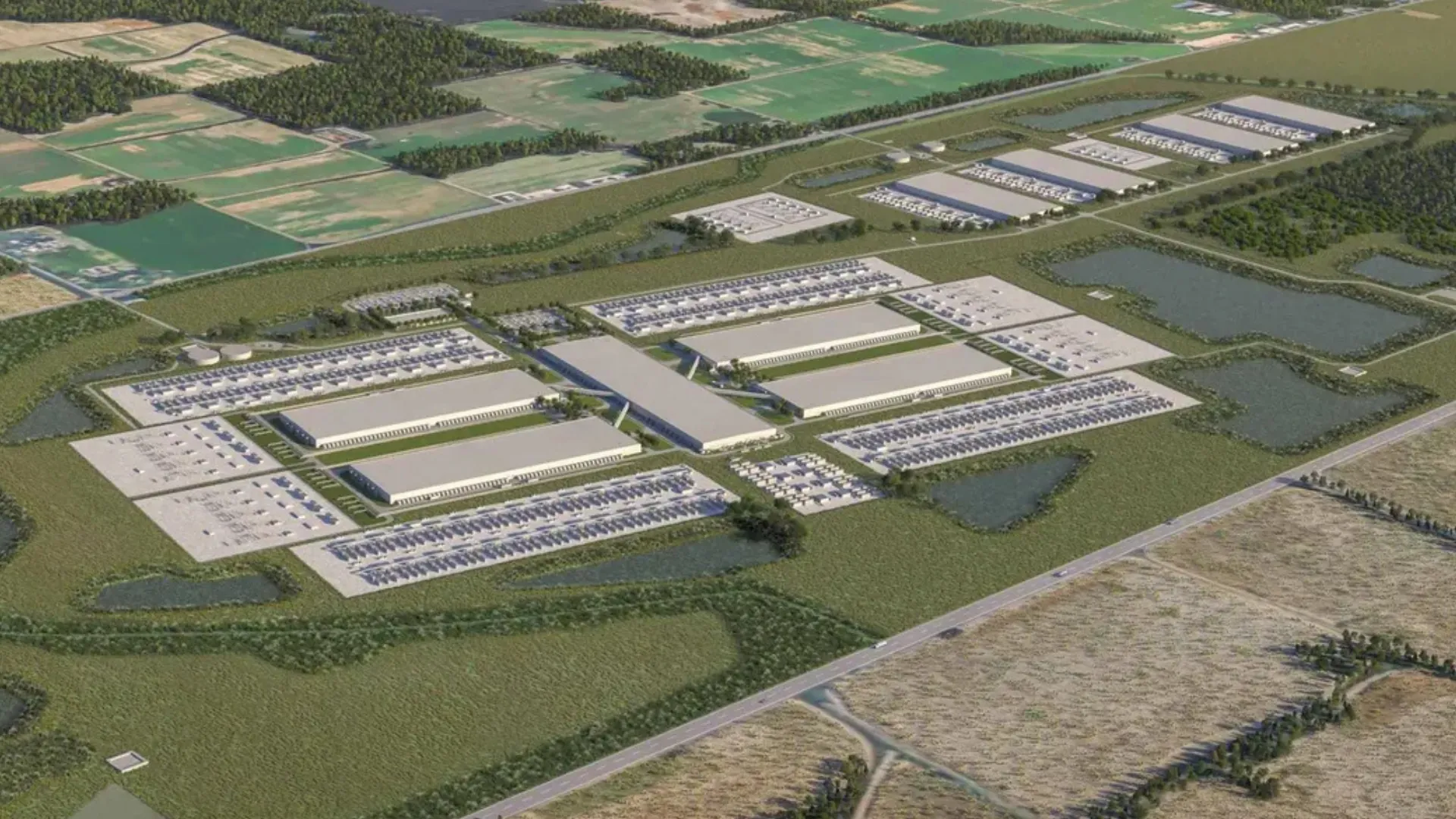
More than a dozen investors are pressuring Amazon, Microsoft, and Alphabet's Google to provide detailed data on water and energy consumption at their U.S. data centers, Reuters reported today. The pressure comes as all three companies have recently scrapped multibillion-dollar data center projects following community opposition, and as North American data centers consumed nearly 1 trillion liters of water in 2025, according to market research firm Mordor Intelligence.
Trillium Asset Management, a Boston-based firm that invests partly based on a company's environmental standards, filed a resolution with Alphabet in December seeking to understand how the company planned to meet climate goals it set in 2020, Andrea Ranger, director of shareholder advocacy at Trillium, told Reuters. Alphabet pledged six years ago to halve its emissions and shift to carbon-free energy sources by 2030, but Trillium said emissions instead rose 51%.
Water usage is still a key concern for AI data centers. Some estimates say that generating just 100 words with OpenAI's GPT-4 consumes three bottles of water. Last year, another study suggested that AI data centers use more water annually than people drink bottled water, globally.

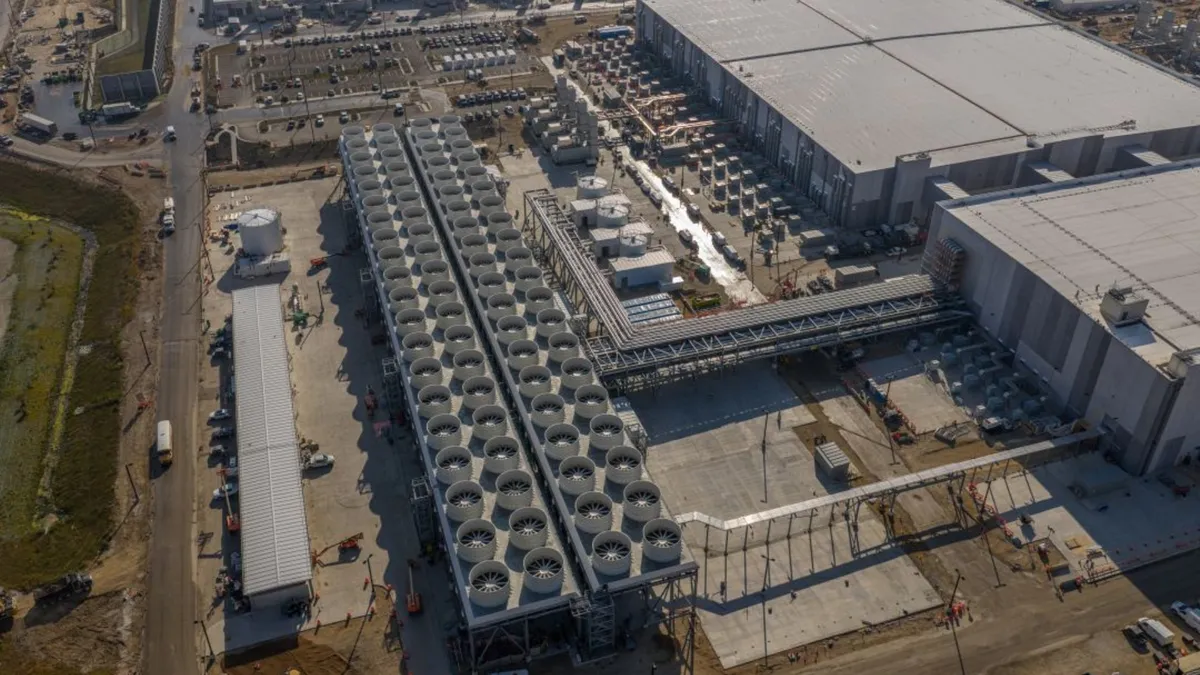
Article continues belowAll four major hyperscalers have adopted closed-loop cooling systems that use substantially less water than traditional evaporative methods, but the level of disclosure varies.
Data center water consumption involves more than closed-loop cooling, as well. The majority of water a data center consumes is indirect; i.e. for generating the electricity the data center will use. A 2024 study found that data centers (in general, not specifically AI data centers) consumed about 800 billion liters of water indirectly. Another 2025 study found the vast majority of water consumption happens offsite an AI data center.
Investors want site-level data to assess operational risks more accurately. "We haven't seen them disclosing enough about their water consumption (and the) impact on the local community," Jason Qi, lead technology analyst at Calvert Research and Management, told Reuters.
Josh Weissman, director of infrastructure capacity delivery at Amazon, told Reuters the company is "increasingly disclosing site-specific water consumption data where we operate." An Amazon spokesperson added that the company was committed to being a "good neighbor" and was investing in efficiency and water reduction efforts. A Microsoft spokesperson said environmental sustainability was "a core value." Google declined to comment, and Meta did not respond to Reuters' request.
Get Tom's Hardware's best news and in-depth reviews, straight to your inbox.
The backdrop of this is the alarming rate of AI data center expansion. Last week, Bloomberg reported that nearly half of planned U.S. data center builds for 2026 have been delayed or canceled, largely due to infrastructure demands. Although there's a clear call from some investors for sustainability, there's also a question of practicality when new projects are being funded so quickly. The capital expenditure of companies like Microsoft, Amazon, and Meta has shot up amid the AI boom, even if some projects will never actually be completed.

Follow Tom's Hardware on Google News, or add us as a preferred source, to get our latest news, analysis, & reviews in your feeds.

Luke James is a freelance writer and journalist. Although his background is in legal, he has a personal interest in all things tech, especially hardware and microelectronics, and anything regulatory.
- Jake RoachSenior Analyst, CPUs
-
CrazyCarrot911 just one more nail in the coffinReply
"Ai will solve all problems, bla bla bla.."
sed omnia retrorsum fiunt -
Stomx On the Middle East some BigTech's data centers are already 100% on solar (Dubai Moro Hub, 100MW power, key partners Microsoft and Dell). Besides they need also extra for cooling. Why not here? Death Valley is waiting unless they are superstitious with the place's name :)Reply -
usertests Reply
According to this guy, you can get 24/7 solar at 5x panel efficiency in a sun-synchronous orbit; it's a no-brainer:Stomx said:On the Middle East some BigTech's data centers are already 100% on solar (Dubai Moro Hub, 100MW power, key partners Microsoft and Dell). Despite they need also extra for cooling. Why not here? Death Valley is waiting unless they are superstitious with the place's name :)
Txt3Wodav1o:1087 -
Stomx For him it is indeed no brainer. But if you will order to lift the solar battery on 500 km orbit, it will cost you $50,000 per every 500W battery of 20kg in weight (he charges $2,500-5,000 per kg of weight). He will not charge himself that "cosmic" price for sure :). Just the fuel is cheap and costs 100x less. Boosters now can last up to 500-1000 flightsReply
But for you and me the solar system will cost $100 Billion per 1 GW of power
You still have a chance to recover this cost. Given the cost of electricity 10 cents per kWh this will take just "as little as" 100 years. We just have to live biblical 200-800 years -
Jabberwocky79 Rather than reaching any compute threshold, the difficulty scaling the infrastructure needed may be what ultimately causes AI growth to level off.Reply -
usertests Reply
It only works with a fully reusable Starship dropping the $/kg a lot, and they admit that. No Starship, no chance.Stomx said:But if you will order to lift the solar battery on 500 km orbit, it will cost you $50,000 per every 500W battery of 20kg in weight (he charges $2,500-5,000 per kg of weight). He will not charge himself that "cosmic" price for sure :). Just the fuel costs 100x less.
If Starship works? Then, ehhhhhhhhhhhhh maybe. -
Arkitekt78 Reply
Yes, lets keep a data center cool in the middle of one of the hottest places in the country, using solar that would require massive amounts of land.Stomx said:On the Middle East some BigTech's data centers are already 100% on solar (Dubai Moro Hub, 100MW power, key partners Microsoft and Dell). Despite they need also extra for cooling. Why not here? Death Valley is waiting unless they are superstitious with the place's name :)
Work smarter, not harder.