Join for quick access. Enter your email below and we'll send confirmation plus sign you up to our newsletter.
By submitting your information, you confirm you are aged 16 or over,
have read our
Privacy Policy
and agree to the
Terms & Conditions. Geographical rules apply.
Stay On the Cutting Edge: Get the Tom's Hardware Newsletter
Get Tom's Hardware's best news and in-depth reviews, straight to your inbox.
You are now subscribed
Your newsletter sign-up was successful
Join the club
Get full access to premium articles, exclusive features and a growing list of member rewards.
An account already exists for this email address, please log in.
Nikon weaponizes lower prices to break ASML's lithography monopoly — tech giant leverages in-house manufacturing to slash prices to lure back American chipmakers
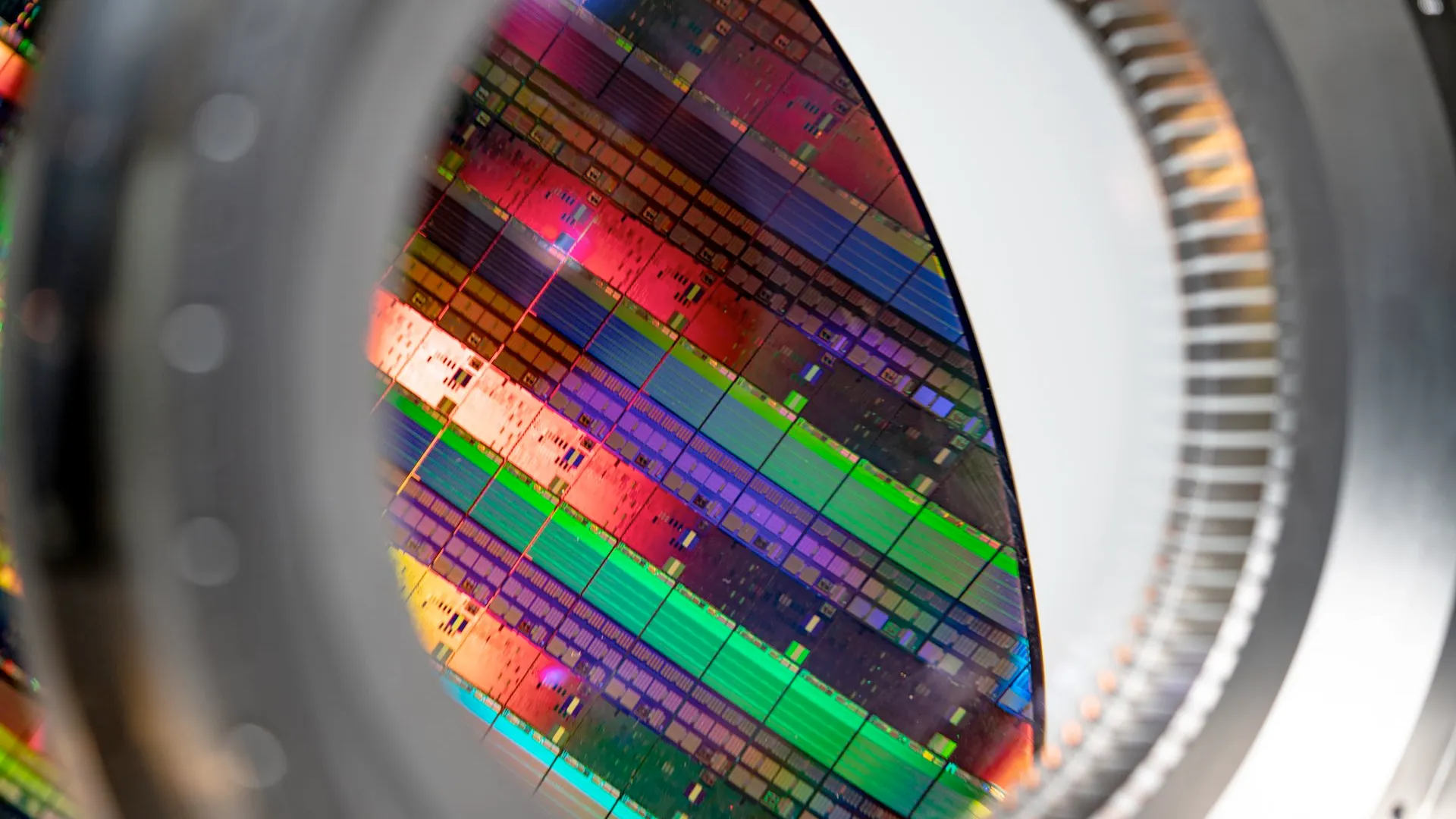
Nikon will try to win back lithography customers by selling argon fluoride (ArF) tools for less than market leader ASML, the company's new president and chief executive, Yasuhiro Ohmura, told Nikkei Asia in a recent interview. Ohmura, who took the role in April, said Nikon is talking to several large chipmakers in the U.S. and Asia about fresh ArF orders, with discussions "nearing purchase orders."
Nikon’s pitch to customers comes after a brutal stretch for the business: Nikon shipped 11 ArF systems in its fiscal year ending March 2024 and none across the first three quarters of its 2025 fiscal year, according to company figures reported by TrendForce, against ASML's grip on more than 80% of the lithography market.
Competing on price like this targets a segment of the market that ASML doesn’t outright dominate. While it holds an obvious monopoly position on extreme ultraviolet (EUV) systems used for the most advanced chipmaking processes, ArF immersion is a type of mature deep ultraviolet (DUV) work, and the majority of patterning steps, even on a 3nm chip, still run on it. ASML's advanced ArF immersion machines average around $82.5 million per unit, leaving room for a cheaper rival. Nikon walked away from EUV in 2008.
In February, Nikon said that it would launch a new ArF immersion platform in its 2028 fiscal year, fitted with a new lens and wafer stage, and built for compatibility with ASML's installed tools. "We manufacture many parts in-house, giving us an advantage in cost competition," Ohmura told Nikkei Asia.
Nikon and ASML are the only two companies that build ArF lithography equipment, and demand is climbing as the AI bubble strains tool supplies. ASML shipped 48 EUV and 131 immersion DUV systems in 2025 and closed the year with a €38.8 billion order backlog. Ohmura argues that chipmakers would rather buy from two suppliers than depend on one to keep a lid on equipment costs.
Whether price alone will pull customers back remains to be seen. Nikon's ArF market share has kept sliding since ASML pulled ahead through long-term R&D partnerships and exclusive handling of cutting-edge tools, and Intel, which once accounted for 80% of Nikon's ArF orders, has cut spending amid its own manufacturing troubles.
Nikon posted a net loss of 86 billion yen ($540 million) for the year ended March, its worst ever, dragged down by weak equipment orders and a struggling metal 3D printing unit. Ohmura says he plans to narrow Nikon's focus to cameras and chipmaking tools.
Luke James is a freelance writer and journalist. Although his background is in legal, he has a personal interest in all things tech, especially hardware and microelectronics, and anything regulatory.
Yeah, what is with the title on this article?
You could have just said "Nikon starts pricing war with monopoly holder ASML".
And we could have interpreted it as a David vs. Goliath type of situation.