









Do AMD's Radeon HD 7000s Trade Image Quality For Performance?
We discovered blurry textures when we reviewed the Radeon HD 7800s, so now we're performing an in-depth investigation. Why does the Radeon HD 6000 series demonstrate crisper image quality? Is performance affected? Does AMD know about the issue?

Radeon HD 7000 Texture Problems: Uh Oh!
When we were testing the Pitcairn-based Radeon HD 7800 cards for last month's launch, we stumbled upon image quality issues with AMD’s two most recent boards. Specifically, we noticed textures in popular games that appeared blurrier on all of the Radeon HD 7000s compared to the prior-generation offerings. And this was using identical image quality settings in the software driver and the games we were testing.
Here is an animation from AMD Radeon HD 7870 And 7850 Review: Pitcairn Gets Benchmarked that demonstrates the issue:
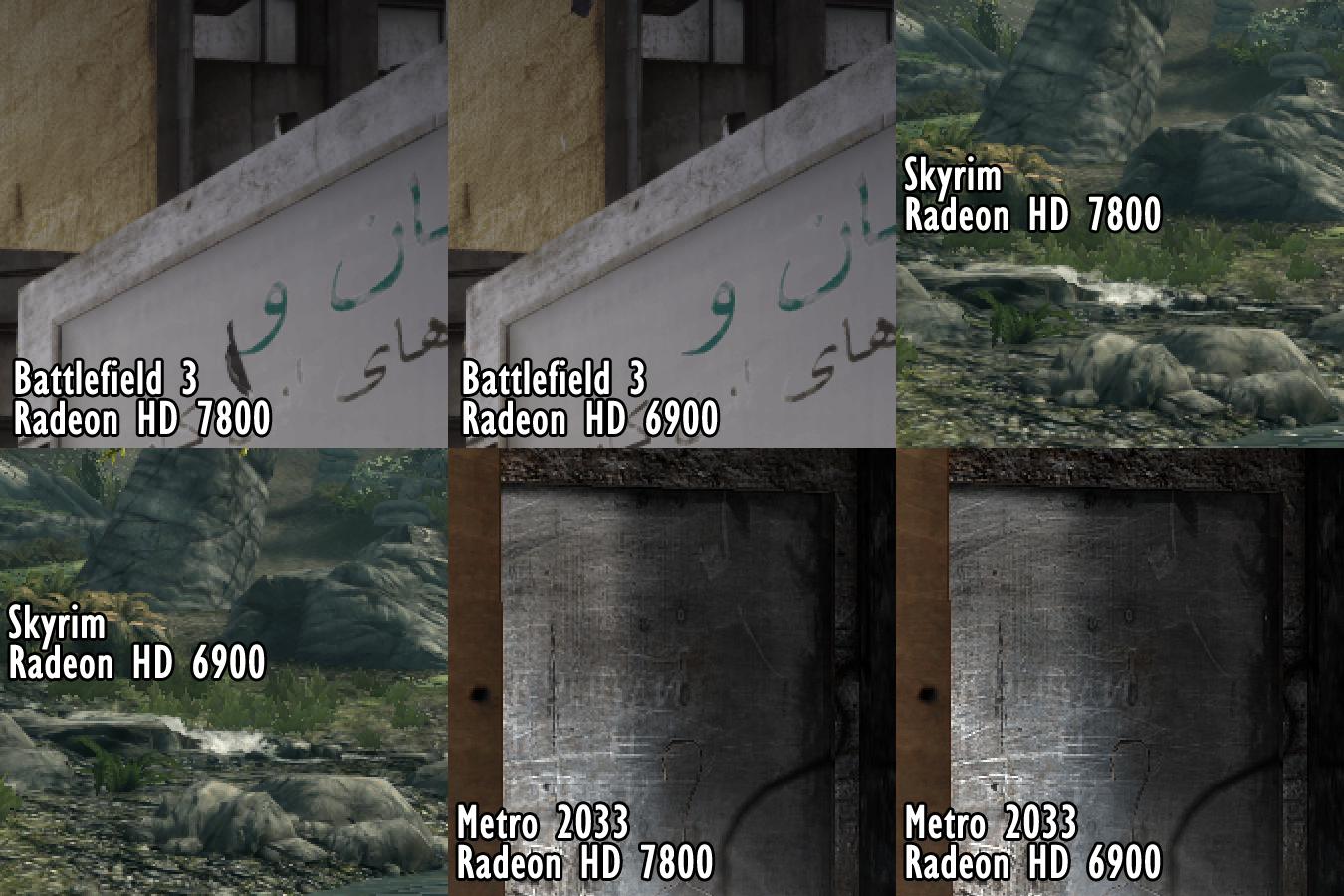
Unfortunately, AMD hasn't given us much time with any of its Radeon HD 7000-series cards prior to launching them, so our ability to go into more depth with our review was severely limited. But now we're all freed up, and ready to dig deeper.
Was the issue limited to just AMD's press-only beta driver? Does it affect the Radeon HD 7800s exclusively, or do all of the 7000s take a step backward? Does it change performance? If so, the implications there would be that AMD altered image quality to deliver more competitive performance. If not, the texture issue could just be a bug that needs to be fixed.
Of course, we always wanted to compare the Radeon HD 6900s and 7000s to Nvidia's default image quality as well. And naturally, we wanted to work with AMD each step of the way to figure out what went wrong, so we have the company's feedback as well. What does AMD have to say?
Get Tom's Hardware's best news and in-depth reviews, straight to your inbox.
Current page: Radeon HD 7000 Texture Problems: Uh Oh!
Next Page Test System And BenchmarksDon Woligroski was a former senior hardware editor for Tom's Hardware. He has covered a wide range of PC hardware topics, including CPUs, GPUs, system building, and emerging technologies.
-
lahawzel These differences are things that no one would ever notice if tech review sites didn't point them out.Reply
Well, not that I mind knowing that it can be fixed with a driver update, but I find it unnecessary for the average gamer to worry about these minor differences with image quality (knowing it's "fixed" is more of a placebo than an actual improvement of gaming experience). Not to mention that the typical gamer plays on 6-bit TN-panel monitors because "HURR 1ms RESPONSE TIME HOLY SHIT BEST SCREEN EVER" and they in turn elect to give up the superior color gamut and viewing angles conferred by IPS panels. They ought to the last ones who deserve to complain about image quality, at any rate. -
buzznut Huh, don't know about all of that but thx for the article. I do think its important to bring such things to the vendor's attention and follow up to see if they respond appropriately. Good job!Reply
-
therabiddeer Is it just me or is toms heavily biased towards nvidia? We see tons of articles for the Nvidia 6xx but very few for the 7xxx. Nothing negative for nvidia, but an article like this for AMD's, which is already being fixed even though it is undetectable... and the fix doesnt even yield a real change in framerates.Reply -
the associate "HURR 1ms RESPONSE TIME HOLY SHIT BEST SCREEN EVER"Reply
HAHAHAHAHA
Oh man that made my night. But yea, that's exactly why I just got a panny st30 screen, tn's are just garbage, and lcd just can't do black. As for framerate lag? Doesn't affect my average scoreboard k/d ratios, or lap times, or whatever other "precision" timing actions both online and offline.
Least I got a screen that can do my cards justice, this also makes me glad I got my crossfire setup with the 6780's instead of waiting for the 7000 series...
-
SteelCity1981 Nothing new really early driver support for new graphics cards always have their bugs, but normally by the 3rd supported driver version a lot of the generel bugs are normally fixed, because by then a lot more people own that card series thus giving a lot more feedback to the gpu company about the drivers suppported for that card.Reply -
neon neophyte Do AMD's Radeon HD 7000s Trade Image Quality For Performance?Reply
No, no they do not -
airborne11b the associate"HURR 1ms RESPONSE TIME HOLY SHIT BEST SCREEN EVER"HAHAHAHAHAOh man that made my night. But yea, that's exactly why I just got a panny st30 screen, tn's are just garbage, and lcd just can't do black. As for framerate lag? Doesn't affect my average scoreboard k/d ratios, or lap times, or whatever other "precision" timing actions both online and offline.Least I got a screen that can do my cards justice, this also makes me glad I got my crossfire setup with the 6780's instead of waiting for the 7000 series...Reply
Going from a dell u2711 2560 x 1600 to a asus vg278h 120hz 2ms tn panel, there is a clear difference in gaming. The u2711 compared to vg278h feels sluggish. The image quality, sharpness and color is clearly better in u2711, but the lag is terribly noticable.
Once you get a real gaming monitor, you will see the difference for yourself. TN 120hz monitors are the only true choice for pro gaming, imo.