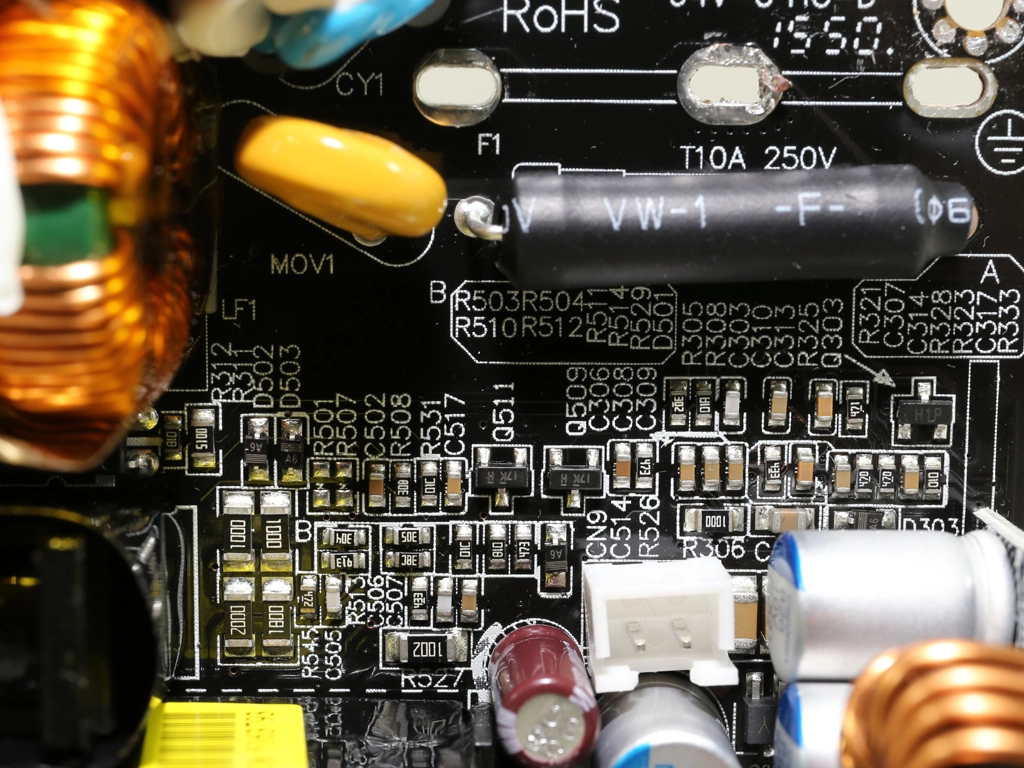
Do you think that all power supplies are manufactured by the brand on the label? Think again. We show what makes a good PSU and reveal who builds them. You can actually find lots of quality (instead of just scrap metal) behind some of the budget labels.
This article first appeared on November 12, 2010, and has since been added to and updated.
Update, 7/22/14: Due to overwhelmingly positive feedback and a number of reader questions about the actual origin of certain power supply brands, we thoroughly revised our Who’s Who of PSUs, originally published in November of 2010, refreshed in May of 2011, and revisited in January of 2013. Since the article is frequently quoted and linked to, we’re updating it rather than publishing the newest entries. As such, much of the content remains unchanged from the previous version.
Today’s revision adds many new manufacturers and brands as well as expanding the number of models in several product families. Indeed, much has changed since our original article appeared more than two years ago, and we’re happy that readers in our forums and around the Web appear to be better informed and more discriminating when it comes to picking out a new power supply.
At the same time, manufacturers also appear to have re-evaluated some of their practices, and we’ve seen newer models use better components, resulting in higher quality overall.
We want to extend a special thanks to our community, as many of our readers and forum members have contributed much helpful information and valuable data to this analysis.
Several companies also joined in for the first time, volunteering information on their product lines. Sadly, for now it still appears that this is the exception rather than the rule. Many of our emails asking for information were met with silence. On that note, we acknowledge that we’re not infallible. Should you come across any omissions or errors, big or small, we invite you to send us your feedback so we can keep expanding and refining this list, ensuring it remains current and as inclusive as possible.
Who’s Who?
Let’s start by dividing the manufacturers into three large groups so we can better understand the database and how these companies are connected:
1. The OEMs (Original Equipment Manufacturers)
OEMs manage all of their production internally. They either exclusively design and manufacture their own PSUs (like Enermax) or design and manufacture their own brands, as well as manufacture PSUs designed by other companies (such as FSP, HEC, and SeaSonic). Some of them focus heavily on worldwide exports and provide a range of models, which are then sold under different labels. It's common to find otherwise-identical models marketed under many different names and labels. The industrial areas around Shenzhen, China, are the cradle of the lowest-priced PSUs sold all over the globe.
2. Designers: Without Their Own Production
The second group of companies also develops and designs their own products. However, they have to outsource either some or all of the manufacturing to other companies. One example of this is Be Quiet. Those familiar with the brand noted how Be Quiet P7 models were suddenly much better than the disappointing P6. The answer was simply a manufacturer change, from Topower to FSP. Other examples of designers include SilverStone, Corsair, PC Power & Cooling, and Tagan.
3. The Labels: With or Without Any Technical Involvement
Arguably, this group could be subdivided. Some importers of foreign PSUs that resell models under their own labels have a certain influence over the quality and choice of components, while others simply bring in some very cheap products, change the label, and resell them.
This third group is the most interesting one for price-oriented customers, though also the most uncertain for quality. You're as likely to score a bargain by getting a relabeled high-quality product at a lower price as you are to be disappointed by being too tight-fisted. Some good examples of products to watch are new models from Aerocool, which are essentially the Cougar units from Compucase/HEC with a discounted price and completely restyled exterior.
After many tests and inspections of budget models (by us, our readers, and friendly computer stores), we would advise you to steer your piggy banks clear of the labels Rasurbo, Inter-Tech (Sinan Power, Coba), Tech Solo, LC Power, RaptoxX, Tronje, Xilence, Ultron, World Link, Q-Tec, etc. We were able to identify some of these models without looking at the UL number simply by checking out the installed components. These were almost exclusively the simplest work of such manufacturers as Enhance, World Link, Andyson, Topower, Casing Macron, and Channel Well.
Lack of protection circuits, low efficiency, and bad build quality were major points of criticism. The lowest of the low was a European label called Hardwaremania24, targeted at OEM PCs. While still in standby mode, the PSU heated to about 176 degrees Fahrenheit, spent the next six hours billowing smoke, and finally made what might be described as a trumpeting sound before dying. The host computer was never even turned on. After analyzing the PSU, we found no protection at all save for a single slow fuse.


Thanks again!
With the caveots given about brands and quality - would it be unreasonable to suggest staying with a brand that manufactures it's own PSUs? I am refering to the FSPs, SeaSonics and Zippys on the list. I have had FSP and have heard very glowing praise about the other two brands.
Also does the quality of their products meet or exceed the brands that are subcontracted to them - OR do some of the designs from other brands that use these three companies exceed even those of the three mentioned brands? For example - is there a case where say 'Named Brand Company' design as manufactured by FSP exceeds the quality of any FSP branded PSU?
With the caveots given about brands and quality - would it be unreasonable to suggest staying with a brand that manufactures it's own PSUs? I am refering to the FSPs, SeaSonics and Zippys on the list. I have had FSP and have heard very glowing praise about the other two brands.
Also does the quality of their products meet or exceed the brands that are subcontracted to them - OR do some of the designs from other brands that use these three companies exceed even those of the three mentioned brands? For example - is there a case where say 'Named Brand Company' design as manufactured by FSP exceeds the quality of any FSP branded PSU?
I understand almost everything is made there, but Western companies understand Western standards of quality.
The whole Chinese business model is based on manufacturing crap and making it hard to return.
I almost put off my younger brother's build because I had to get a ThermalTake PSU, but he didn't have enough money to get a different one, so I figured I'd get the warranty and hope for the best.
Western is the only thing worth buying because Chinese means Chinese quality, and that's an oxymoron.
I understand almost everything is made there, but Western companies understand Western standards of quality.
The whole Chinese business model is based on manufacturing crap and making it hard to return.
I almost put off my younger brother's build because I had to get a ThermalTake PSU, but he didn't have enough money to get a different one, so I figured I'd get the warranty and hope for the best.
Western is the only thing worth buying because Chinese means Chinese quality, and that's an oxymoron.
What about the norm of a Western company selling Chinese made goods though? Surely, if the 'Western companies understand Western standards of quality', as you say, they wouldn't dream of selling something that doesn't live up to their Western standards, right?
While your rule may sound like a sensible one in theory, you really need to keep in mind that manufacturing in China these days (like most other places) is based around building to a cost. If that cost, specified by the buyer (the company who will sell the product to the consumer), is realistically too low for what they want, they're going to get a low quality product. On the other hand, if the buyer specifies certain quality factors they want, and costs the product realistically, the product manufactured for them can be of very high quality.
So while it's easy to write off everything manufactured in China as being junk, that's really not fair. Items manufactured there do vary massively in quality, and that quality is signed off on by the company (western or not) that then sells the product, so they're just as culpable for any quality issues as the manufacturer.
At its simplest, I guess you could say it all comes down to that oft said cliche: you get what you pay for.
Missing Superflower as the EVGA SUPERNOVA G2 OEM.
I understand almost everything is made there, but Western companies understand Western standards of quality.
The whole Chinese business model is based on manufacturing crap and making it hard to return.
I almost put off my younger brother's build because I had to get a ThermalTake PSU, but he didn't have enough money to get a different one, so I figured I'd get the warranty and hope for the best.
Western is the only thing worth buying because Chinese means Chinese quality, and that's an oxymoron.
What about the norm of a Western company selling Chinese made goods though? Surely, if the 'Western companies understand Western standards of quality', as you say, they wouldn't dream of selling something that doesn't live up to their Western standards, right?
While your rule may sound like a sensible one in theory, you really need to keep in mind that manufacturing in China these days (like most other places) is based around building to a cost. If that cost, specified by the buyer (the company who will sell the product to the consumer), is realistically too low for what they want, they're going to get a low quality product. On the other hand, if the buyer specifies certain quality factors they want, and costs the product realistically, the product manufactured for them can be of very high quality.
So while it's easy to write off everything manufactured in China as being junk, that's really not fair. Items manufactured there do vary massively in quality, and that quality is signed off on by the company (western or not) that then sells the product, so they're just as culpable for any quality issues as the manufacturer.
At its simplest, I guess you could say it all comes down to that oft said cliche: you get what you pay for.
The difference is that Western companies understand the end goal is something that's in good enough condition to run and not to ship broken crap that is cheap beyond a reasonable standard and make it hard to return. You won't catch them selling crap simply to make a quick buck like the Chinese do.
Western companies have a sense of honesty and duty to the customer; the Chinese companies not only understand, but they also happily exploit caveat emptor.
Western companies also have far better R&D and specs, so it makes sense the end product would be better than a Chinese-created and manufactured one. There's a very simple reason that Chinese made items are of such poor quality. It's a business strategy there.
Do you think a Western company could survive by being cheats?
the one I got saved is from 2010
http://www.tomshardware.com/reviews/psu-manufacturer-oem,2729-5.html
