Pixel Shading Performance: ATI's R520 Vs R580
With the launch of the R580 graphics processor, otherwise known as the Radeon X1900 XTX, ATI made a big bet on the importance pixel shader performance. With triple the pixel shading units of its otherwise identical predecessor, the Radeon X1800 XT, R580 is nothing less than a pixel shading beast.
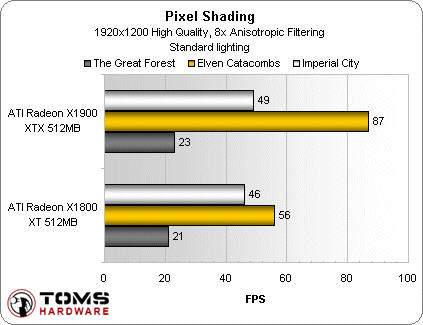
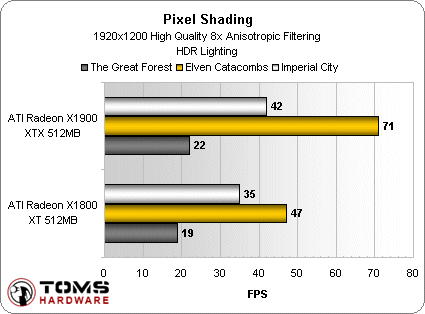
But does that translate into monster performance in Oblivion? Not quite. We compared the performance of Radeon X1900 to X1800, with both boards running at identical core and memory frequencies and in identical 512 MB configurations. Intriguingly, the results prove that different locations within the Oblivion universe dish out very different work loads. R580's triple-wide pixel shader capabilities translate into a very little additional performance in the Great Forest and the Imperial City, suggesting that both of those areas are limited by vertex unit performance (both cards share the same array of eight vertex units).
In more restricted environments such as the confines of the Elven catacombs, R580 pulls ahead of the R520 by over 50 percent. With likely appearance of ATI's first unified architecture GPU in late 2006, it will be fascinating to observe whether the ability to load balance shader functionality towards or away from pixel, geometry and vertex processing will provide a massive boost in performance.