From SATA

On the left side is the SATA data connector. The right connector is for the power supply. The number of pins is required to provide 3.3 V, 5 V and 12 V to each SATA device.
SATA is in its second generation and has been available for many years. SATA I defines a gross bandwidth of 1.5 Gb/s by using two serial links running low-voltage differential signaling, while 8/10-bit encoding at the physical layer (10 bits are transferred for 8 data bits) results in a maximum interface throughput of 150 MB/s. During the rollout of SATA at 300 MB/s, people started calling this acceleration SATA II, although the standardizing SATA-IO (International Organization) intended to add more features prior to calling it SATA II. The latest specification hence is SATA 2.5, and it includes SATA extensions such as Native Command Queuing (NCQ) and eSATA (external SATA), port multipliers (up to four drives per port) etc. However, SATA features are optional both on the controller and the hard drive side.
Hopefully, SATA III at 600 MB/s will stop growing by 2007.

While parallel ATA (UltraATA) cables were limited to 18" (46 cm), SATA cables may be up to 39" (1 m), with double the cable length for eSATA. Rather than 40 or 80 wires, only seven pins are required for serial data transmission. Obviously, SATA cables are pretty narrow, easy to run inside of systems and they will not restrict airflow either. There is only one device per SATA port, making the interface a point-to-point connection.
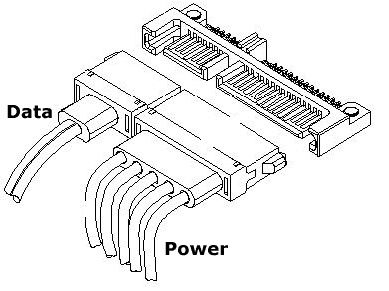
SATA connects data and power via separate plugs.


