Join Tom’s Hardware today









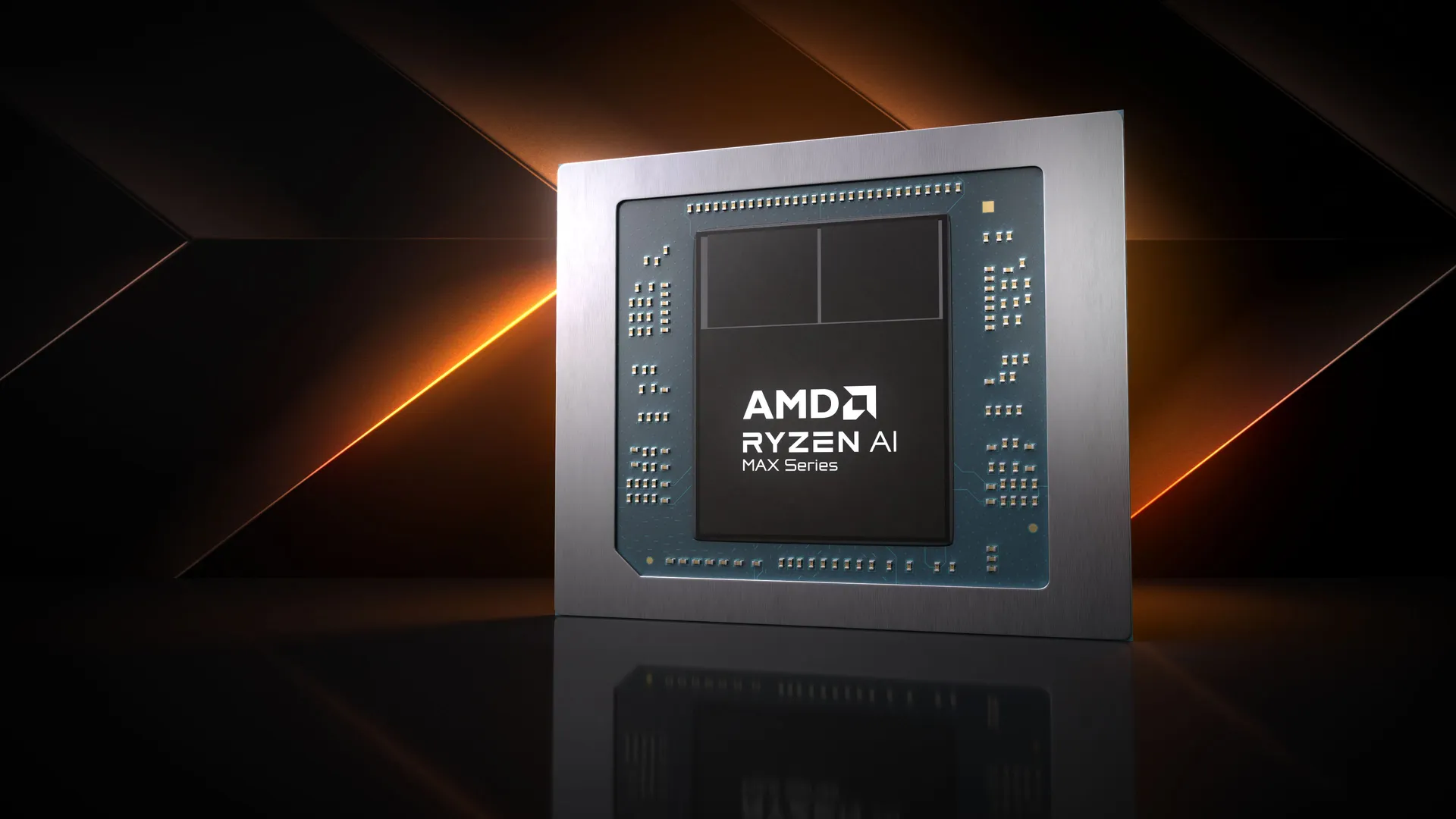
AMD is refreshing its stack of large SoCs, dubbed Ryzen AI Max, with new Gorgon Point chips. Codenamed Gorgon Halo, the Ryzen AI Max 400 range is a minor refresh to the Ryzen AI Max 300 ‘Strix Halo’ chips already available, similar to what we saw with Gorgon Point in laptops earlier this year. Gorgon Halo comes with one significant difference, however, which is space for up to 192GB of unified memory.
With Strix Halo, you could pack up to 128GB of unified memory, but AMD is pushing that boundary higher with Gorgon Halo; perhaps at the worst possible time, as global DRAM shortages continue to push prices up across all business categories. It’ll be a minor miracle if AMD is able to actually ship Gorgon Point with 192GB of unified memory consistently — we’ve seen Apple remove the 512GB option and even the 128GB option from the Mac Studio due to memory shortages.
Regardless, AMD has a lineup of three chips that should look very familiar if you’ve looked over the Strix Halo stack. All three chips use Zen 5 CPU cores and RDNA 3.5 GPU cores, alongside an XDNA 2 NPU. The flagship Ryzen AI Max+ Pro 495 comes with a minor clock speed bump of 100 MHz over the Ryzen AI Max+ 395, allowing it to boost to 5.2 GHz. Otherwise, you could scratch off the “4” and replace it with a “3,” at least based on the specs AMD has shared so far.

| Row 0 - Cell 0 | Cores / Threads | Arch (CPU / GPU) | Boost Clock | Total Cache | NPU TOPS | iGPU (CUs) | Unified memory (GPU memory) |
Max+ Pro 495 | 16 / 32 | Zen 5 / RDNA 3.5 | 5.2 GHz | 80 MB | 55 | Radeon 8065S (40) | Up to 192 GB (160 GB) |
Max Pro 490 | 12 / 24 | Zen 5 / RDNA 3.5 | 5 GHz | 76 MB | 50 | Radeon 8050S (32) | Up to 192 GB (160 GB) |
Max Pro 485 | 8 / 16 | Zen 5 / RDNA 3.5 | 5 GHz | 40 MB | 50 | Radeon 8050S (32) | Up to 192 GB (160 GB) |
These chips currently have a “Pro” tag, which means they’re targeting the commercial market. However, the slides below refer to the Ryzen AI Max 400 range more broadly. I asked AMD about this discrepancy, and a spokesperson sent the following: “AMD will be announcing the Ryzen AI Max PRO 400 Series, featuring AMD PRO technologies which deliver enterprise-grade security, manageability, and reliability.”
So, I guess consumer Gorgon Halo is still up in the air. Maybe.
Interestingly, AMD opted to stick with a GPU with 32 CUs (the Radeon 8050S) for the Ryzen AI Max Pro 490 and 485. Earlier this year, AMD refreshed the Ryzen AI Max 385 and 390 with 40 CUs, the same as the flagship, in the form of the Ryzen AI Max+ 388 and 392. Maybe we’ll see a refresh of the refreshed Gorgon Halo chips with 40 CUs down the line.


Memory is the big upgrade here. Regardless of the GPU configuration, up to 160GB of unified memory can function as VRAM (32GB is reserved for the system). AMD says that much memory makes Ryzen AI Max 400 chips the first x86 client processors able to run a 300B+ parameter LLM. It wins in a category of one, however: Intel doesn’t make a large SoC like Gorgon Halo, and Apple uses the ARM ISA.
AMD says Ryzen AI Max 400 chips are “coming soon,” but didn’t share any timeline beyond that, nor any partners for Gorgon Halo systems. Strix Halo, as a niche product, was only available in a handful of machines, such as the Framework Desktop, ROG Flow Z13, and GMKtec EVO-X2. There’s a good chance we’ll see a similarly conservative rollout of Gorgon Halo, as well.
Despite not sharing any partners, AMD tells me that “several OEM partners have expressed excitement for the Ryzen AI Halo platform and the Ryzen AI Max Pro 400 series family of processors,” and that “systems will be announced from our partners starting in Q3 2026.”
AMD Ryzen AI Halo starts at $3,999 — pre-orders in June
The only confirmed machine with Ryzen AI Max 400 so far is the Ryzen AI Halo, which is “coming soon” configured with the Ryzen AI Max+ Pro 495. Coming sooner is the Ryzen AI Halo box AMD revealed earlier this year with the Ryzen AI Max+ 395. AMD is opening up pre-orders in June, and it says the machine starts at $3,999.

The starting configuration includes a Ryzen AI Max+ 395 with 128GB of unified memory and 2TB of storage. It says “details and pricing of the other configurations will be released closer to on-shelf,” so it sounds like we’ll see additional models in the future. The Ryzen AI Halo’s main competitor, Nvidia’s DGX Spark, is currently selling for $4,700 with 128GB of unified memory, Nvidia’s GB10 chip, and 4TB of storage.

The Ryzen AI Halo supports Linux and Windows, while the DGX Spark is limited to Linux. Still, the penguin seems like the primary platform for this box. With Linux, AMD says the Ryzen AI Halo offers up to 14% higher tokens per second than the DGX Spark with the GLM 4.7 Flash 30B model, as well as up to 4% higher tokens per second with Qwen 3.6 35B. AMD also compared the Ryzen AI Halo to the Mac Mini M4 Pro, showing around 4X scaling in AI workloads. That’s not really a fair comparison, however; a Mac Studio is more akin to the level of compute inside the Ryzen AI Halo or DGX Spark.

Outside of the core components, the Ryzen AI Halo comes with Wi-Fi 7, Bluetooth 5.4, and 10Gbps Ethernet, along with an HDMI 2.1b display output. The device includes three USB-C ports (no word on speeds yet), along with a fourth USB-C used for power delivery. The rated TDP is up to 120W for the box. It’s a lot of hardware crammed into a tiny space, with the Ryzen AI Halo coming in at 5.9 x 5.9 x 1.7 inches.
Although these boxes are expensive, AMD is framing the Ryzen AI Halo around the “token economy,” similar to how Nvidia has messaged against its data center hardware. AMD says one Ryzen AI Halo box can save up to $750 each month over using cloud compute, claiming the Ryzen AI Halo will break even on cost after six months (assuming six million tokens per day). With AI agents, that token usage is certainly possible. Just this month, we saw OpenClaw developer Peter Steinberger rack up $1.3 million in OpenAI API usage in just 30 days across a three-person team working on the agentic AI framework.
Pre-orders open in June for the Ryzen AI Halo., although AMD hasn’t shared the exact date. For the updated Ryzen AI Halo box with Gorgon Halo chips, AMD hasn’t announced any release date yet. Assuming we see more systems in Q3 as AMD has suggested, we should have a better idea about the Gorgon Halo rollout at that point.
Full presentation



Follow Tom's Hardware on Google News, or add us as a preferred source, to get our latest news, analysis, & reviews in your feeds.