Conclusion
The T-Balancer from mCubed monitors the system through heat sensors positioned by the user and works with four system fans. The individual fans and sensors can be configured in the program in such a way that the PC is well protected against overheating. The TBAN was originally intended to be a fan controller only. But with software like the Lightblaster, for example, it takes on a whole new role as a light controller. The four connectors on the board can be used for cold cathode fluorescent lamps (CCFLs) or other light sources. If system fans with integrated LEDs are used, air circulation and lighting effects can be combined.
However, the four channels for fans or lighting effects on the T-Balancer cannot be expanded. The sensor interface is different in this respect, since the package contains four heat sensors that can be bumped up to eight with the TBAN-ES expansion kit.
The software still has problems with USB 2.0, but manufacturer representatives assured us that they are working on a new software version that places less strain on the USB data bus. The effects for the lightshow will then be loaded into the hardware's EPROM and called up from there to do their stuff. This is designed to prevent the software from freezing and the hardware from crashing. That said, crashes no longer occurred after switching to USB 1.x. This is strange, as USB 2.0 has a larger bandwidth than USB 1.x. USB 2.0 should therefore be able to cope with more control commands per unit time.

Despite initial problems, the T-Balancer and its Lightblaster software proved convincing - and help is on the way, as well. The gadget is a worthwhile investment not only for modders, but for anyone who would like their PC to run a tad quieter. This is achieved by intelligently regulating and monitoring the system and CPU fans. Two channels on the T-Balancer are enough for this. The other connectors can be used to cast a bit of light into the computer's dark insides.

This has to go in the PC, too - for appearance's sake, somewhere where it can't be seen
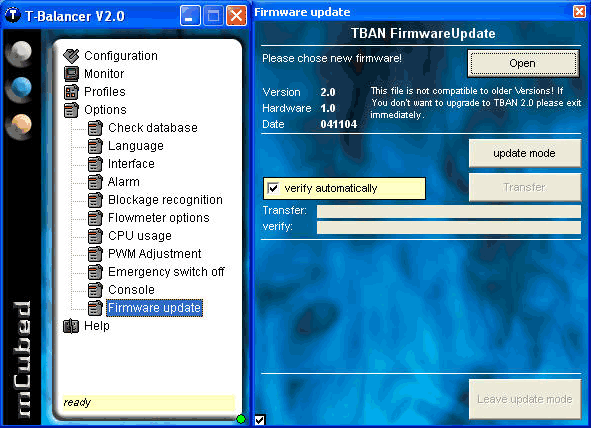
A look ahead to T-Balancer software coming soon (still at beta stage)
