









Intel's 5.7 GHz Xeon 6377P features 12 P-cores and a desktop-class LGA1700 socket — unusual server CPU prioritizes clock speed over core count
Bartlett Lake server chip targets workloads where frequency beats core count

Intel has published specifications for the Xeon 6377P, a 12-core server processor that pairs enterprise-grade features with clock speeds more commonly associated with high-end desktop CPUs. According to Intel's product database, the chip, based on Bartlett Lake silicon, has a recommended price of $1,045 and is scheduled to launch in Q2 2026. The 6377P is also notable as the first P-core-only processor Intel has placed in its enterprise Xeon lineup.
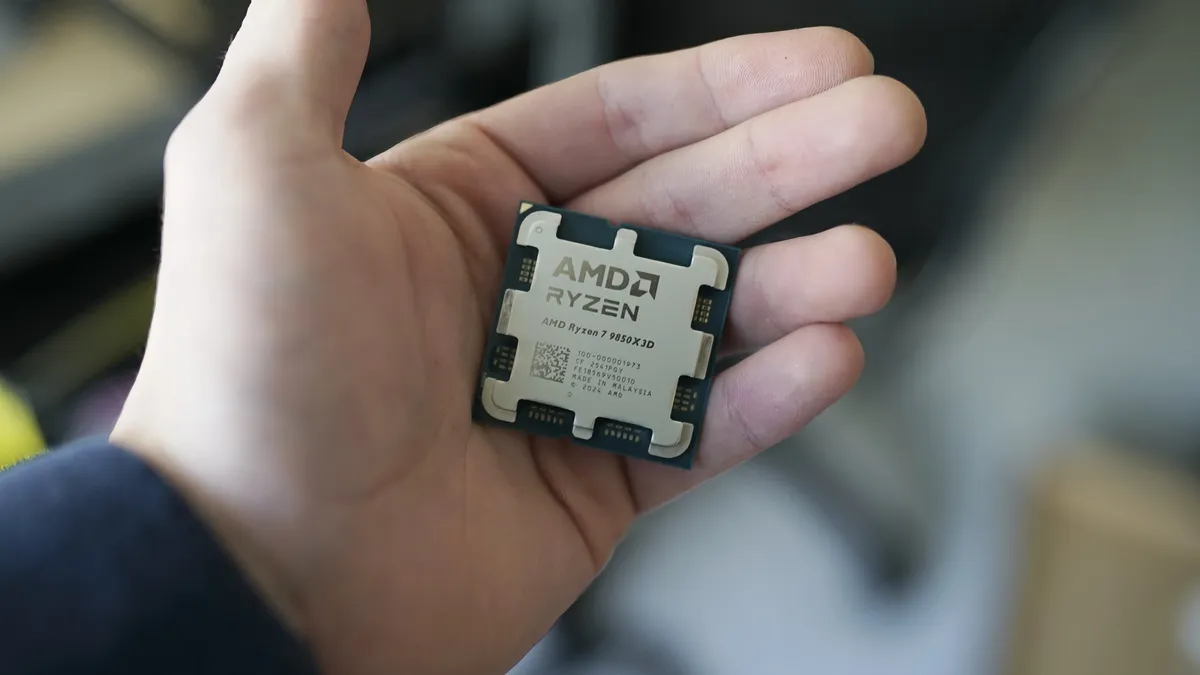
The Xeon 6377P appears to be an unusual addition to Intel's server lineup. While modern Xeon processors typically emphasize high core counts, large memory capacities, and extensive I/O connectivity, the new chip instead prioritizes frequency, boosting up to 5.7 GHz while maintaining a relatively modest 95W TDP.
Specification |
Value |
Cores / Threads |
12 / 24 |
Base Frequency |
3.1 GHz |
Max Turbo Frequency |
5.7 GHz |
Cache |
36 MB |
TDP |
95W |
Memory |
DDR5-4800, dual-channel, 128 GB max |
PCIe |
Gen 5, up to 20 lanes |
Socket |
LGA1700 |
Based on the specifications, the chip looks quite different from what most buyers expect from an Xeon. Dual-channel memory, a 128 GB capacity ceiling, 20 PCIe 5.0 lanes, and single-socket-only support are all constraints that would be unremarkable on a workstation processor but stand out on a $1,045 server part.
Intel's Xeon 6 lineup normally spans the high-core-count Granite Rapids P-core parts and the 288-E-core Clearwater Forest and Sierra Forest parts. Dropping a 12-core Bartlett Lake die — basically a desktop CPU with ECC support and a server product code — into this family appears to be a deliberate choice to address single-socket, entry-level server deployments where raw core count matters less than per-core performance and platform familiarity.
One standout number is the 5.7 GHz maximum turbo — unusually high for server silicon, where power efficiency and core density typically dominate the conversation. The 95W TDP — genuinely low for a $1,045 server chip — makes that figure even more impressive.
Now, not every enterprise workload needs dozens of cores. Electronic design automation, CAD, software compilation, financial modeling, and certain industrial control workloads are often bottlenecked by single-threaded or lightly threaded performance. For those use cases, a 5.7 GHz Xeon with ECC memory, PCIe 5.0, platform validation, and guaranteed long-term availability is a more targeted fit than a 64-core EPYC with slower per-core clocks.
On the other hand, the competitive picture is less flattering. AMD's EPYC 4005 series, built on Zen 5, targets the same single-socket entry-level segment at lower price points and with a newer architecture. The earlier EPYC 4004 series topped out at 16 cores on AM5 — more cores than the 6377P at a lower RCP. Intel's counter-argument may be per-core performance and the existing LGA1700 platform ecosystem. However, the chip's AVX2-only instruction set, with no AVX-512 support, may give pause to workloads that can use wider vector operations — a notable omission at this price.
Get Tom's Hardware's best news and in-depth reviews, straight to your inbox.
So, why would a buyer choose the 6377P over a Core i9 running on a high-end desktop board? The answer probably lies in what consumer platforms don't offer: certified ECC support, validated system configurations, and the multi-year product lifecycle commitments that enterprise procurement often requires.
Intel has not indicated whether the 6377P will be compatible with existing consumer LGA1700 motherboards, and given its Server/Enterprise use designation, OEM system availability is the more likely path to market.

Follow Tom's Hardware on Google News, or add us as a preferred source, to get our latest news, analysis, & reviews in your feeds.

Etiido Uko is a news contributor for Tom's Hardware covering the latest updates in big tech and the PC industry. He is a mechanical engineer and senior technical writer with over nine years of experience in documentation and reporting. He is deeply passionate about all things engineering and technology, and is an expert in gadgets, manufacturing, robotics, automotive, and aerospace.
-
salgado18 I'd love to see this testes in games. How would a 12 P-core CPU behave without those e-cores? I believe the P-cores of Intel are faster than AMD's, but there has never been more than 8 of those against up to 16 from red team.Reply -
bit_user Reply
It simply won't boot (unless they manage to hack the BIOS).bolweval said:I'm looking forward to someone trying to run this in a z790 board...
It's been tried several times, but the latest and probably best experiment was this one:salgado18 said:I'd love to see this testes in games. How would a 12 P-core CPU behave without those e-cores?
https://www.tomshardware.com/pc-components/cpus/intels-new-bartlett-lake-flagship-loses-fight-to-a-four-year-old-cpu-core-9-273pqe-has-50-percent-more-p-cores-but-cant-surpass-core-i9-13900k-in-games
They had to use an industrial board, because those are the only kind that natively support Bartlett Lake. However, they compared both Bartlett Lake and a i9-13900K on the same board, with the same RAM. They also included a data point with the i9-13900K on a gaming board, with gaming memory.
There were a few issues with the experiment, but I think even if they had provided active cooling of the VRM (for instance), it still wouldn't have turned out much better for the 12P CPU.
Raptor Cove were faster than Zen 4, but Zen 5 managed to catch up. With the extra L3 cache of the X3D models, it's a bloodbath.salgado18 said:I believe the P-cores of Intel are faster than AMD's, -
artk2219 It's a shame we will never see the desktop release that some were looking forward to for bartlett lake. If released generally it would have been a nice swan song for lga 1700.Reply -
usertests Reply
It's a fartlett in the wind, now. Time to think about Nova Lake instead.artk2219 said:It's a shame we will never see the desktop release that some were looking forward to for bartlett lake. If released generally it would have been a nice swan song for lga 1700. -
thestryker The only thing I find interesting about this part as opposed to the edge computing versions is that it's listed as RPL rather than BTL, only officially supports DDR5-4800 and there's no DDR4 support. This puts it in line with the Xeon 6 RPL SKUs with disabled E-cores which were launched last year.Reply -
bit_user Reply
Yeah, I wouldn't have minded seeing how it performs with its cores all cranked up to the same clocks as i9-14900K. It seems like that's one of the factors holding back its gaming performance - it hit an apparent ceiling at 5.3 GHz, based on how many cores games were using.artk2219 said:It's a shame we will never see the desktop release that some were looking forward to for bartlett lake. If released generally it would have been a nice swan song for lga 1700. -
bit_user Reply
I know I won't be touching it for at least a year.usertests said:Time to think about Nova Lake instead.
In the near term, I'll be more interested to see if Wildcat Lake starts replacing Alder Lake-N, in low-cost mini-PCs. -
bit_user Reply
That's weird.thestryker said:The only thing I find interesting about this part as opposed to the edge computing versions is that it's listed as RPL rather than BTL,
So, it just occurred to me that I don't know what stepping of BTL actually shipped. Seems it's A0.
https://www.intel.com/content/www/us/en/products/sku/245724/intel-core-9-processor-273pqe-36m-cache-up-to-5-90-ghz/ordering.html
The ark.intel.com page for the 6377P claims it's using B0 silicon, which is consistent with Raptor Lake and other members of the Xeon 6 RPL family. So, I'll go out on a limb and suggest probably somebody at "the new Intel" made the ark.intel.com database entry for the 6377P by copying and modifying one of those entries, and neglected to change all of the fields they should've.
https://www.intel.com/content/www/us/en/products/sku/246153/intel-xeon-6377p-processor-36m-cache-3-100-ghz/ordering.html
It's possible there was another stepping of BTL, but unlikely.