




Intel’s new Bartlett Lake flagship loses fight to a four-year-old CPU — Core 9 273PQE has 50% more P-cores but can't surpass Core i9-13900K in games

Bartlett Lake
(Image credit: Intel)

Some say Intel robbed consumers of the Core Series 2 processor with P-cores (codenamed Bartlett Lake), and that the chips could have competed against the best CPUs for gaming. However, German publication PC Games Hardware (PCGH) recently put the flagship of the Bartlett Lake series, the Core 9 273PQE, through a series of benchmarks and discovered that it couldn’t even outperform the Core i9-13900K released four years ago.
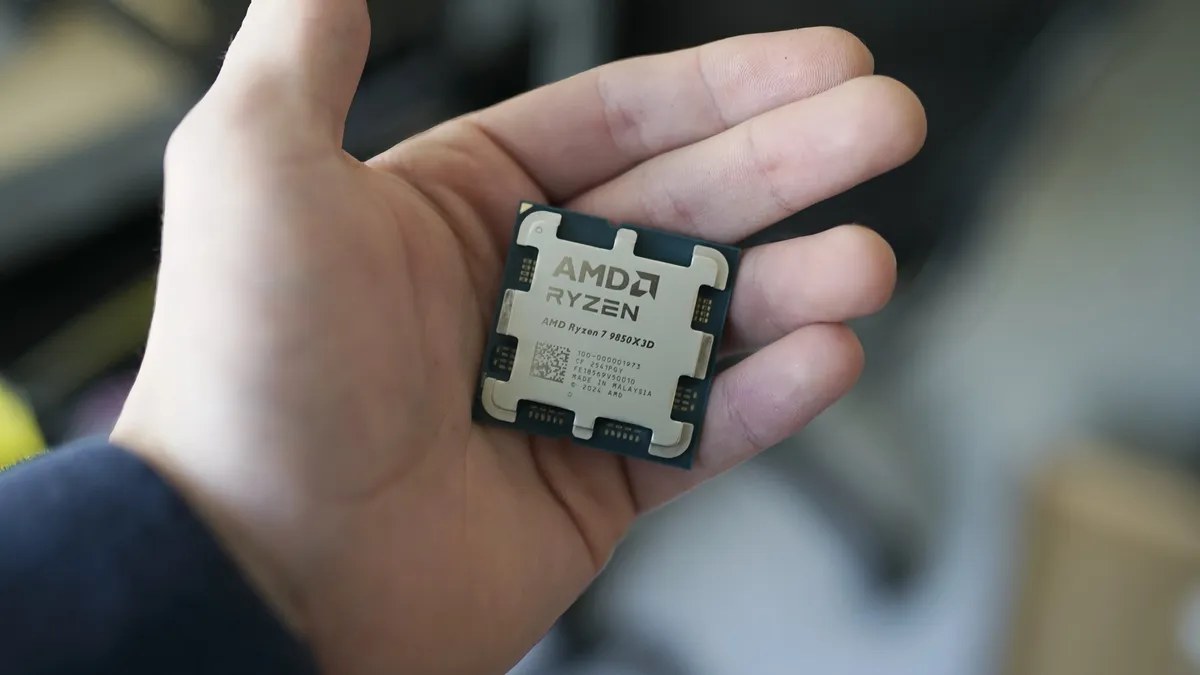
Some Intel enthusiasts have been vocal about their desire for Intel to release a processor lineup that features only P-cores. Bartlett Lake is Intel’s answer to these demands. Essentially, Bartlett Lake is just Raptor Lake stripped of its E-cores. Speculation and leaks about Bartlett Lake have circulated for a couple of years now, but it wasn't until recently that Intel unleashed it.

Bartlett Lake comes four years after the introduction of the 13th Generation Raptor Lake processors and three years after the refresh of the 14th Generation Raptor Lake lineup. Needless to say, many enthusiasts were happy to finally see Bartlett Lake until Intel dropped the bomb that the new series would be exclusive to OEMs and embedded applications, locking out mainstream consumers from the lineup. Bartlett Lake still runs on the LGA1700 platform, so there are mods to run it on conventional Intel 700-series motherboards.

Latest Videos From

Intel Core 9 273PQE Specifications

Swipe to scroll horizontally

Processor

Cores / Threads (P+E)

P-Core Base / Boost (GHz)

E-Core Base / Boost (GHz)

L3 Cache (MB)

PBP / MTP (W)

Memory

Core i9-14900KS

24 / 32 (8+16)

3.2 / 6.2

2.4 / 4.5

36

150 / 253

DDR4-3200 / DDR5-5600

Core i9-13900K

24 / 32 (8+16)

3.0 / 5.8

2.2 / 4.3

36

125 / 253

DDR4-3200 / DDR5-5600

Ryzen 9 9950X3D2

16 / 32

4.3 / 5.6

N/A / N/A

192

200 / 270

DDR5-5600

Core i5-14600K

14 / 20 (6+8)

3.5 / 5.3

2.6 / 4.0

24

125 / 181

DDR4-3200 / DDR5-5600

Core 9 273PQE

12 / 24 (12+0)

3.4 / 5.9

N/A / N/A

36

125 / 253

DDR4-3200 / DDR5-5600

Ryzen 7 9700X

8 / 16

3.8 / 5.5

N/A / N/A

32

65 / 88

DDR5-5600

The Core 9 273PQE is the processor that purists have been dreaming about for years: a Raptor Lake chip built exclusively with 12 Raptor Cove P-cores. Impressively, the Core 9 273PQE boasts 50% more P-cores than either the Core i9-13900K or Core i9-14900K. When it comes to clock speeds, the Core 9 273PQE outpaces the Core i9-13900K and comes within just 5% of the Core i9-14900K's P-core boost clock frequency.

PCGH used the ASRock IMB-X1714 motherboard with the W680 chipset to host the Core 9 273PQE. For memory, the news outlet selected DDR5-5600 C46 modules to complement the 12-core processor. Only two specific memory kits are on the Qualified Vendor List (QVL). This motherboard comes with a chipset made for Bartlett Lake, unlike the mods we've seen to get the chips running on consumer chipsets.

The publication compared the Core 9 273PQE to a plethora of contemporary and previous-generation processors, though for conciseness, we’ve picked a small subset of the outlet’s results. To ensure an apples-to-apples comparison with the Core i9-13900K, PCGH also ran it on the ASRock IMB-X1714 with the DDR5-5600 C46 memory (the publication usually runs DDR5-6000 C28 memory with LGA1700 chips).

Intel Core 9 273PQE Benchmarks

Swipe to scroll horizontally

Processor

Gaming Performance Index

Application Performance Index

Ryzen 9 9950X3D2

100%

100%

Core i9-14900KS

80.1%

81.4%

Core i9-13900K

78.3%

78.5%

Ryzen 7 9700X

72.6%

50.9%

Core 9 273PQE

72.2%

55.0%

Core i5-14600K

71.7%

53.6%

Core i9-13900K (W680)

71.4%

67.7%

Despite featuring 12 P-cores, the Core 9 273PQE delivered gaming performance comparable to the Ryzen 7 9700X and Core i5-14600K. With DDR5-5600 C46 memory, it was only slightly faster than the Core i9-13900K. However, when using high-performance DDR5-6000 C28 memory, the Core i9-13900K outperformed the Core 9 273PQE by up to 8.5%. That goes to show the impact of memory performance in gaming, as the switch from DDR5-5600 C46 to DDR5-6000 C28 increased the Core i9-13900K’s gaming performance index by 9.66%.

In application performance, the Core 9 273PQE outperformed the Core i5-14600K and Ryzen 7 9700X by 2.61% and 8.06%, respectively. However, the performance gap widened considerably when compared to the Core i9-13900K and Core i9-13900K (W680), with those models being up to 42.73% and 23.09% faster, respectively.

There is good reason to believe that the Core 9 273PQE didn't quite live up to its full potential, and several factors contributed to it. One of the primary limitations is that Intel has restricted the Bartlett Lake to commercial clients. There is little to no flexibility for fine-tuning or pairing the processor with faster memory, which has proven to improve gaming performance. Additionally, the lack of optimization for mainstream applications further hampers the chip’s performance. Then again, many games do not scale performance beyond eight cores, so the additional cores in the Core 9 273PQE offer diminishing returns in gaming scenarios.

Bartlett Lake is fine where it is, and we should leave it alone. Our attention is better directed toward Intel's upcoming Core Ultra 400S (codenamed Nova Lake) chips, which are scheduled to launch later this year.

Google Preferred Source

Follow Tom's Hardware on Google News, or add us as a preferred source, to get our latest news, analysis, & reviews in your feeds.

TOPICS
Zhiye Liu
News Editor, RAM Reviewer & SSD Technician

Zhiye Liu is a news editor, memory reviewer, and SSD tester at Tom’s Hardware. Although he loves everything that’s hardware, he has a soft spot for CPUs, GPUs, and RAM.

  • Roland Of Gilead
    A 9900x in their would be a good reference to add in.
    Reply
  • Marlin1975
    Something seems off. I would think it should be able to beat a 9700x. Maybe a software glitch where its not taking advantage of the cpu properly?
    Reply
  • usertests
    99% of newer games don't use more than 8 cores, sometimes not more than 2-4 cores, news at 11 (cores).

    Next-gen games should be pretty easy to run if the baseline is 6-ish Zen 6 cores in a PS6 handheld targeting up to 60 FPS. Probably more performance than 8-core Zen 2 at ~3.5 GHz, maybe with some goodies like AVX-512 support, but not a massive leap. Then you might need a fast 12-core to get to 144+ FPS.
    Reply
  • bit_user
    Marlin1975 said:
    Something seems off. I would think it should be able to beat a 9700x. Maybe a software glitch where its not taking advantage of the cpu properly?
    Well, it seems to have gotten bogged down by the industrial motherboard they used, which didn't have heatsinks on the VRM and therefore couldn't sustain a boost above 125W. I don't know if it's because of the 125W limit or just the CPU's turbo boost table (which dials back the clock frequencies, based on the number of active cores), but Bartlett Lake never got above 5.3 GHz, according to their charts.

    It generally worse than a i9-13900K on the same board, which always seemed to manage a P-core frequency of 5.5 GHz. Ryzen 9700X often (but not always) outperformed both, with a frequency of 5.5 GHz.

    As @usertests said, a lot of games don't use much more than 8 cores, and Zen 5 is a better microarchitecture than Raptor Cove (i.e. tends to outperform it, clock for clock).

    If you click through the different games, you can find some where i9-13900K (W680) and the 273 PQE come ahead of the 9700X:
    https://www.pcgameshardware.de/Core-i9-273PQE-CPU-284956/Tests/Gaming-Benchmark-Intel-Review-Mainboard-1535872/2/
    Note that I don't see a way to switch the page to English. I tried looking at it via Google Translate, but that breaks the interactive charts.
    Reply
  • bit_user
    usertests said:
    99% of newer games don't use more than 8 cores, sometimes not more than 2-4 cores, news at 11 (cores).
    In their tests, the following games seemed to exhibit multi-core scaling above 8 cores:
    Baldur's Gate 3 Cities: Skylines 2 Death Stranding 2 Kingdom Come: Deliverance 2 Spider Man 2 Starfield: Terran Command Anno 117: Pax Romana
    That's 7 of the 15 games they tested! Not a lot of scaling, but enough that the 9950X places well ahead of the 9700X. In 4 of those tests, the 273 PQE also outperformed the 9700X.

    So, you should probably update your "99%" statistic.


    P.S. here are the other games where the 273 PQE outperforms the 9700X:
    Indiana Jones & the Great Circle Resident Evil: Requiem Star Wars: Outlaws
    So, that yields a total of 7 out of 15 games, where the 273 PQE beat the 9700X. In the last two of those, the i9-13900K (W680) also outperformed the 9700X.
    Reply
  • TerryLaze
    Engineering sample....wait for more results.
    https://i.imgur.com/bZfAcUa.jpeg
    bit_user said:
    Not a lot of scaling, but enough that the 9950X places well ahead of the 9700X.
    The 9950x also has more than twice the cache, and we all know how much cache can influence performance.
    A CPU with more cores having a better result doesn't have to have anything to do with more cores.
    Reply
  • bit_user
    TerryLaze said:
    Engineering sample....wait for more results.
    https://i.imgur.com/bZfAcUa.jpeg
    Nope. That picture is not from their article, nor does their article give any indication that they used an engineering sample.

    TerryLaze said:
    The 9950x also has more than twice the cache, and we all know how much cache can influence performance.
    It does, but the L3 cache can only be populated by the cores on that CCD. Unlike the Intel CPUs we've seen so far, the L3 is not global.

    That means a game can only take advantage of the 9950X's additional L3 cache if it's also spreading out its threads across both CCDs. That also poses the hazard of higher communication latency, which could overwhelm the benefits of more L3. So, it's really not as simple as you suggest.

    TerryLaze said:
    A CPU with more cores having a better result doesn't have to have anything to do with more cores.
    While my analysis was somewhat superficial, one could look at the ratio of 9800X3D vs. 9700X and compare that to the 9950X vs. 9700X to see how many of those games performed better primarily due to increased L3 cache. I'm betting it won't be most of the ones I listed.

    The launch of Zen 6 desktop CPUs will also be a great chance to see how well games scale beyond 8 cores / 16 threads.
    Reply
  • Corgano
    I find the framing in articles like these weird - like it's trying to imply an expectation that makes no sense to hold.

    By now we know the trade off; more processors in the package usually means better multi threaded performance and worse single threaded speed due to thermals or shared power budget or both. I wouldn't expect this to be faster in games (usually low thread count applications) than their lower core but higher clock previous chips. Like why would I expect that. You don't make a Lamborghini faster by putting the engine from a semi in it expecting higher torque number = more fast.

    Comes out in the wash as a nothing burger.
    Reply
  • -Fran-
    This smells like apples to oranges testing, or someone missed something intentionally in the testing disclosure.

    Regards.
    Reply
  • cp0x
    This would have been a decent chip to bring to market a few years ago.

    But now they're a few years late, and not really bringing it to market.

    Hopefully the chips they'll release in 6 months will have been worth the wait.
    Reply