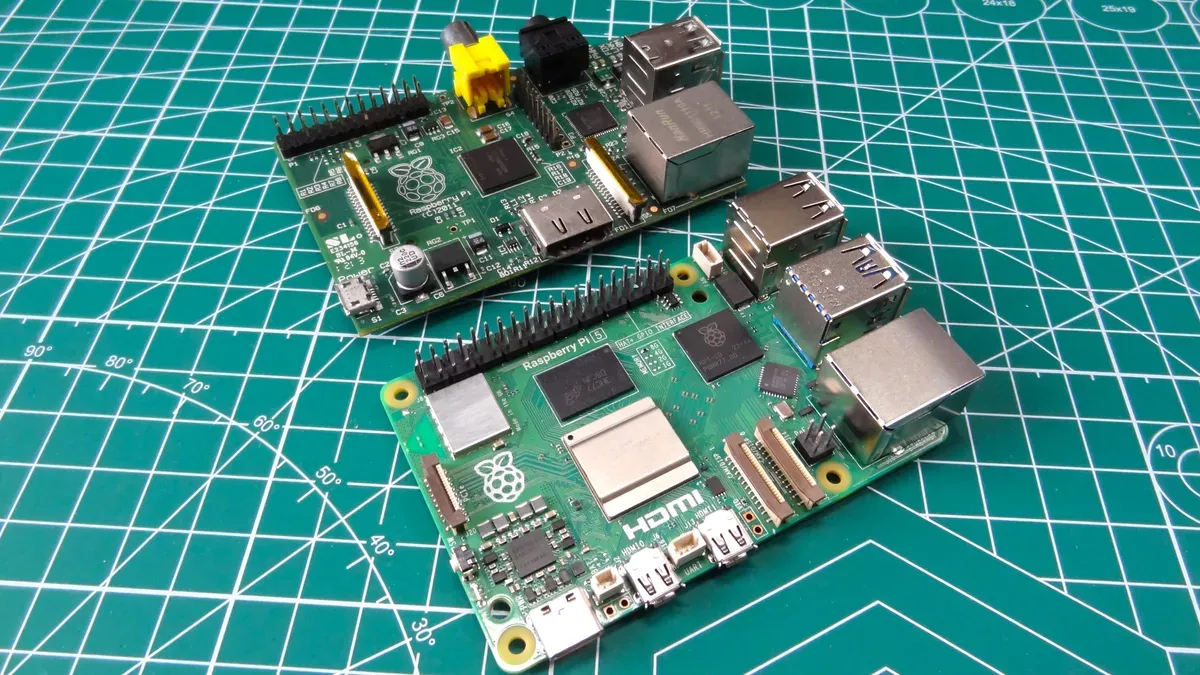
The humble Raspberry Pi, the perennial leader of the low-power, single-board computing (SBC) world, has hit a price parity with its rival, the Intel N100-based mini PCs. An investigation by Jeff Geerling, which we’ve independently confirmed, shows that pricing for Pi’s is now within just a few cents with a similarly configured board from brands like GMKTec. Why does this matter? Hobbyists and homelab builders had a great 2024 / 2025 which saw low prices for their DIY setups.
If you’ve been keeping a close eye on the PC hardware market of late, you’ll have noticed prices only going one way: upward. Flash memory costs, along with tariff uncertainties last year, have forced mini PC manufacturers and retailers to raise prices across the board. As Geerling explains, an explosion in homelab builds using $100-150 mini PCs made those same PCs a better, or certainly cheaper, alternative to current-gen Raspberry Pi 5s which when bundled up with NVMe HATs, NVMe drives, cases etc, retailed for over $200 last year.
Model | 2025 price | 2026 price |
Raspberry Pi 5 16GB (with 512GB SSD, 27W PSU, Bumper Case, and RTC Battery) | $208.75 (Jeff Geerling - Jan 2025) | $246.95 (Jeff Geerling - Jan 2026) |
$156.87 (Aug 2025) | $246.99 (Jan 2026) | |
$159 (Aug 2025) | $259 (Jan 2026) | |
$158 (Aug 2025) | $217.54 (Jan 2026) | |
$199 | $199 |
Our own comparison of rival mini PCs, based on Amazon’s current pricing whilst compared with Camelcamelcamel’s historical data, shows that this isn’t just a brand-specific issue. For instance, the Beelink S13 with the refreshed Intel N150 CPU, 16GB RAM, and a 512GB SSD is on sale for $269, from as low as $168.99 in August 2025.
Meanwhile the Acemagic V1, with similar specs, is available for $217.54, up from $158 in August 2025, or $180 in January 2025. Geekom does offer an N100 mini PC costing $199.99 that hasn't seen a price change on Amazon in the last year, but with only 8GB RAM and a 256GB SSD.
The Raspberry Pi is also not immune to the upward pricing trend. The cost of a Raspberry Pi has changed in recent months, and Raspberry Pi introduced a 1GB Pi 5 in order to keep a low $45 price point. A Raspberry Pi 5 with 16GB of RAM is now $145, $25 more expensive than in early 2025.
The cost of additional components, such as the SSD, have all added to the cost of creating your own DIY homelab.
Product | RAM | Old Price | New Price |
|---|---|---|---|
Raspberry Pi 4 | 4GB | $55 | $60 |
Raspberry Pi 4 | 8GB | $75 | $85 |
Raspberry Pi 5 | 1GB | New product | $45 |
Raspberry Pi 5 | 2GB | $50 | $55 |
Raspberry Pi 5 | 4GB | $60 | $70 |
Raspberry Pi 5 | 8GB | $80 | $95 |
Raspberry Pi 5 | 16GB | $120 | $145 |
Source: Raspberry Pi blog.
This now leaves prospective homelab builders with three variables to consider: overall cost, power usage, and performance. Intel mini PCs are more powerful than the Raspberry Pi, even if the Pi 5 did offer a significant speed boost over the Pi 4, as our Pi 5 review explains. However, the Raspberry Pi continues to be the superior option if you're looking for the lowest power draw, even compared to the otherwise power-efficient Intel N100 and refreshed N150 mini PCs on sale.
Geerling believes that, as a result of these price rises, repurposing old hardware will be the “theme” for this new year, and one that will save you far more money, given the alternatives. This might be the status quo for some time, too. There’s no end in sight for the price shocks affecting the market, with memory manufacturers warning that the crisis has only just started, and could roll on for years to come.

Follow Tom's Hardware on Google News, or add us as a preferred source, to get our latest news, analysis, & reviews in your feeds.