Windows 2000 Results - Dual Processor Benefit
Now I am coming to the most interesting chart in this comparison. How much do you actually gain from using two processors instead of one? Is the benefit all the same, or are there differences?
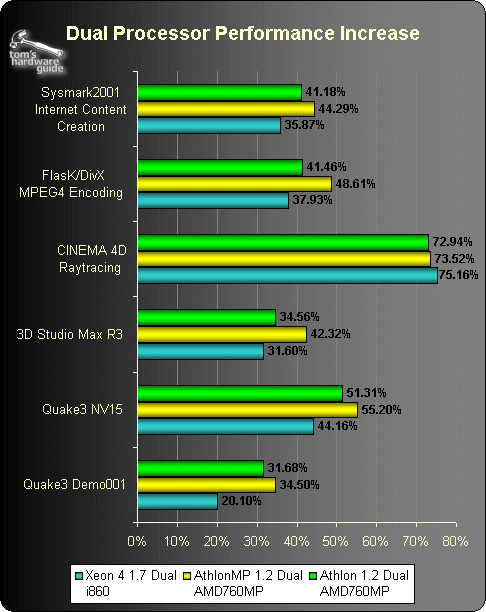
With the exception of CINEMA 4D, all results show the same trend. AthlonMP gets the by far most benefit out of dual processor operation. Athlon comes in second place and Xeon 4 is the loser. This shows the high potential of dual AthlonMP. Xeon 4 will have a hard time, once AMD is able to supply AthlonMP at competitive clock speeds. It's also interesting to see that Athlon with Thunderbird core is indeed not able to benefit from dual operation as much as Palomino. This has to be due to one of the enhancements that were implemented into the Palomino core.