Less Than 1% Average Performance Gain At FSB1333 Vs. FSB1066
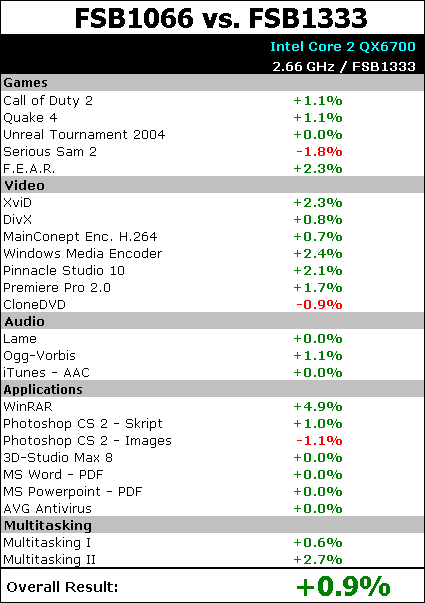
We've compared the overall performance between a Core 2 Extreme Processor QX6700 (2.66 GHz, FSB1066) and the same processor at FSB1333 speed. Since all Extreme Edition processors have unlocked multipliers, you can select any combination of system speed or multiplier. The default setting is 266 MHz base clock times 10 (2666 MHz); we simply switched to 333 MHz base clock and changed the multiplier to 8, which also results in 2666 MHz.
The result is not unexpected, but still a bit disappointing: The average difference in our benchmark suite between FSB1066 and FSB1333 speeds is less than 1%. Purchasing a new platform because of the new system speed option makes no sense whatsoever, but I would still recommend going for one of the FSB1333 babies if you want to purchase a new system.
45 nm Penryn/Wolfdale Processors At The End Of The Year

Intel's Core 2 Extreme Edition QX6800 quad core is rated at the maximum power design of 130 W, which also applies to the new QX6850. The Core 2 Quad Q6600 is rated at "only" 105 W. It may be possible to increase the clock speed even more, but looking at the advent of the 45 nm manufacturing process, this might not be necessary.

While the next generation microarchitecture called Nehalem won't be ready before mid-2008, the first 45 nm processors will be a shrunken and face lifted version of the existing Core 2 processors. Penryn is the name for the mobile processors, succeeding Merom, while Wolfdale is the dual core desktop version that follows Conroe, also used for the servers as Wolfdale-DP. The dual-die Yorkfield is the replacement for the Core 2 Quad Kentsfield, and an almost identical version will go into servers as Harpertown. There won't be a dual core version for servers.
The following are the most important changes when compared to the current 65 nm product family:
- Introduction of SSE4 instructions
- 3 MB or 6 MB shared L2 cache
- 12 MB combined L2 cache for dual-die quad core processors
- FSB1333 speeds
- Clock speeds over 3 GHz
- Improved energy efficiency
