Introduction
A Comeback For Rambus? Six Boards With Intel 850E

It never happens like you plan it. This is exactly what concerns many marketing experts at Intel, where decisions of a political nature are often made. The way this company works can be compared to a large political party: consider what the voters want but then allow generous leeway for your decision, as if the voters had never wanted things otherwise. Intel made a political faux pas more than two years ago, when it declared Rambus to be the only capable memory of the future. When all votes were in for the best memory technology, however, it turned out that the majority didn't support the Rambust faction, but, in a conservative manner, went for the DDR SDRAM camp instead. With this defeat, Intel lost significant ground - with its competing platform, the arch-enemy AMD attained double figures in its percent share of the market. In order to adapt to the latest trend, Intel, the market leader, announced that it was naturally developing on the basis of DDR technology. Still, it got much worse - at official press conferences where the public was not as well-versed in technology, the following mantra was popular: there was never any Rambus memory in question, and above all, not in combination with a processor from the said company. In prayer-wheel fashion, Intel announced to its guests at all events that Rambus was no longer relevant to the market - the development was at a dead end; clearly, the future was DDR! Now this strategy seems totally incomprehensible, especially because Intel's flagship product, the Pentium 4, only attains its true performance capability with help from RDRAM.
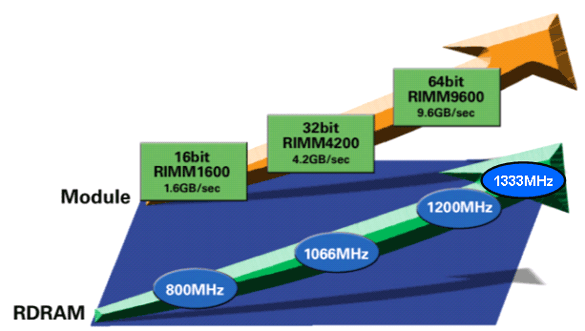
This is what the Rambus roadmap looks like. However, it's not yet certain whether Intel will be be launching a successor to the 850E chipset with RDRAM support. Also, Rambus has the FTC lawsuit hanging over its head.