Resurrecting an Nvidia graphics card with a massive hole in it might be enough of an achievement for some, but not for Brazilian YouTuber Paulo Gomes. Hours of initial work between him and his team to fix this burned-out RTX 5070 Ti succeeded, wiring up the VRMs from an AMD Radeon RX 580 to give it sufficient power in an otherwise unthinkable engineering feat.
Fresh from that initial success, and teaming up with fellow YouTuber ET's LGA1155, the team have taken a step further by introducing a new card into the mix: an Asus RTX 2080 Ti. Using the PCB from that card, Gomes and his team spent over seven hours bringing together this new and "improved" Frankenstein card, resulting in a Unigine Superposition benchmark result that makes it the number one-recorded RTX 5070 Ti by that tool.
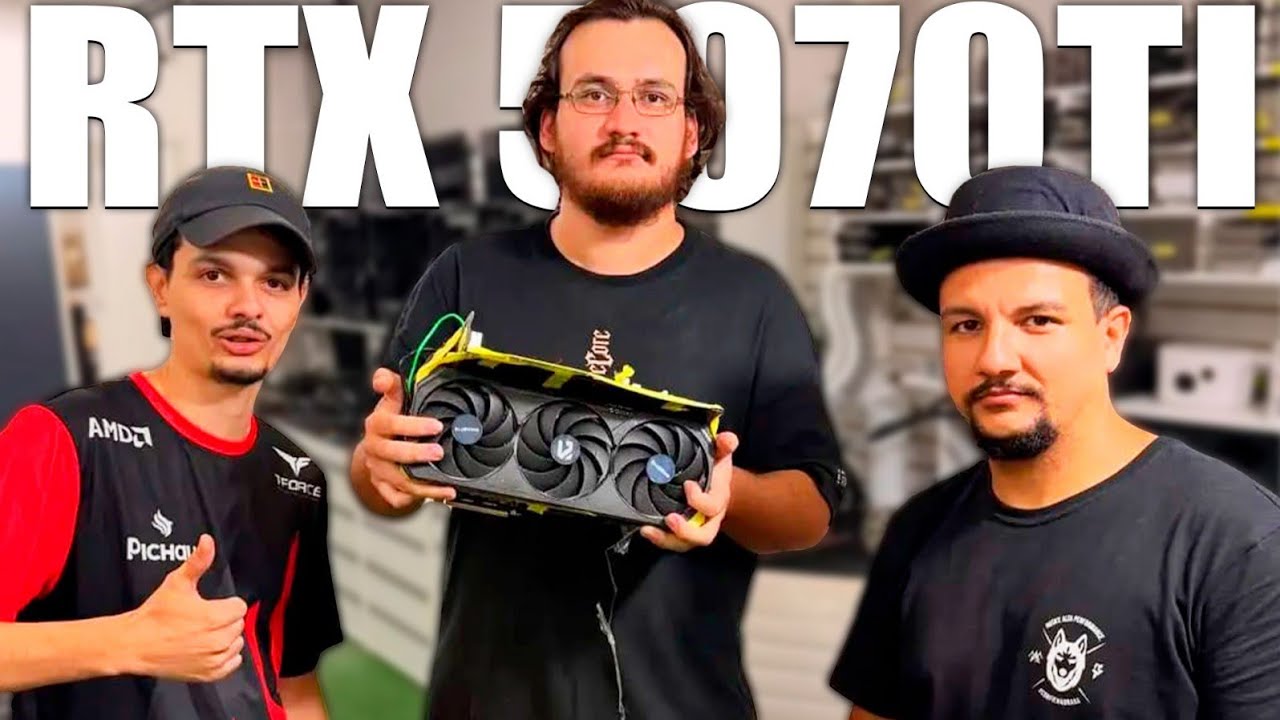
To begin with, the modding team managed to get the card to reach RTX 3070-esque performance, with its benchmark system only able to use the card over four PCIe 4.0 lanes, with a pretty sizable voltage drop of 400 mV under load, although this was reduced to around 30 mV towards the end. Other issues the team faced include signal display issues at 1080p, driver conflicts, and work to solder additional wires onto the various power and ground paths for stability between the donor RTX 2080 Ti’s PCB and the original 5070 Ti.

Thermal spikes, including one that took the card from 50 °C to 80 °C in just one second, along with 12V wires hitting nearly 100 °C during benchmark testing, showed that this isn’t a feat for the average gamer at home. The team was also able to resolve some of the performance difficulties by switching to a different benchmark PC, this time doubling the bandwidth using PCIe 3.0 over 16 lanes versus PCIe 4.0 over four.

While the end result isn’t particularly graceful, it does certainly work. The hybrid card, once tested, managed to hit a 3.23 GHz clock speed, with memory bandwidth hitting 34 Gbps. Benchmarked using Unigine Superposition throughout the process, the card managed a high score of 11,150, putting it at the top of Unigine’s leaderboard for RTX 5070 Ti GPUs.
Few graphics cards with such physical damage could hope to even run, let alone achieve top-scoring benchmark results like this. As technical challenges go, it’s a triumph, but the copious amounts of electrical tape and solder joints make this a challenge that only a serious electrical engineer could ever hope to repeat.

Follow Tom's Hardware on Google News, or add us as a preferred source, to get our latest news, analysis, & reviews in your feeds.