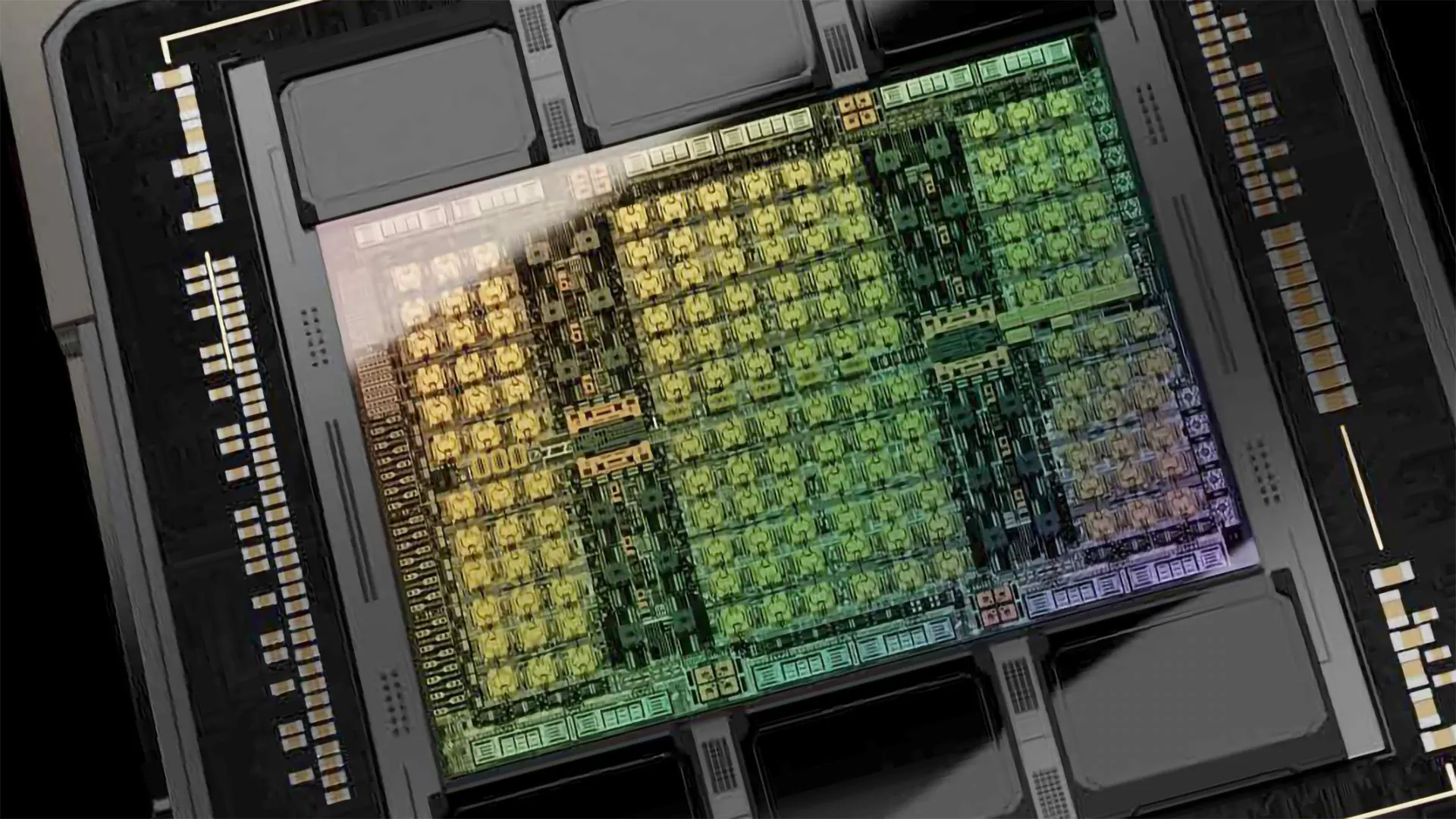
The U.S. Department of Commerce is about to let Nvidia import its H200 AI GPUs into China, Semafor reports, citing a person with knowledge of the matter. If true, Nvidia would be able to ship much more capable GPUs to China, enhancing its positions and ensuring dominance of its CUDA software stack. The only question is whether China lets these AI accelerators in, as it previously blocked imports of the weaker H20.
The authorization reportedly only covers Nvidia's H200, a processor that originates from 2022, but features formidable performance and comes with 144 GB of HBM3 memory (an important spec for training large AI models), so it is years behind the leading edge Blackwell GPUs. When compared to the HGX H20 — specifically designed to meet U.S. export control regulations of 2023 — it still delivers a formidable performance advantage over H20. Although Huawei now offers accelerators and rack-scale systems that can compete against Nvidia's H200 and even GB200 NVL72 systems, many Chinese companies still prefer Nvidia hardware largely because of their reliance on the CUDA-based software stack.
Semafor claims that the decision also reflects an assessment inside the U.S. government that the earlier restrictions did not significantly hinder progress by Chines AI leaders like Alibaba, DeepSeek, or Huawei. These companies continued to release advanced AI models and fill hardware gaps with domestically engineered products, therefore blunting the intended effect of U.S. policy and spreading Chinese AI standards when it comes to hardware, software, and eventually ethics.
An avid reader would ask whether the Department of Commerce — a part of the executive branch of the federal government — is overriding laws set in 2023. This is not exactly the case. The DoC is not formally canceling or rewriting the 2023 export control rules, but it is preparing to apply them far more flexibly. The ECCN 3A090/4A090 framework — which sets performance caps and interconnect thresholds for AI accelerators — remains intact. What is changing is the DoC's willingness to grant licenses for hardware that sits above those limits. By approving Nvidia's H200, the U.S. is effectively raising the practical performance ceiling that China may receive, without altering the existing export rules. Whether or not AMD can receive appropriate indulgences is something that remains to be seen.
One thing to keep in mind is that China rejected the H20 for political, not technological, reasons.
On the one hand, China is more likely to permit H200 imports than it was to accept the H20, because the H200 is a full-fat Nvidia GPU rather than a deliberately slow-downed, export-only model. Meanwhile, H200 will help China to develop its AI prowess faster than any domestic hardware.
On the other hand, China's approval is not guaranteed as availability of H200 could slowdown development of domestic AI hardware solution.
Stay On the Cutting Edge: Get the Tom's Hardware Newsletter
Get Tom's Hardware's best news and in-depth reviews, straight to your inbox.
Last but not least, China may hesitate to re-open reliance on U.S. technology that the U.S. government could cut off again. Therefore, it may prefer to protect the momentum of domestic manufacturers like Huawei as it fits into China's broader semiconductor self-sufficiency plan.
Anton Shilov is a contributing writer at Tom’s Hardware. Over the past couple of decades, he has covered everything from CPUs and GPUs to supercomputers and from modern process technologies and latest fab tools to high-tech industry trends.