Samsung narrowly avoids 18-day chip strike after last-minute wage deal with 48,000-worker union — tentative deal, subject to workers' vote, suspends billions of dollars worth of potential losses
Deal struck just hours before planned action
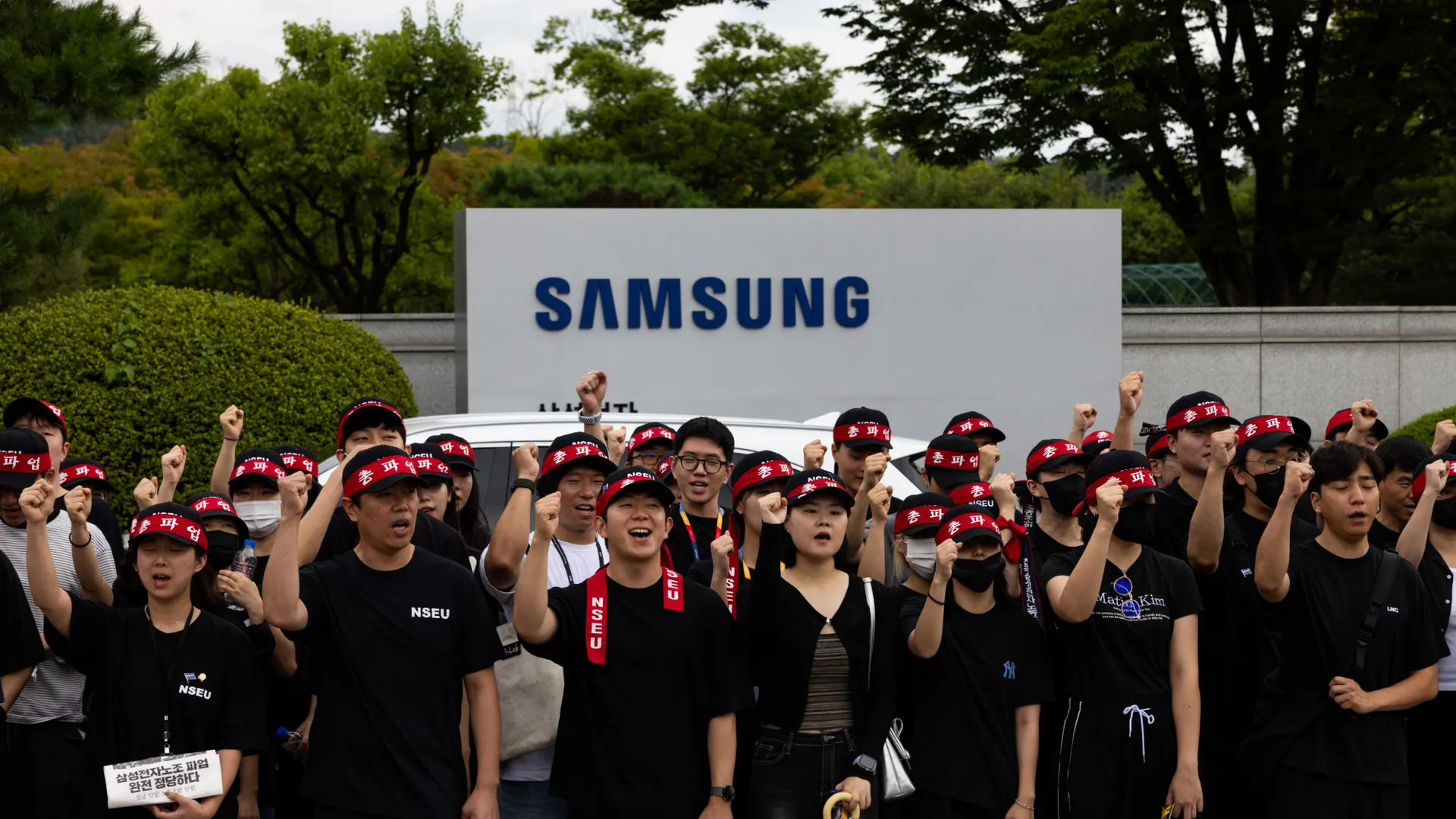
Samsung Electronics has narrowly avoided an 18-day strike at its South Korean chip operations after reaching a last-minute tentative wage agreement with its labor union on Wednesday — just hours before workers were due to walk out.
The union, representing nearly 48,000 members, said it would suspend the general strike planned for May 21 to June 7 and put the deal to an internal vote. Voting is expected to run from May 22 to May 27, though some notices put the window at May 23 to May 28. If members approve it, the tentative agreement becomes formal; if they reject it, the strike threat could return.
The deal followed last-minute talks involving Samsung management, union leaders, and South Korea’s labor ministry. Labor Minister Kim Young-hoon helped restart negotiations after earlier discussions broke down. Samsung’s Device Solutions negotiator, Yeo Myeong-gu, and union leader Choi Seung-ho signed the tentative agreement in Suwon.
Exact terms of the agreement have not been fully disclosed, but the dispute centered on performance bonuses. The union had pushed for Samsung to allocate 15% of annual operating profit to employee bonuses and scrap a 50% annual salary cap on performance payouts. Samsung had resisted those demands, arguing that profit-sharing across its businesses was complicated because its booming memory division and weaker logic/foundry operations were performing very differently.
The breakthrough caps months of escalating labor unrest. Dissatisfaction grew among workers as Samsung’s semiconductor profits surged on AI-driven memory demand, with workers comparing their payouts to those at rival SK Hynix, which has offered more generous bonus structures.
After earlier talks collapsed in February and March, the union threatened a May general strike. Further negotiations were scheduled for May 11 and 12, but the penultimate talks broke down again on May 12 without a deal. Leaked transcripts from the talks alleged that Samsung offered memory workers a 607% bonus worth $477,000, while logic chip staff were to get as little as 50%. The union rejected the proposal — citing a potential retention crisis due to the imbalance — and threatened to proceed with the strike.
The union had already demonstrated its ability to disrupt operations via a one-day strike that reportedly saw over 40,000 workers participate and caused night-shift output at Samsung’s foundry operations to fall sharply, with memory output also hit.
Ahead of today's deal, the May 21st strike seemed inevitable, with Samsung reportedly winding down chip production in preparation. Samsung had also obtained last-minute court injunctions to limit the impact of the strikes before direct government intervention helped bring both sides back to the negotiating table.
Analysts and officials warned of potential disruptions to chip supply and major economic damage in South Korea. One estimate cited possible daily losses of around 1 trillion won if production halted, while others warned of tens of billions of dollars in broader economic risk.
For now, that risk is suspended — not eliminated. The immediate question is whether Samsung’s union members accept the tentative wage deal. Approval will defuse the company’s biggest labor crisis in years, while a rejection will put the strike back on the table at one of the most sensitive points in the global AI chip supply chain.

Follow Tom's Hardware on Google News, or add us as a preferred source, to get our latest news, analysis, & reviews in your feeds.

Get Tom's Hardware's best news and in-depth reviews, straight to your inbox.

Etiido Uko is a news contributor for Tom's Hardware covering the latest updates in big tech and the PC industry. He is a mechanical engineer and senior technical writer with over nine years of experience in documentation and reporting. He is deeply passionate about all things engineering and technology, and is an expert in gadgets, manufacturing, robotics, automotive, and aerospace.
-
Kicapan07 Lmao at describing a 50% bonus at loss making divisions is considered "little" (and it goes up to 100% too). More than a fair offer given the current state of those divisions.Reply
Memory division getting huge bonuses of 600%is warranted giving that's where the current windfall is coming due to the memory price crazyness from but not LSI and foundry, which are loss making. -
chaos215bar2 Reply
So, your move would be to create entirely unnecessary animosity between employees in different divisions because you want to play the game of trying to give bonuses only to employees whose work can somehow be directly tied to profits from the memory division?Kicapan07 said:Lmao at describing a 50% bonus at loss making divisions is considered "little" (and it goes up to 100% too). More than a fair offer given the current state of those divisions.
Memory division getting huge bonuses of 600%is warranted giving that's where the current windfall is coming due to the memory price crazyness from but not LSI and foundry, which are loss making.
That's certainly a choice. The kind that would get me immediately applying to work for a competitor.
When did it become so trendy to pretend that companies should operate in a completely cold, capital-driven manner while entirely ignoring the human impact of their actions? It's really a pretty disturbing attitude. -
justrudi Reply
As somebody who works in Taiwan, I have to say it is a very common attitude from the management here. "You are all replaceable", "This is my success and my money" or "His vision brought the company to where it is" as an attempts of some managers to justify leadership's decisions on company culture.chaos215bar2 said:So, your move would be to create entirely unnecessary animosity between employees in different divisions because you want to play the game of trying to give bonuses only to employees whose work can somehow be directly tied to profits from the memory division?
That's certainly a choice. The kind that would get me immediately applying to work for a competitor.
When did it become so trendy to pretend that companies should operate in a completely cold, capital-driven manner while entirely ignoring the human impact of their actions? It's really a pretty disturbing attitude.
I am not saying every company is like that, but the more I am here, the more I hear from others and see by myself too. -
Why_Me Reply
Never heard that one before. I live in Alaska and this is what our union laborers make:pclaughton said:So labor in countries other than the U.S. still understand their worth.
Union laborers in Anchorage (represented primarily by Laborers' Local 341) earn base hourly wages ranging from $29.82 to $54.01, depending on their specific classification. These base wages are supplemented by a robust fringe benefits package, which typically adds an additional $34.26 per hour to the total compensation. -
chaos215bar2 Reply
A lot of companies are like that. And they're all generally terrible to work for. That's the kind of place you want to leave as soon as you have the opportunity.justrudi said:As somebody who works in Taiwan, I have to say it is a very common attitude from the management here. "You are all replaceable", "This is my success and my money" or "His vision brought the company to where it is" as an attempts of some managers to justify leadership's decisions on company culture.
I am not saying every company is like that, but the more I am here, the more I hear from others and see by myself too.