Intel confirms rumored Core Ultra 9 290K Plus has been scrapped — potential Core Ultra 9 285KS Special Edition also off the table as Arrow Lake refresh rolls out
With Nova Lake set to arrive later this year, it is not surprising Intel is scrapping any new Ultra 9 parts for LGA 1851.
Get Tom's Hardware's best news and in-depth reviews, straight to your inbox.
You are now subscribed
Your newsletter sign-up was successful
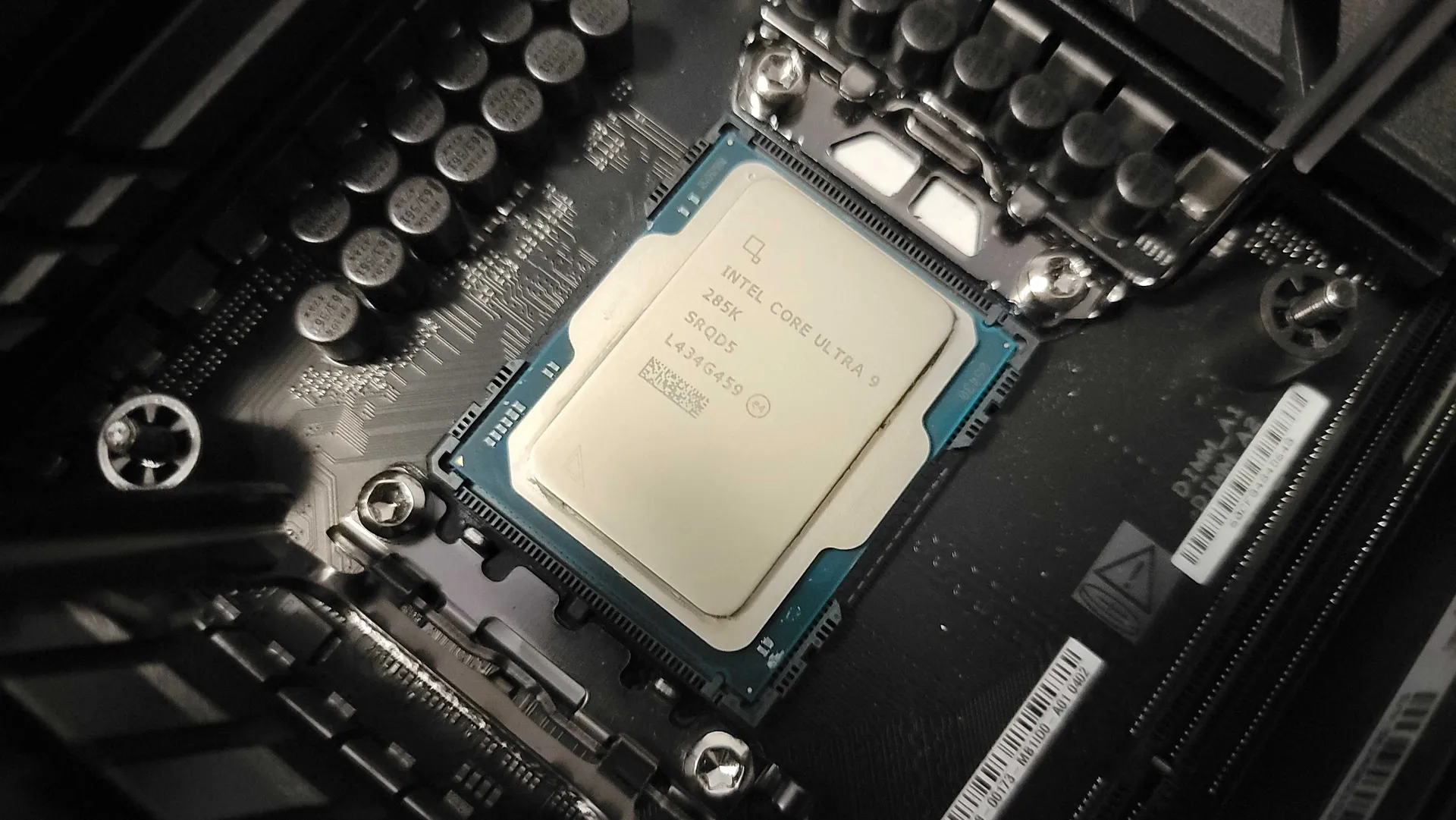
Intel has been busy preparing and launching the new Core Ultra 7 270K Plus and Ultra 5 250K Plus this week, leaving speculation as to where the Ultra 9 counterpart might be — after all, we saw leaked benchmarks of the flagship part a month ago. Intel confirmed to PCGamesHardware that it has scrapped the Core Ultra 9 290K Plus and won't be releasing the chip. Furthermore, Intel also stated it is scrapping a potential Special Edition Ultra 9 SKU for the Arrow Lake generation as well.
Intel neglected to share its reasons for cancelling the 290K Plus, but it is easy to guess why. Specs-wise, the chip was rumored to be a very minor boost over the 270K Plus, featuring the same core count and a 200-300MHz clock speed improvement over the 270K Plus, assuming the 290K Plus' rumored clock speeds were true. The lack of any additional cores would have made the 290K Plus a significantly worse product from a value perspective, assuming Intel was going to price the 290K Plus similarly to all of its previous flagships. Even if Intel undercut the 285K's MSRP by $100, the 270K Plus would likely still be a better value at its $300 MSRP.
But to give you an idea of its performance, previous benchmark leaks revealed that the Core Ultra 9 290K Plus was around 10-11% faster than the 285K in Geekbench 6 benchmarks. This shouldn't be interpreted as the actual performance difference between the two chips in real-world applications, but it gives us an idea of the 290K Plus' potential performance. We are also unsure if iBOT was enabled or not on the 290K either.

Article continues belowNo Core Ultra 9 285K/295K Plus Special Edition
Ditching a Special Edition part for Arrow Lake is arguably more surprising than ditching the 290K Plus. Intel has consistently released a Special Edition "KS" flagship every generation for the past several years. Intel first began shipping Special Edition chips with the Core i9-9900KS in 2019, skipped the 10th and 11th generations, then produced the i9-12900KS, i9-13900KS, and i9-14900KS. Intel again did not share its decision to cancel its "KS" product for Arrow Lake, but one reason could be that the 285K couldn't consistently hit 6 GHz; a mark previous KS releases have been able to surpass.
The Core Ultra 7 270K Plus and Core Ultra 5 250K Plus debuted this week as quite possibly Intel's last CPUs on the LGA 1851 socket. The new chips focus on improving the criticisms of Intel's previous Arrow-Lake S products, featuring higher clock speeds, four more E-cores, and a much lower MSRP compared to their vanilla Ultra 7 and Ultra 5 counterparts. The cherry on top is hardware integration for Intel's new iBOT tool that can boost IPC by solving inefficiencies in instructions sent to the CPU cores.

Follow Tom's Hardware on Google News, or add us as a preferred source, to get our latest news, analysis, & reviews in your feeds.

Get Tom's Hardware's best news and in-depth reviews, straight to your inbox.

Aaron Klotz is a contributing writer for Tom’s Hardware, covering news related to computer hardware such as CPUs, and graphics cards.
-
cyrusfox Makes perfect sense, as they are not the market leader, no point releasing a halo sku when it would still lose to x3d chips in gaming. Glad they are focusing on strengths here: Arrow lake plus dominates for cost/productivity metric, while a good improvement in Gaming vs Arrow lake, until Intel gets a cache solution in place, x3d remains king.Reply -
wussupi83 I really think the 265k was the optimum design and the star for this generation. The one that should get remembered.Reply -
erlewis5 I'll take the credit for Tom's reviewers now referring to the LGA socket type. Am I the only one who has a hard time keeping Intel's various mud puddles sorted out? As usual, nothing about the NPU. But now we know, no thank's to Tom's, that no news about the NPU is bad news.Reply -
usertests Reply
The NPU should be 13 INT8 TOPS in all Arrow Lake-S SKUs: https://www.intel.com/content/www/us/en/products/sku/245692/intel-core-ultra-7-processor-270k-plus-36m-cache-up-to-5-50-ghz/specifications.htmlerlewis5 said:As usual, nothing about the NPU. But now we know, no thank's to Tom's, that no news about the NPU is bad news.
98% of people don't care about the NPU on a good day, but 13 TOPS is low and slow.
A leaker claimed that Nova Lake-S will have a 74 TOPS NPU, which is a whopping 5.7x faster than Arrow Lake-S. There will be a lot of office PCs capable of using Stable Diffusion at a reasonable speed.
Integrated graphics will be interesting. You get up to 4 Xe-LPG in Arrow Lake-S, but maybe only 2 Xe3 in Nova Lake-S. So each core has to be twice as fast for it to not be a regression. Maybe that can be estimated now that Panther Lake is out, but I have to read up on it. -
cyrusfox The NPU on a desktop chip is truly a waste of space and silicon. On a desktop there is little thermal ceiling issue, chew through more watts on the cpu and gpu which seem to have more useful TOPS. What is the point of a fixed function hardware like a NPU on the desktop? On a laptop perhaps there is an efficiency improvement if the thing was supported and utilized (very few uses I am aware of). I find it a distraction from impactful features (Say AV1 encode/decode support). and I blame microslop with their AI intrusion and am betting their efforts continues to fall flat.Reply -
thestryker Fixed function hardware like an NPU really just doesn't make sense at all right now given how much silicon they're taking up. The LNL NPU is about the size of two LPE-core clusters or 2 P-cores + cache. This is an absurd silicon cost for something that most buyers will never need. The NPU on ARL is about the size of 2 Xe cores (used this comparison because the nodes used are closer), but it's also much less performant. With PTL the size versus performance has improved, but it's still about the size of an E-core cluster + cache or 2 P-cores.Reply
Still seems like an awful lot of silicon for something that has no widespread use at this time. Even though I personally don't leverage the integrated graphics on desktop much I think that would be a much better use of silicon.