AMD CES 2026 gaming trends press Q&A roundtable transcript — 'we see a little bit of an uptick in the percentage of AM4 versus AM5 platforms'

In our final CES 2026 Q&A session for Tom's Hardware Premium, we had the opportunity to sit down with AMD in Las Vegas, Nevada, to discuss the evolving PC hardware landscape and how products like the Ryzen AI 400 might make a splash over the coming year.
If you've not checked out our previous rounds of transcripts, be sure to catch up with our FSR Redstone roundtable transcript, AMD ROCm transcript, Jensen Huang Q&A, and Intel Panther Lake Q&A.
AMD Representative: ... a little bit about the Ryzen AI 400 box, but that's not my primary area of expertise. I think from a component, CPU, a graphics standpoint, yes there is the 9850X3D that was part of the announcement (although not included in the keynote yesterday) that will be a new product that comes into the AM5 portfolio, that really will complement the existing 9800X3D and market. I think as we look at that product and its performance, there are certain games and workloads that really respond to the higher frequency, and so it was one of those things where, just kind of as we've been gaining more experience with our X3D products, and with the 9000 Series X3D products in particular, we took the opportunity to bump the clocks on that a little bit, and deliver a part that I think will be another choice for gamers who play more of those frequency-sensitive eSports titles and things like that, in addition to the games that our X3D products really excel at already.
You know, outside of that, on the graphics side, while we didn't announce anything new at CES, most of what we did on the graphics side really was in the run-up to CES, last year, with the introduction of FSR Redstone, and a host of new technologies that augment our FSR portfolio, bringing in, you know radiance caching, frame generation, and a handful of things like that to continue the progress on our FSR journey. I think we see that as a key part of the portfolio going forward; you'll continue to see us investing in and growing the capabilities, and part of that as well is utilizing things like GPUOpen to proliferate that throughout the gaming ecosystem and developers who may not have been on that first wave of games that those technologies get integrated into.

And then I think maybe the last topic to talk about a little bit before we just open it up for a little bit more free-form discussion is, you know, one of the products that we didn't make a lot of noise about last year that's starting to get a little bit more traction is the Radeon AI Pro R9700, which is a 32-gigabyte version of our Navi 4 products. It really comes in a couple of different flavors: one that is sort of a workstation form factor, dual-slot full-length card, actively cooled, and then late last year, we also introduced two versions of that card that are passively cooled cards designed to go into a server form factor platform, either as a dual-slot full-length card or as a single-slot card. And I think that's kind of complemented with the release of ROCm 7.2, which will come in January, supporting both the Ryzen AI and AI Pro 400 products, the Ryzen AI Max products, and our Radeon and Radeon Pro products out of the box. That includes both the standard 9000 series as well as the 9070 cards, both in the Windows ecosystem as well as the Linux ecosystem.
Maybe sort of last-but-not-least, just kind of recapping some of the things that we've been doing on the AI front, just to simplify that experience is, in our Adrenaline software stack we're now [including] the AI software bundle, just trying to make it easier for people to access the tools, to experiment with and use AI on either their notebooks with integrated graphics, or Strix Halo type products, or discrete graphics systems. That's really intended to be kind of an 'easy button' that pulls all of the tools and frameworks that are needed to just, out of the box, run AI workloads on our GPUs, and do it in a way where it lowers the bar for entry for more people to have that experience on their system.
To talk about the keynote a little bit, I think that one of the things that in more the client and gaming section of the keynote, one of the things that I think is really important and really interesting is this migration of models from the cloud down to local devices. I think that whether you're a creator or whether you're trying to run agents locally on private, proprietary data, we see an enormous amount of interest, of traction in that right now, we think that that is one of the trends that is really going to accelerate in 2026. And it spans from being able to do those capabilities on a notebook, like some of the things you saw last night, to dev platforms like the Halo box, all the way up to single or multiple R9700 parts in a system to tackle a much bigger workload. I think that whether it's individuals trying to do that, or developers, or even sort of departmental deployment of that as a workgroup AI solution within a business, we think that's going to be one of the significant trends that really shapes demand for those products in 2026.
So, with that, maybe I'll pause for a minute and see if you guys have any questions or things that are on your mind that you want to talk about.

Journalist 1: I have a couple of related questions about the impact of AI on [unintelligible] and the recent concern that RAM prices have gone way up, and my question is, what can you do about it? On the gaming side, AI demand is driving it up; do you have any insight into this problem? I guess the companion rumor is that GPU prices are going up, and that's more speculative, but [unintelligible]
AMD Representative: I think that the press in general has done a pretty thorough job of covering some of the dynamics around memory, supply, and demand, and I think that it is definitely true that some of these large deals to secure the RAM supply have affected the overall supply chain for memory. I think that when you look at it at a macro level right now, there is a finite supply of capacity at DRAM manufacturers that shared, whether you're talking about HBM memory, DDR memory, GDDR memory, it all comes from the same handful of companies around the planet, and I don't think there's any segment that's immune to the sort of unprecedented forces that are shaping demand in that part of the market right now.
I think on the CPU side, you know one of the phenomena that we have seen more recently that is really interesting is, as we talked to a number of our retail partners and E-tail partners, they are seeing quite a few more purchases of a CPU without a motherboard in the in the shopping basket, which indicates to us that the in-socket upgrade market and the longevity of our AM4 and AM5 platforms is actually turning out to be a really big benefit for gamers or creators who want to get more out of the platform and components that they already own without having to make that investment in a new RAM kit and a new motherboard and everything else. So I think that will be potentially a trend we see in 2026 with more component upgrades as opposed to full-system swap-outs and altogether rebuilds. It's interesting; as we look at our own telemetry data on users who are part of our Adrenalin software package that have opted-in to share some of their information with us, some of the most popular CPUs that are still running in gamers' platforms are like the [Ryzen 5] 2600, back to the Pinnacle Ridge days, or 3000 series Ryzen products. Stepping even from there into a little bit more modern 5000 series processors in an AM4 socketed motherboard, there's a pretty big boost there.
Journalist 2: I wanted to follow up on that right quick, because —
Journalist 1: Wait, just, the other half of the question —
AMD Representative: I'll get to GPUs in a second; I'm not going to forget. I had a bet, honestly, going into this, that this would be the first question, so thank you for that.
Journalist 1: So you're saying that Zen+ and Zen 2 parts are popular, from your own data; the upgrade path to Zen 3 — a lot of that's been blocked; the 5800X3D isn't available, the 5700X3D isn't available, and there's no option to scale up to AM5. I know you've done a couple of the Zen 3 refreshes, for the XT models, was it? In 2024? Are there any plans to refresh any of those, given how much demand there is for them now?
AMD Representative: I don't — so with those XT models, for instance, I think one of the things that we found is a small speed bump in a product doesn't materially affect the experience that a customer gets out of those CPUs, right? And I don't know that it's tremendously valuable to a user to do like a little tweak to an existing product definition. That being said, if you look globally at the sales and the demand that we see for our products, our AM4 processors and products still represent a very healthy, like, I'm going to say, between 30-40% of our total sales revolve around that AM4 platform. Some of that's new build, some of that's upgrade-in-socket, but it's still a platform which has very, very healthy demand that goes along with it. We're certainly looking at everything we can do to bring more supply and kind of reintroduce products back into the AM5 ecosystem to satisfy the demands of gamers that maybe want that significant upgrade in their AM4 platform without having to rebuild their entire system, so that's definitely something we're very actively working on right now.
I think on the GPU question, there is no product that has memory in it that's immune to some of these forces around DRAM pricing and what it's doing to the market, and I think the truth is the volatility that we've seen over the past two months or so has really been unprecedented. I think that there's a lot of behavior that we saw in the market with — um, once those deals were announced, significant acquisition of DRAM products to make sure that some of the larger customers have supply for those products, and I think that's what created a large volatility. What I expect to happen is that some of that volatility is going to settle out over the first half of this year, I think some of that volatility is going to settle out in the market over the next 3-6 months, and I think we're going to see pricing stabilize.
That being said, I think it is a given that the cost of memory is going to go up in every platform. That's going to affect prices in desktop builds, graphics cards, you name it, and we're doing everything we can to mitigate those cost increases, but our commitment is, just as we launched the product, to make sure that we're, from a price-performance and competitive positioning standpoint, maintaining the value that the Radeon 9000 Series products brought into the market when we launched them, and we're going to do everything we can to maintain that.
Journalist 3: You want to talk about X3D, and memory, and how it [unintelligible]?
AMD Representative: Okay, that's, that's a good point, and what is interesting —I think that there's maybe two aspects to the topic that Matt was bringing up. One is, for our X3D processors, often, kind of the rule of thumb with Ryzen products from the very beginning was you need the fastest memory kit so you can overclock the fabric on the processor to get the most gaming performance out of it, and that's, I think, a true statement for all of our products except for the X3D products. The X3D products, because of that really large cache next to the processor, are much, much less sensitive to memory latency, to fabric overclocking, and so I think one of the things that we've seen as we've peeled the onion and tried to dissect 'how do you build the best value for somebody that's trying to build a new system', I think one of the things the X3D products do really well is they mitigate that need to have the most expensive, lowest latency, fastest kit that you can buy. You can get almost all of that performance with a much less premium kit that's part of that. Now, I'm not saying that — of course, there's a premium across all memory kits right now — but I think it gives you an opportunity to open that search range and still get great performance without having to buy the best of the best memory kit to really push the envelope.
And I think the other thing that we've seen is, again, I'll say, in some parts of the world, not every market, every part of the world, there's a lot of our partners and customers that are looking at, 'okay, what does single memory channel versus dual memory channel performance look like?' And I think the thing that we've seen in some of the data is, of course it's title dependent, but a lot of games that are that are super popular, that people play all around the world, have relatively little sensitivity to dual channel versus single channel memory. So I'm not necessarily advocating that single memory channel systems are the right choice for everybody, but I think that one of the things that's going to be a theme throughout 2026 is really scrutinizing every component that's a part of the build to make sure that you're getting the best value for what you're putting together. And I think the second part of it is this phenomenon of a more significant trend toward component upgrades versus full system upgrades. I think it's something we're going to see, like upgrading the CPU, or the GPU, or the motherboard to get a little bit more out of that system without having to refresh everything. I think is going to be something that's really a trend throughout the year.
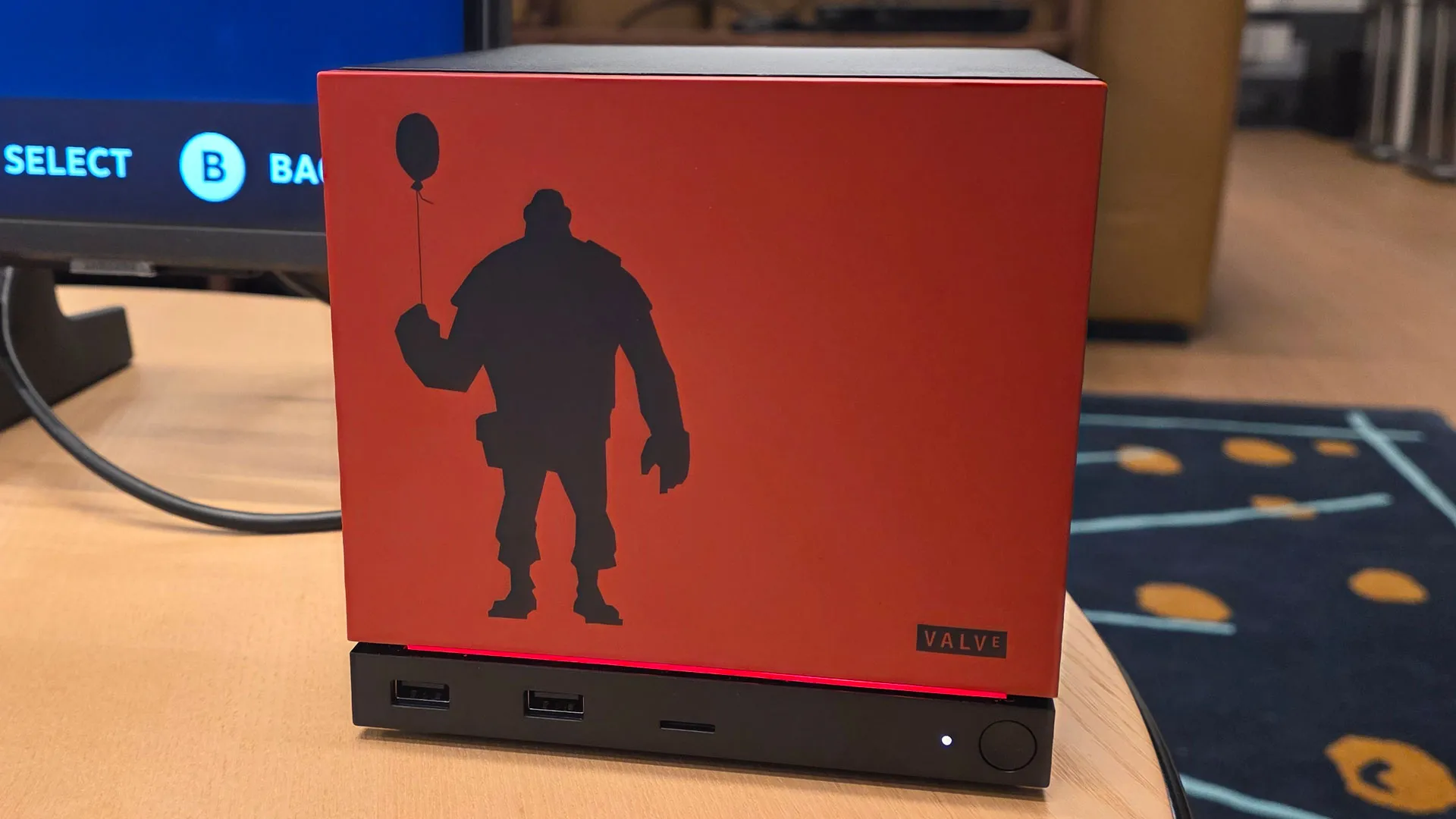
Journalist 4: The other big story [...] What will PCs, what will gaming desktops look like, between the Steam machines, between collaboration with Microsoft and whatever they're doing, it seems like the gaming desktop could look very different this year, and I'm just wondering how you guys are thinking about that as you're doing [...] because not everyone needs a big tower.
AMD Representative: That's true. So, I'll use the Halo box down there as a great example, right? I think that the Strix Halo product was a product where, when we first were going through the process of designing and building the part, there was a lot of conversation about what really is the value proposition of of this really unique architecture and its capabilities, and I think certainly we saw an opportunity as a single chip that could replace a mid range to lower end GPU really, really interesting, really compelling. As a mobile workstation product, super interesting as well, or even a small form factor like that, as a desktop workstation is a really interesting use case as well. And then I think, over the course of the past 18 months, the role of local AI has really changed so much, the memory architecture of that type of product has kind of given it a whole other dimension of spaces and use cases and workloads that it can serve very, very effectively with [a] kind of unprecedented level of capabilities. So I think that when we look at 'what does a desktop look like over the next couple of years,' I think that that's a great example of a unique system architecture that solves the problem in a different way, potentially leads to something that is more "console like," in terms of its size, capabilities, and dimensions. I think that you're already seeing the transformation that's happening, like with these FSR capabilities that we're introducing, and how much ML or AI-enhanced techniques for rendering are augmenting more traditional rasterization techniques to drive the gaming experience. I think there will always be a space for those mid-tower desktop systems, for people who want the absolute best, and the highest resolutions, the fastest refresh rates, the most detail in their games that they play. But I think there's also a pretty significant class of gamers who want something that is just easy, small, quiet, and fits about anywhere, and I think that you will see this — I guess 'resurgence' may be the wrong word, but I think the demand for the small form factor gaming desktop will be something that really picks up steam in 2026 and 2027, and I think it's just going to be something that continues forward as you look at how ML capabilities affect the way that GPUs render different games, and experimenting with different architectures to just get the most out of limited power, and maybe slightly different silicon capabilities and construction to go solve that gaming problem.
Journalist 3: Is graphics memory protected in some way from the surges in memory pricing, or are they in the same boat as main memory?
AMD Representative: I think that if you look at who builds graphics memory, it's the same DRAM manufacturers that build DDR memory, HBM memory; again, there's a relatively small set of companies on the planet that build those chips. There is a lot of overlap in the technology, and again, that's why I say I don't think that any memory type is immune to the effects of how AI is shaping the overall supply and demand picture for memory this coming year.
Journalist 3: It seems like the industry [could have] planned a little better, because you need a lot of AI PCs out there to meet that AI demand...
AMD Representative: I can't comment on planning cycles of the DRAM manufacturers, but maybe, just going back to it, the DRAM industry, if you look back in history, has been characterized by these mega cycles, right? And I think you're seeing another mega cycle right now that maybe is exacerbated a little bit by this very sudden demand shift to AI GPUs, which makes it probably a little bit more painful because of the speed at which it went from 'no problem' to, you know, 'DEFCON 1'. Yeah, I think that's very true, that just, the speed at which the change happened in the market is pretty unprecedented, and I think that everybody is reacting to the sudden demand shift that you're seeing, but it takes time, right? It takes time to bring new capacity online, to increase production, and all of those things are problems that could still have in past memory cycles, but I think we're definitely seeing this one hit very, very suddenly.
Journalist 4: Do you think we're working on a longer timeline in that cycle? We've heard anywhere from like —
AMD Representative: I am not the expert there to be totally — what I couldn't tell you — I don't know who you speak with, from some of the DRAM manufacturers or things like that, but I think those are good questions for some of the companies that make DRAM, to understand what they're doing, what their timelines are. If history is any indication, it follows the same pattern that we've seen in the past, right? Demand outstrips supply, more fab capacity gets put in place, and eventually you get to a point where you have oversupply compared to the demand that's in the market, and the cycle repeats itself. So, I don't know the answers to those questions. I think you'd have to talk to those guys to really get the get a get a better understanding of what they're planning on doing and how they're planning on reacting to the current situation.
Journalist 3: I think I read too that Samsung came out and said, 'expect your cell phone to go up,' right?
AMD Representative: Yeah. I think I saw Samsung said nothing's immune, TVs, dishwashers, and then everything else.

Journalist 4: I do have a question you can answer about the 9850X3D. So, during the pre-brief, we got a taste of — I think 7% was the number that was quoted, we got performance after the fact, and I think it was averaging 3% or somewhere around that?
AMD Representative: I remember hearing 7% in the pre-brief, but I think the 7% was mis-statement. There are some games — it depends on what your suite is, right? You look at e-Sports games, and it's going to be in that 5 to 7% range; you look at AAA games and it may be parity on an AAA game where the X3D effect dominates the influence on the game engine and how it plays. I know that from our internal data, and correct me if I'm wrong, but I think, like over a suite of 25 to 35 games, blended, it's in that 2-3% range overall, with the outliers on one end and the 'no change' on the other end.
Journalist 4: Well, my question wasn't so much the discrepancy, my question was — the point is to have these two live side-by-side, we don't know pricing yet; I just want to confirm once again that that is the plan, given the small gap in both performance and frequency? Given that you can just turn on PBO with the 9800X3D and easily get another 200 MHz or so out of it. The plan is to still have both of them?
AMD Representative: Absolutely, absolutely, we will definitely have both of them. I think that as our Ryzen business has gotten more diverse, I think what you'll see is — look, a lot of system builders like stability. They'll want to keep that 9800X3D in a lot of the prebuilt systems that they're manufacturing. I think even as an individual processor in a box sale, you'll see both available in the market. The 9800X3D has been a stellar product for us, tried and true, such a great reputation. These transitions take time, and we're certainly not going to do anything to artificially force this to be a faster transition that it needs to be. Both are really valuable products, and have have their own space where people are going to gravitate to one or the other.
Journalist 3: I also think it's going to be a fun value proposition; how you guys characterize it, right? Because there are some people that absolutely want the best of the best. Obviously, there'll be a price gap there, but they will go for the top-end one. The other thing that's going to be interesting is eSports professionals. There are people that, 'five frames per second? Here's my money.' So it will be the top, they will exist together, and I'm really excited to see how you guys — because I'm pretty sure when you do the math, the best dollar per frame is going to be the 9800, right? Because of that gap. But what is it worth to you? You know? And to David's point of in socket upgrades, do I want to go for that? So to have that choice is really cool. For me, I'll turn on PBO. Like, that's no problem for me. There are people that don't want to — have never entered the bios, right? So you can tell them — and PBO is 200 megahertz? You're not going to get 600, or 400, excuse me. So this came up; I don't know if it was on you guys' call or another one, but somebody asked about the 400 [MHz], and our overclocking team was like, "if you squint at like, you have to dial that in, to get anywhere close to that." You can! But a number of things have to fall in line to get there, including silicon lottery.
Journalist 4: I'm just curious to see how much it costs.
Journalist 5: I have a slightly different question. Since the market is shifting in terms of pricing, do you expect people to lean a bit more toward pre-builts as opposed to going out and building their own PCs?
AMD Representative: It's a good question. I think that the next couple of months are going to be hard to predict, how all these forces shape what people buy and how they buy it. I was saying a little bit earlier; I think one of the things that we've certainly seen through the holiday period is talking to many of our retail and e-tail partners; they see a significant difference today in the shopping cart that users check out with, the number of processors to motherboards. In other words, more people now are upgrading in-socket than ever before. I think that's an option for somebody who already has an existing system, but those pre-built customers, a lot of those kind of fall on two ends of the spectrum: you have people who want the best of the best — and look, if your system costs a little bit more, it's not going to affect their decision to go build that system.
I think on the other hand the customers that are more budget-conscious may be making different choices than they would have six months ago. In our own tracking data, we see a little bit of an uptick in the percentage of AM4 versus AM5 platforms, DDR4 memory has been a little bit more stable in terms of pricing, especially recently, and I think that's driving a little bit of that. So it may force some different behaviors than what we would have expected. My statement around DDR4 and AM4 is also very regional. In the US, or in North America in general, AM5 is the heavy, heavy majority — I'm talking 80-90% plus of North America has moved to AM5 — but if you look at it globally, it's a lot more balanced.
However, I think even in North America we are seeing a little bit of an uptick in AM4 that started to show up in December as things got so volatile and difficult to predict with memory pricing overall. So I think that's something that would be an interesting sort of trend to watch as we go into 2025 [sic]; as we're here at CES, that's the conversation that many of our partners are having with us, motherboard partners as well as system builders, just to make sure that they've got the right mix between AM4 platforms and AM5 platforms so that, whatever the price point is that they need to address, or customer that they're going after, that they've got a solution that fits that space.

Journalist 6: [mostly unintelligible question about AMD's Radeon lineup]
AMD Representative: I think that 2025 was a pretty special year for Radeon, and the response from gamers and the community has really been pretty awesome. I think that we, as we look at 2026, and beyond, our goal with Radeon is to make sure that we're following that playbook that was so successful for us with our Ryzen CPUs, and I think over multiple generations, what Ryzen really built was something where, if you were building a Ryzen system, you knew you were getting a great value, you were getting more for your money, and you're getting great features in a really highly competitive product. As we plan out the future of Radeon, it is the same thing. I think we're on that same curve; we're a few clicks earlier in the journey, but we want to do exactly the same thing, and as time goes on, continue to expand the coverage within the graphics market to make sure that we're addressing as broad of a range of gamers as we possibly can. I think that we've seen it this year; bringing choice into the gaming graphics ecosystem is a good thing for everybody. Having two strong competitors in that space is good for gamers, it's good for PC builders, and I think it's strategically very, very important to AMD. Whether you're talking about notebooks and integrated GPUs or discrete graphics, what we do with visualization and gaming is really core to AMD's DNA, and it's a part of how we build our product portfolio and our roadmaps.
It's kind of ironic; a lot of people look at gaming as a workload that really isn't challenging, like AI or computational fluid dynamics or something else, yet visualization and gaming workloads are really some of the most complex workloads there are. As we move from traditional rasterized gaming to ray tracing and path tracing — like, very, very complicated, both in how that works and how it works efficiently, and, drives high frame rates and low frame times and all of those things, and solving those problems is actually really important, not just for our gaming graphics business, but really kind of across the board. So it's an area that we are absolutely focused on, and absolutely focused on growing that portfolio. I think we've been very open; you've certainly seen and heard and read the conversations that Jack [Huynh] has had with with various members of the press about how our strategy, very deliberately, was to go after the spaces where gamers live and go after the, really big parts of the market, and I think we're going to start there and just continue to expand our coverage as time goes on.
Journalist 4: You said you can't speak on Ryzen AI 400 very much?
AMD Representative: You can ask me questions; I'll try my best. [chuckles]
Journalist 4: I just want to get a reaction to — you know, we have to get a refresh. AMD was the performance leader in that segment of low-power SoCs in this previous generation. We have this refresh now that looks like the same architecture, similar specs, with some higher memory speeds and frequencies. I want to get your reaction to Intel's announcement yesterday, with a very large GPU inside of a mobile chip, and where AMD sits now, given that they're just kind of going after gamers with this huge push for this entry-level gaming platform that might be competitive with AMD's current offerings.
AMD Representative: The announcements from Intel yesterday, betting on a bigger GPU, that has been a part of our portfolio strategy for quite some time; products like Strix Halo fit into that overall scheme. There are going to be places in the portfolio where betting on a really big GPU is important. There's going to be places in the portfolio where having the balance between CPU cores, GPU cores, NPU, and total cost is more of a driving factor in the construction of a particular chip. I think that what Intel has done, stepping up in their graphics configuration in such a substantial way, is very aligned with the approach that we've been taking for years across the portfolio, which is: big graphics in chips that go into notebooks matter. It is important; it enables a class of gaming systems, or mobile workstations, creator systems, whatever, that doesn't require a dGPU and offers really exceptional power, and performance, and gaming characteristics. So I think that what they've done is really quite well aligned with what we've been executing in our strategy over the past couple of years.
Journalist 3: Kind of a follow-up question to that is, we've seen NPU tops — short of Qualcomm, who is coming out and saying 80 TOPS on their parts — we've seen NPU TOPS level off around 45-50, and more focus is going on the GPU, from Panther Lake in particular. I'm wondering: do we see that kind of inference capabilities living at this level? Or is there going to continue to be that push over the next few years for faster and faster NPUs?
AMD Representative: I think that the NPU is something that fills a very specific need on the part, and you have to look at the characteristics of the NPU in multiple dimensions. It's not just TOPS, it's TOPS per watt, it's bandwidth, it's all of those things, right? Because, really, at the end of the day, the NPU was intended to be that engine that is handling high-duty-cycle always-on AI workloads in the background, and doing so at low power without materially affecting the battery life in your system. That's kind of the objective of having that accelerator in there. That being said, it's not the sort of 'one tool that solves all problems,' because I think if you look at CPU versus GPU versus NPU, an NPU is incredibly targeted at being very efficient, at running persistent AI workloads. However, its programmability is more challenging than a GPU, for instance.
A GPU is more flexible in terms of its programming model, but its power characteristics are not such that you would want that to run high-duty-cycle AI workloads all the time, right? And so, to me, it's kind of 'right tool for the right job', and so this I think this 'plateauing' of NPU tops that you've seen over the past couple of generations from us, from Intel, really is indicative of that there's a set of workloads that are pretty well-defined and characterized as those high duty cycle AI workloads, and that kind of fits the characteristics of those NPUs. As those workloads evolve, I think the NPU will evolve as well, and I think that those two things go hand in hand with each other to really get the value out of the NPU. I think a more powerful NPU without an evolution of those high-duty-cycle AI workloads that are running on it is probably less valuable than — in the specs itself, having higher specs on an NPU doesn't necessarily translate to value for the end-user.
Journalist 1: [unintelligible question about Microsoft Copilot]
AMD Representative: I'm not super close to the Microsoft features, but just as an end user, I do see those slowly evolving and getting more and more integrated into the way that Microsoft is trying to deliver them. So that, too, is probably its own evolution. I think that the early steps with Copilot created an expectation that made that a little bit more challenging, and now I think it's actually starting to come into its own a little bit more with some of the things that it's able to do.
[Session ends]
That wraps up our Tom's Hardware Premium CES coverage for the year. We hope you enjoyed this insider look at our conversations with the biggest companies around.