AMD Zen 6 and Intel Nova Lake CPUs reportedly arriving late, delayed to CES 2027 — next-gen chips rocked by industry turmoil

Next-gen Intel & AMD desktop CPUs delayed
(Image credit: Intel / AMD)

The state of the PC, nay, the tech industry at large, is one of confusion right now, characterized by the somewhat still ongoing AI boom despite little real-world benefits. RAM is already three times as expensive, while SSD and GPU prices are also rising. Now, it seems upcoming CPUs are being affected, too, as new info suggests that both AMD and Intel are eyeing delayed launches for their next-gen desktop lineups.
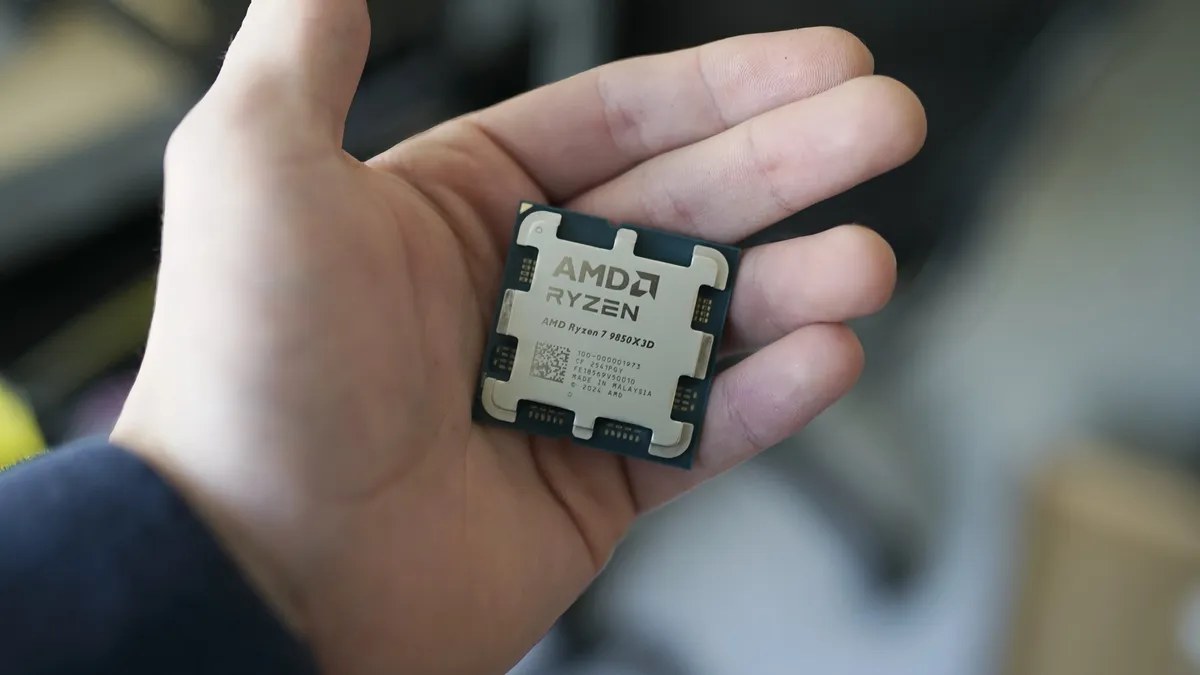
So, a staggered launch for Zen 6 was likely the plan all along, but the manufacturing crisis might have pushed its mainstream desktop release beyond 2026 to minimize turbulence. An older roadmap leak for AMD's mobile CPUs did put Zen 6 as a 2027 release, so it was never truly confirmed when Olympic Ridge would launch specifically. There was just a general assumption that it would line up with Nova Lake.

Funnily enough, that's still possible as Nova Lake seems to have been pushed back as well. On Weibo, leaker Golden Pig Upgrade has claimed that the Blue Team's next-gen desktop CPUs will be released in 2027, despite CEO Lip-Bu Tan previously confirming a year-end launch. There's still a chance that initial Nova Lake variants come out in Q4 2026, with Nova Lake-S to be officially unveiled at CES 2027.

Nova Lake-S launching in 2027, according to Golden Pig Upgrade

(Image credit: Future)

It's too early to speculate on all this, since Intel's upcoming Arrow Lake refresh hasn't even been announced yet, and the company just launched Panther Lake for mobile devices. AMD is more straightforward, as its next desktop launch is supposed to be Zen 6 with no stopgaps in between. Besides, given the current state of the tech landscape, these reports are only really unearthing rationality rather than revealing shocking information.

Last year, Intel said it was shifting production capacity from consumer chips to data center CPUs, and it's no surprise to see this now. Nearly every company has begun prioritizing AI money — that's how we're in this mess after all — so even though there's no reason given for Nova Lake-S' delay, we might be able to connect the dots with the little info we have.

We do know a lot about specs; however, a couple of days ago, we covered the leaked Zen 6 core configs, which are expected to finally introduce a 12-core CCD, enabling a new 24-core Ryzen flagship. Top-end Nova Lake is a 52-core behemoth on the other hand, with up to 288 MB of bLLC to compete with X3D chips. Either family is set to bring major architectural improvements, so the battle is sure to be spicy.

Google Preferred Source

Follow Tom's Hardware on Google News, or add us as a preferred source, to get our latest news, analysis, & reviews in your feeds.

Hassam Nasir
Contributing Writer

Hassam Nasir is a die-hard hardware enthusiast with years of experience as a tech editor and writer, focusing on detailed CPU comparisons and general hardware news. When he’s not working, you’ll find him bending tubes for his ever-evolving custom water-loop gaming rig or benchmarking the latest CPUs and GPUs just for fun.

  • thestryker
    From AMD's perspective delaying would make sense as they rely more on DIY/enthusiast than Intel. Their CCDs are also shared between enterprise and client so a delay could just bolster the higher profit segment.

    On Intel's side it makes a lot less sense unless there's a real reason for the delay. NVL is using some form of dual source between TSMC N2 and Intel 18A and their Compute Tile design is client only. That would mean a delay would simply be sitting on silicon and it's not like Q4 2026 to Q1 2027 is going to have any meaningful market shift to make them more desirable.
    Reply
  • jackt
    I have faith in the bubble.
    Reply
  • Hotrod2go
    High DDR5 prices is definitely influencing this among other factors & its also encouraging DIYers to build DDR4 based rigs now or rejuvenate an older rig. Has anyone seen the prices now of new DDR4 kits? they have literally doubled over the last couple months already. Even 2nd hand ones on ebay show this trend as well.
    Reply
  • ezst036
    One rationale for Intel that comes to my mind is if they really are going to push some time out on new arch, they can also tip some weight into manufacturing and process during that time.

    Is Nova Lake more important than Intel/18A? Probably not. Sure Intel could gain a lot of value from an arch win but 18A is do or die.

    And the better process nodes will benefit the new arch(probably the one after it more likely) anyways as well so win win.
    Reply
  • Pierce2623
    thestryker said:
    From AMD's perspective delaying would make sense as they rely more on DIY/enthusiast than Intel. Their CCDs are also shared between enterprise and client so a delay could just bolster the higher profit segment.

    On Intel's side it makes a lot less sense unless there's a real reason for the delay. NVL is using some form of dual source between TSMC N2 and Intel 18A and their Compute Tile design is client only. That would mean a delay would simply be sitting on silicon and it's not like Q4 2026 to Q1 2027 is going to have any meaningful market shift to make them more desirable.
    I think they mostly don’t want the scrutiny of terrible sales numbers because nobody can afford to pay ridiculous RAM prices. I’ll sit on zen4 as long as I need to because I’m not paying over $400 for 32GB of ddr5 and I don’t want to reuse the terrible micron ddr5 I have now unless zen6 has a revolutionary performance gain. Im not expecting that.
    Reply
  • thestryker
    Pierce2623 said:
    I think they mostly don’t want the scrutiny of terrible sales numbers because nobody can afford to pay ridiculous RAM prices.
    Prices won't be getting better by delaying a quarter which is why I said the strategy makes sense for AMD who can sell their CCDs elsewhere, but not for Intel which cannot.
    Reply
  • thestryker
    ezst036 said:
    One rationale for Intel that comes to my mind is if they really are going to push some time out on new arch, they can also tip some weight into manufacturing and process during that time.
    NVL is being built on Intel's 18A and TSMC's N2 (Intel has not officially said which for which SKUs, but leakers say TSMC for NVL-S) so manufacturing really doesn't come into play here as they've already paid for the wafers.
    Reply
  • TerryLaze
    thestryker said:
    Prices won't be getting better by delaying a quarter which is why I said the strategy makes sense for AMD who can sell their CCDs elsewhere, but not for Intel which cannot.
    They can't, at least not when we are taking one quarter, the shipping to the packaging place alone probably takes that long.
    Reply
  • Zoolook13
    Low quality article, Zen 6 is clearly on time and already in hands of early "special" customers, enterprise launch seems on track and Zen 6 desktop has never been shown as a 2026 launch AFAIK, debuting on CES means shipping to packaging 2 half of 2026 after a few quarters of harvesting CCDs.

    All reasonable and its hard to see why they would have planned it any different, and clearly no incentive to rush out a product in the current market.
    Reply
  • thestryker
    TerryLaze said:
    They can't, at least not when we are taking one quarter, the shipping to the packaging place alone probably takes that long.
    I don't really understand what you're trying to say here.

    If you're saying AMD cannot delay the release by a quarter of course they can since that quarter is a year away. That's plenty of time to increase priority of enterprise parts over client since they use the same CCDs and should still be using the same packaging technology.
    Reply