Nvidia's N1/N1X chips leak once again, this time tipped for release in first half of 2026 — hotly-anticipated chips to reportedly debut on Dell and Lenovo laptops
N1 silicon is finally right around the corner.
Get Tom's Hardware's best news and in-depth reviews, straight to your inbox.
You are now subscribed
Your newsletter sign-up was successful
We've been waiting for Nvidia's return to the consumer SoC market for a while, ever since the company's partnership with MediaTek was first announced. The N1/N1X chips, born from this partnership, have been in the rumor mill for ages, but it finally feels like the time is right, with major leaks intersecting recently. Now, a new report from The Wall Street Journal says the N1/N1X SoCs are ready to launch in the first half of 2026.
"People familiar with Nvidia’s supply chain said PC makers including Dell Technologies and Lenovo were working with the chip maker on models using the Nvidia-MediaTek system-on-a-chip, which is built on architecture from U.K. chip designer Arm. The first PCs with the chip could come in the first half of this year, they said."
The excerpt above implies that Dell & Lenovo would be among the first OEMs to debut the N1 silicon, and that the initial models will start rolling out in H1 2026. The timeframe aligns with previous reports where DigiTimes said N1X-based laptops were set to release this quarter. Prior to that, a shipping manifest (dated November 2025) leaked out showing a 'Dell 16 Premium' laptop with an N1X engineering sample.
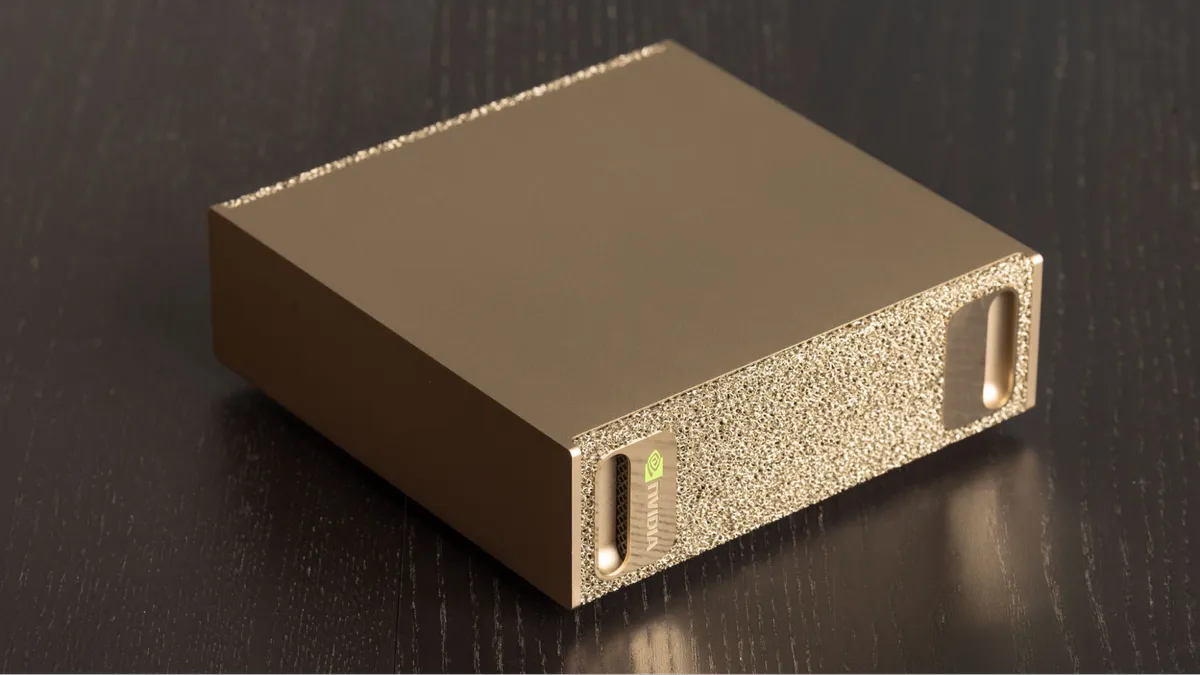
Article continues belowAs a reminder, the N1 and N1X chips are Arm-based SoCs from Nvidia, purportedly featuring up to 20 CPU cores (split across two 10-core clusters) and a rumored RTX 5070-level integrated GPU. CEO Jensen Huang has confirmed that the GB10 Superchip powering the DGX Spark mini-PC is actually based on N1 silicon, so it's already out there... just not with the gaming-focused slant we expect from the N1.
These SoCs are aimed at consumers looking for thin and light devices that can stand toe-to-toe with Apple's MacBook lineup, according to WSJ. The M-series chips in those laptops are also Arm-based and, so far, Microsoft doesn't have a proper answer to those with its Windows-on-Arm initiative. Qualcomm's efforts haven't been able to replicate that level of success, due to both laggardly GPU drivers and spotty compatibility with x86 applications.
Nvidia, of course, is a GPU manufacturer, so irrespective of the Arm CPU cores, we can expect the N1/N1X chips to be targeted at gaming. The company already supplies the chips for the Nintendo Switch 2, but the last time we saw it release a chip to the public was back in 2015 with the Tegra X1 (which also powered the original Switch). Therefore, a return to this segment has been a long time coming. Over the past decade, Nvidia has mainly focused its SoC development at the robotics and automotive markets.
Apart from the N1, Nvidia is also partnered with Intel to develop "Intel x86 RTX SOCs," which would combine Intel's CPU cores with an Nvidia GPU chiplet on a single package. Apart from the architectural differences of x86 versus Arm, this silicon would likely be much more powerful and at least a couple of years out at this point, but the WSJ report still mentions it.
Get Tom's Hardware's best news and in-depth reviews, straight to your inbox.
Following several rumors that touted a 2025 release as early as 2024, we eventually learned that the N1/N1X chips have been pushed back to 2026. It's possible the upcoming Nvidia GTC, planned for March 16-19, is likely the stage where these chips will be unveiled. Pricing will remain a key factor in its prevalence; Jason Tsai of DigiTimes said that "it may remain a niche luxury product" unless it lands around the $1,500 range.

Follow Tom's Hardware on Google News, or add us as a preferred source, to get our latest news, analysis, & reviews in your feeds.

Hassam Nasir is a die-hard hardware enthusiast with years of experience as a tech editor and writer, focusing on detailed CPU comparisons and general hardware news. When he’s not working, you’ll find him bending tubes for his ever-evolving custom water-loop gaming rig or benchmarking the latest CPUs and GPUs just for fun.
-
bit_user Reply
Still got the facts jumbled, on this point.The article said:Nvidia, of course, is a GPU manufacturer, so irrespective of the Arm CPU cores, we can expect the N1/N1X chips to be targeted at gaming. The company already supplies the chips for the Nintendo Switch 2, but the last time we saw it release a chip to the public was back in 2015 with the Tegra X1 (which also powered the original Switch).
ConsoleSoCLaunch DateNintendo SwitchNvidia Tegra X12017-03Nintendo Switch 2Nvidia Orin NX-derived2025-06
Seriously, you can look this stuff up on Wikipedia:
https://en.wikipedia.org/wiki/Tegra#Devices_9 -
Notton Here's hoping N1X isn't another one-off product like the Shield and TV based on said Tegra.Reply
The specs and leaked CPU benchmark numbers look promising, but Nvidia drivers have been on a downward trend ever since they released the RTX 50xx series, and the iGPU portion is based off of that.
Oh, and let's not forget Nvidia partnered with Mediatek on this project. Mediatek drivers are good enough on Android, but on Windows? lol
Likewise, Windows-on-ARM leaves a lot to be desired, though I'm not entirely sure if it's Qualcomm that's dropping the ball or Microsoft... I assume it's the latter, but ya never know.
If it's supported, I'd much rather see how N1X performs on Linux, or Aluminum. -
bit_user Reply
Well, I presume the iGPU interface spec that Nvidia is going to use with Intel CPUs is the same. So, if Nvidia only needs to make one series of iGPUs to sell into both ARM and x86 markets, then it's very likely they'll continue.Notton said:Here's hoping N1X isn't another one-off product like the Shield and TV based on said Tegra.
The specs and leaked CPU benchmark numbers look promising, but Nvidia drivers have been on a downward trend ever since they released the RTX 50xx series, and the iGPU portion is based off of that.
As for Mediatek, what other option does it have, besides Nvidia or ARM's Mali graphics? Maybe they could go back to Imagination Technologies, but that would just put them in the same lot as probably a bunch of Chinese SoCs.
I think Windows/ARM is going to show a lot more maturity than it did when Snapdragon X first launched. Qualcomm is releasing their second gen of those products, so they'll be making another big push to get support shored up.Notton said:Likewise, Windows-on-ARM leaves a lot to be desired, though I'm not entirely sure if it's Qualcomm that's dropping the ball or Microsoft... I assume it's the latter, but ya never know.
If it's the same silicon as GB10, then you already can.Notton said:If it's supported, I'd much rather see how N1X performs on Linux, or Aluminum.
Jeff Geerling tested GB10 on some generic application benchmarks + Linux gaming:
https://www.jeffgeerling.com/blog/2025/dells-version-dgx-spark-fixes-pain-points/
Phoronix did a more comprehensive suite of CPU tests:
https://www.phoronix.com/review/nvidia-gb10-cpu
And GPU tests:
https://www.phoronix.com/review/dell-pro-max-gb10-llama-cpp -
thestryker Reply
The T210, which is the X1, launched with the Shield TV in 2015.bit_user said:Still got the facts jumbled, on this point. -
bit_user Reply
Yes, my table was listing the launch dates of the consoles.thestryker said:The T210, which is the X1, launched with the Shield TV in 2015.
If you want to talk about the SoC's, Orin NX launched in 2022. So, it was even older by the time Nintendo Switch 2 launched than the SoC used by the Switch 1 was, at the time of its launch.
As I've said before, I think Switch 2 probably would've used Atlan, had it not been cancelled. I think that would've been based on the Ada architecture and would've made Switch 2 a fair bit more powerful. The first of the Orin SoCs were announced back in 2018, though I think it didn't ship until 2021. It has already been succeeded by Thor, which is Blackwell-based and launched last year. -
thestryker Reply
I still don't know why a more advanced node wasn't used for the T239 given that the Ada version didn't launch. While the SoC isn't great even dropping to one of the Samsung 5nm nodes ought to have been a huge efficiency improvement.bit_user said:As I've said before, I think Switch 2 probably would've used Atlan, had it not been cancelled. I think that would've been based on the Ada architecture and would've made Switch 2 a fair bit more powerful. -
bit_user Reply
Maybe because that would cost money and Nintendo is cheap? AFAICT all Orin SoC's use Samsung 8 nm, which makes sense if they're based on Ampere (it also used that node).thestryker said:I still don't know why a more advanced node wasn't used for the T239 given that the Ada version didn't launch.
If it's not an optical shrink, then forget it.thestryker said:While the SoC isn't great even dropping to one of the Samsung 5nm nodes ought to have been a huge efficiency improvement. -
thestryker Reply
All of Samsung's 5nm based nodes are quite a bit better than anything based on their 10nm technology so there's no question it'd be a lot better.bit_user said:If it's not an optical shrink, then forget it.
I suspect this is it entirely as nvidia doesn't need the better node for anything they're making based on Orin.bit_user said:Maybe because that would cost money and Nintendo is cheap? -
bit_user Reply
Mine was a point about cost & effort, not the relative merits of the nodes.thestryker said:All of Samsung's 5nm based nodes are quite a bit better than anything based on their 10nm technology so there's no question it'd be a lot better.