Intel's top-end Nova Lake desktop CPU said to devour up to 700W in PL4 — claimed power draw close to double Arrow Lake
Intel might undo the efficiency gains of Arrow Lake.
Get Tom's Hardware's best news and in-depth reviews, straight to your inbox.
You are now subscribed
Your newsletter sign-up was successful
The Arrow Lake refresh expected in March is Intel's upcoming desktop family, but the chipmaker's true next-gen offering will be Nova Lake. Set to debut later this year, it should bring significant architectural improvements, including a bump to 52-core configs and the inclusion of big last-level cache (bLLC) that rivals AMD's X3D, according to rumors. Now, a new leak claims Intel is also planning to drastically increase the maximum power consumption of these chips to 700W.
The power consumption of a full-load NVL-K is over 700 watts.February 10, 2026
Reliable tipster @kopite7kimi reports that the top-end silicon for NVL-K, meaning the unlocked Core Ultra 9 flagship CPU with dual compute tiles, can reach up to 700W for short bursts — likely in its PL4 state. That's power level 4, and it represents the hard electrical limit for Intel CPUs; it's the ceiling you're technically not supposed to hit because it will instantly throttle your processor. PL4 and PL3 aren't enabled out of the box, even on unlocked SKUs.
As a hard limit, PL4 isn't something you'd normally encounter, rather serving as a hard power limit in order to protect the processor when you remove power limits in your BIOS (such as when using the Intel Extreme performance profile). The outgoing Core Ultra 9 285K, based on existing Arrow Lake microarchitecture, has a max power limit of 490W. Pushing the chip to that point voluntarily is not a good idea unless you're into extreme overclocking.
Article continues belowIn worse case scenarios, the CPU can trigger a shutdown to protect the system, but it looks like Intel is designing Nova Lake to ride close to this ceiling anyway. We say that because another leaker, Jaykhin, says that Nova Lake won't allow you to offset TJMax, the maximum safe operating temperature, so you manually force the CPU into running hotter.
TJMax for Arrow Lake is 105 degrees, up from 100 degrees on Raptor Lake, so expect Nova Lake to be around this limit as well. Once TJMax is hit, your CPU starts to thermal throttle to cool itself down, and you also won't be able to disable that behavior in Nova Lake. The "NVL-S" designation in the tweet below refers to the Nova Lake desktop series as a whole.
NVL-S, preliminary (TJMax value).TJMax cannot be offset and thermal throttling cannot be disabled.The thermal sensor can report from -64C to 100C (TJMax) if Negative Temperature Reporting is enabled.February 9, 2026
Moreover, Jaykihn mentions how Nova Lake can even post without the performance cores, solely working on the standard or low-power efficiency cores. We already know this lineup will mark the debut of LP-E cores on desktop, and that they'll be clustered off into their own low-power island. So, now this apparently confirms that the silicon can clock-gate, blocking the clock signal to almost the entire compute complex to save power and run cooler when idling.
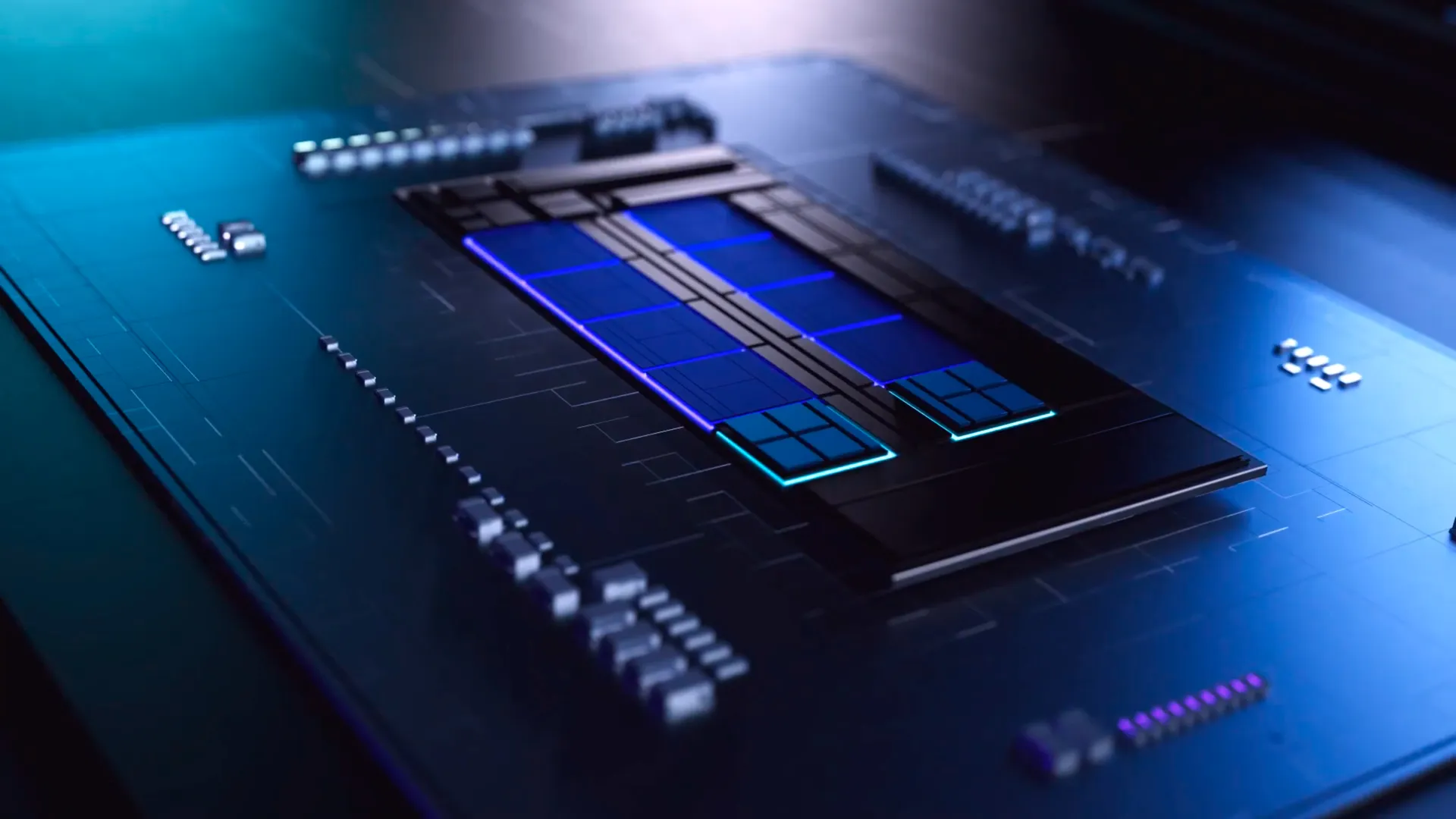
Nova Lake is said to come in two variants: a cut-down version with 28 cores on a single compute tile, and a maxed-out 52-core version split across two tiles. The latter would be a behemoth with 16 P-Cores, 32 E-cores, and 4 LP-E cores, bolstered by up to 288 MB of bLLC cache (128 MB per tile). This chip will go against whatever AMD prepares as the flagship for its pending Zen 6 desktop lineup. When you take all that into account, a 700W PL4 starts to make a lot more sense.
Get Tom's Hardware's best news and in-depth reviews, straight to your inbox.
Although 700W sounds like a lot for a CPU, it's worth reiterating that PL4 serves as a hard power limit, and it's disabled out of the box. The more important numbers are PL1 and PL2, which represent sustained and burst power, respectively.
Previously, leaks have shown us that Nova Lake mobile might be limited to a single compute tile, and even before that, there were even rumors of an insane Strix Halo competitor called "Nova Lake-AX," which have since died down. We know that this family will debut on the new LGA 1954 socket, which is backwards compatible for CPU coolers with LGA 1851 support. That platform will bring 900-series motherboards with it, too, that are currently tipped to launch in late 2026.

Follow Tom's Hardware on Google News, or add us as a preferred source, to get our latest news, analysis, & reviews in your feeds.

Hassam Nasir is a die-hard hardware enthusiast with years of experience as a tech editor and writer, focusing on detailed CPU comparisons and general hardware news. When he’s not working, you’ll find him bending tubes for his ever-evolving custom water-loop gaming rig or benchmarking the latest CPUs and GPUs just for fun.
-
Gururu This is interesting. I suspect that drivers/microcode will power limit the CPU and only those who unlock those limits will see this massive draw. It will be interesting to see if the chip can tolerate it without the integrity issues we see with gen 13/14th. Out of the box, I don't think anyone will need a 2k PSU.Reply -
JRStern The whole thing sounds like a benchmark-beater.Reply
I gather the demand for high-power desktops if very limited. This sounds 1000% over-engineered and not even meant to sell in volume ... unless the game market is expected to line up for it????
Expect to see down-capacity models, half the cores, slower speed, no power issues at all. Then we'll see how they run. Unless there's something in 18a that just drinks power? But Panther Lake doesn't seem to be so thirsty. -
TerryLaze PL4 is the maximum limit for extremely short spikes of 10ms ,it's basically the buffer area for when power goes above the PL3 limit, which itself is basically only a buffer for when power goes above PL2...Reply
PL4 (and 3) are not user adjustable, they are safety limits that the mobo makers should apply to keep their boards from cooking.
PL1 and PL2 are the power limits that the CPU will be "devouring" that amount of.
https://edc.intel.com/content/www/us/en/design/ipla/software-development-platforms/client/platforms/alder-lake-desktop/12th-generation-intel-core-processors-datasheet-volume-1-of-2/004/package-power-control/ -
usertests Reply
Multithreaded performance matters to you, or it doesn't. Few gamers need more than 8+16+4 cores, and if they do it's probably for something else.JRStern said:The whole thing sounds like a benchmark-beater.
I gather the demand for high-power desktops if very limited. This sounds 1000% over-engineered and not even meant to sell in volume ... unless the game market is expected to line up for it????
If Intel is offering 16+32+4 cores for $800, and 8+16+4 with bLLC (big last level cache) for $600, you want the latter or less for gaming.
A PL4 power limit is a red herring. But it's obvious that 52 cores could use a lot of power. -
rluker5 I would hope you can get it to use a lot of power if you want. The big one is supposed to be pretty big.Reply
Cooling is another story though.
I'm sure some will try to push them as hard as they can. That is their choice. -
bit_user Reply
They're all still slotting into a socket about the same size as Arrow Lake, from what I've heard.rluker5 said:The big one is supposed to be pretty big.
Yeah, like don't even bother running the unlocked, dual compute tile version on air.rluker5 said:Cooling is another story though. -
rluker5 Reply
Yeah, but over twice the cores as my 13900kf that can easily use half that power.bit_user said:They're all still slotting into a socket about the same size as Arrow Lake, from what I've heard.
And Thermalright makes some really good AIOs for in the range of $50. I've been using a Thermal Notte 240 for the last few years and it has been great. A 360 might be able to cool 400w and the voltage probably wouldn't even get close to degradation levels on tuned systems to get to 400w. Those base clocks might be a thing for people trying to run stock with a cheap tower cooler.bit_user said:Yeah, like don't even bother running the unlocked, dual compute tile version on air.
But I do have to admit I'm not that excited about this release as my household pcs bottom out at the 13600kf (remember when those were so cheap?) already and that is easily enough to make any GPU I have (9070XT being the fastest) the bottleneck at 4k.
Maybe I will be bored enough that I want to play with it enough to get it? It is a hobby, and while a new bicycle would probably benefit me more, I'm sentimental about the old bike I have. A Nova Lake setup would probably just be for benching, tuning and playing around with the controls. Windows has decent native options for clocks and thread scheduling. I really don't see much personal benefit outside of that. Maybe if reviewers butcher the review by using jedec ram and some half sed AI overclock that just dumps in power at 1.6v and get some surprised Pikachu face when the thing thermal throttles that might goad me a bit.
I really can't see desktop CPU sales being that good for a few years going forward. They have to be a waste of money for the majority of consumers and the amount of time before an upgrade is worthwhile keeps going up. -
bit_user Reply
I've seen Albert's reviews and I still think the performance delta between the locked and unlocked dual-compute die CPUs will be negligible, on any form of air cooling. In a larger socket, it might be a different story.rluker5 said:And Thermalright makes some really good AIOs for in the range of $50.
I grabbed a i5-14600K for $170 at Microcenter. I thought that was a really good deal, until I discovered they sold as cheap as $150 in some of the "black October" online sales!rluker5 said:my household pcs bottom out at the 13600kf (remember when those were so cheap?)
I still have yet to install it, because my system had a weird crash that I was looking into. I might need a new motherboard (ASUS Pro WS W680-ACE), because I doubt it was the PSU (Seasonic Prime TX-750). System didn't bluescreen or fully reboot. Got stuck in some weird state with the fan off, but power LED on. Sleep and hibernation were disabled. Some slight burning smell. And I'm 100% sure there were no loose screws or other objects in the case. Only things plugged into the motherboard were two SSDs.
I want one for APX + AVX-512/AVX10.2.rluker5 said:A Nova Lake setup would probably just be for benching, tuning and playing around with the controls.
You know some will, but at least it'll be DDR5-8000.rluker5 said:Maybe if reviewers butcher the review by using jedec ram -
thestryker While it is what it is the headlines here sometimes drive me nuts: 700W is nowhere near "double" 490W.Reply
Anyways that out of the way I'd be surprised if the dual Compute Tile parts were lower than 350W PL2 and I'd bet on 200W PL1. What I'm most curious about is how the scheduling is going to work on those parts when compared to the single. I'm assuming the two compute tiles will be connected with high speed EMIB like SPR and EMR are so in theory they could prioritize the 16 P-cores. If there isn't a latency penalty that impacts performance I could see gamers potentially buying the top SKU and promptly disabling E-cores (this is assuming bLLC is actually coming to the dual Compute Tile SKUs and the jury is still out on this one).
edit: just read a comment from Jaykihn saying preliminary 400W+ PL2 for performance mode on dual Compute Tile.