









Why you can trust Tom's Hardware Our expert reviewers spend hours testing and comparing products and services so you can choose the best for you. Find out more about how we test.
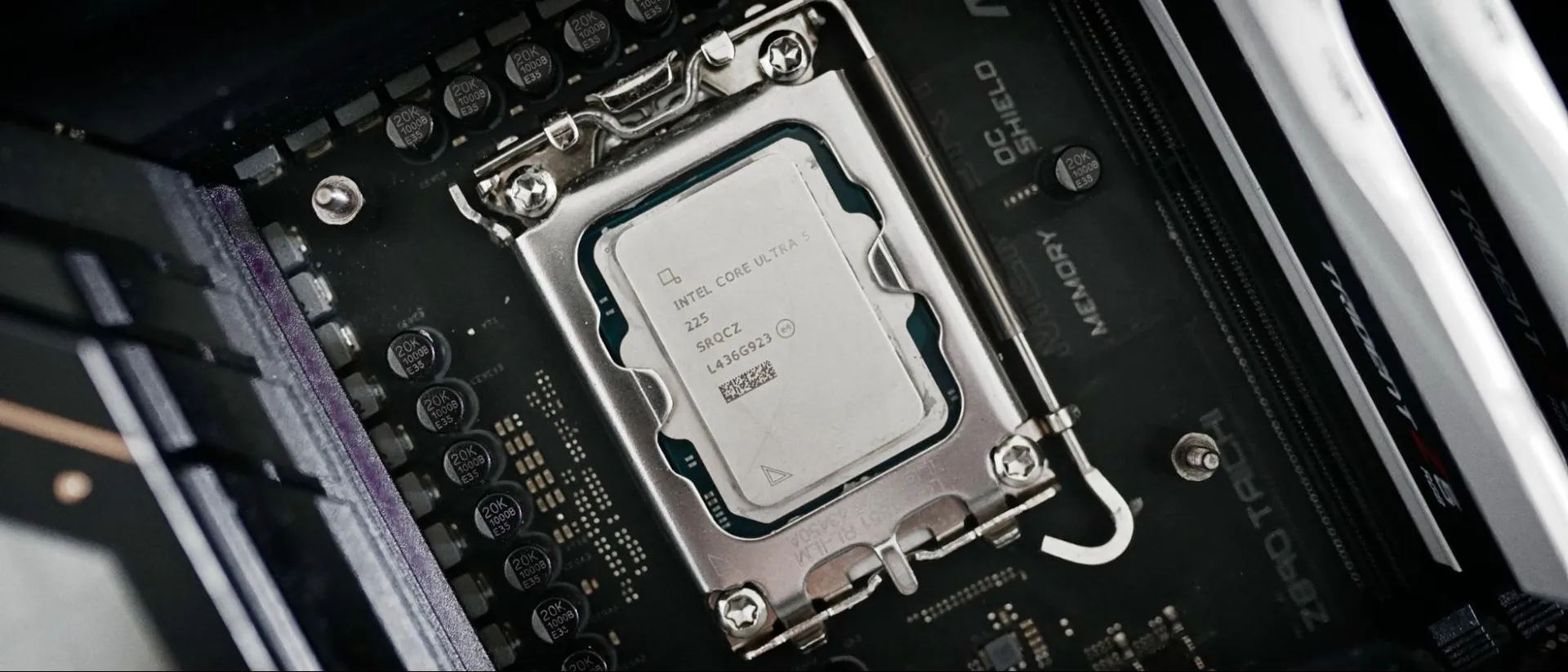
As the lowest-end offering in Intel’s Arrow Lake range — short of the elusive Core Ultra 3 205 — the Core Ultra 5 225 is fairly weak on the productivity front. Despite having access to 10 cores, it’s really the six P-cores that are the main performance driver. Intel is often just a touch behind the Ryzen 5 9600X in multithreaded performance, though Arrow Lake’s impressive single-threaded performance still shines through.
All of our application testing is done with an RTX 2080 FE, though it functions solely as a display output. All compute is running on the CPU. Our single- and multithreaded performance rankings are calculated with a subset of the application tests we run, comprising workloads that are either heavily-threaded or single-threaded. Many workloads fall somewhere in between, so make sure to use the albums below if you’re interested in seeing a particular result.

In our multithreaded rankings, the Core Ultra 5 225 ends up 3.8% behind the Ryzen 5 9600X when they’re both using a 65W TDP. AMD’s chip comes with an optional 105W TDP, which grows the gap to 8.4% between the two chips. Compared to the Core i5-14400 that the 225 replaces, Intel is offering a 16.8% boost, which is a respectable generational leap; a leap that the unlocked Arrow Lake range couldn’t manage, in fact.
Unfortunately, the Core Ultra 5 225 still can’t overcome the stack of LGA 1700 chips from the main Core i5 range. It’s even a few points behind the Core i5-12600K, as well as 24% behind the Core i5-13600K and 29% behind the Core i5-14600K. The 225 is getting hit on two fronts here, not only losing out on the four extra E-cores that these chips all use, but also having a severely limited thermal design.
The elephant in our multithreaded rankings is clearly the Core Ultra 5 250K Plus, however, offering a staggering 86% boost over the 225. At current prices, about $30 to $40 is all that separates these two CPUs, showcasing how much the Core Ultra 5 225 needs a price cut. It’s surprising we haven’t seen the price drop more after the release of the 250K Plus, frankly.
A price cut to around $150 suddenly makes the Core Ultra 5 225 a lot more attractive in multithreaded performance. But given the limited availability of the Core i5-14400, its price has shot up. Around $150, we have chips like the Ryzen 5 7600X and Core i5-12400F, and the Core Ultra 5 225 offers a 21.9% and 53.3% uplift, respectively, compared to those two CPUs.

Although the Core Ultra 5 225 is lackluster in multithreaded performance, the single-threaded prowess of Arrow Lake still comes through, despite limited clock speeds and power. The 225 is able to outclass the Core i5 stack from Alder Lake to Raptor Lake Refresh, and it offers a 15.7% jump over the Core i5-14400. Compared to the Ryzen 5 7600X, the 225 is 22% ahead, though Intel is 1.6% behind the Ryzen 5 9600X in both its 65W and 105W TDPs.
Get Tom's Hardware's best news and in-depth reviews, straight to your inbox.
The higher-end Arrow Lake SKUs still come out on top, with the base Core Ultra 5 245K offering a 5.7% jump, and the Core Ultra 5 250K Plus pushing up to a 7.4% lead. The gap in price between these two chips and the Core Ultra 5 225 is a bit easier to justify when looking at single-threaded performance.
Rendering Benchmarks


View Original
View Original
View Original
View Original
View Original
View Original
View Original
View Original
View Original
View Original
View Original
View Original
View Original
View Original
View Original
View Original
View Original
View Original
Most rendering is heavily-threaded, though we have several rendering benchmarks that focus on a single thread, as well. Starting with the tried-and-true Cinebench 2024, the Core Ultra 5 225 is able to just marginally outclass the Ryzen 5 9600X, though AMD’s chip leapfrogs into a narrow lead with its 105W mode. The 14-core chips unsurprisingly top the charts, with the 18-core Core Ultra 5 250K Plus sitting in first place. The disappointing performance here is against the Core i5-12600K, which comes with the same 6 + 4 configuration as the Core Ultra 5 225, but with the addition of Hyperthreading on the P-cores.
In our single-core Cinebench 2024 rankings, the Ryzen 5 9600X slips into the lead, matching the Core Ultra 5 245K. The Core Ultra 5 225 is marginally behind, though it still managed to outclass the rest of our test pool. Cinebench 2026 offers a near-identical performance picture, with the exception of the 250K Plus in a multi-core render, where that CPU is particularly strong.
Blender is heavily threaded, and it shows a real-world translation of what we can see in the Cinebench multi-core results. The Core Ultra 5 225 is around 5% ahead of the Core i5-14400, depending on the scene, though it falls just shy of the Core i5-12600K and Ryzen 5 9600X.
Intel is able to claim a lead over the 9600X in POV-Ray’s multi-core test, but you can see the results for this benchmark are skewed toward Intel chips, anyway. The 225 leads the 9600X in its 105W mode by 22% in this test, and it beats out the Core i5-14400 by a 26% margin. The 225 also does well in the single-core test from POV-Ray, falling only behind its more expensive siblings in the Arrow Lake stack.
The Core Ultra 5 225 is slightly behind the Core i5-14400 in Corona, only managing to keep pace with the last-gen Ryzen 5 7600X. V-Ray offers another mirror of our Cinebench results, while in C-Ray, we can see the 225 climb into the lead over the 9600X by 27%, coming in just shy of the Core i5-14600K.
Encoding Benchmarks


View Original
View Original
View Original
View Original
View Original
View Original
View Original
View Original
View Original
View Original
View Original
View Original
View Original
View Original
View Original
View Original
View Original
Like rendering, encoding benchmarks factor heavily into our geomean. Most encoders are heavily-threaded, though some, such as the LAME audio encoder, are exclusively single-threaded.
For video, Handbrake is a go-to encoder that slams the CPU, utilizing as many threads as possible. Starting with HEVC, the Core Ultra 5 225 is 10.9% behind the 9600X in its 105W mode and 5.7% behind with like-for-like TDP. There’s a similar situation with x264. Using the newer AV1 codec, the scaling is a bit more dramatic. The 225 is 21.5% behind the 9600X, even when both are running with a 65W TDP. The 225 is 14.6% ahead of the Core i5-1440, though it falls behind by 22.4% and 27.9% compared to the 13600K and 14600K, respectively.
Using Intel’s Scalable Video Technology (SVT) library, the 225 understandably holds up better with video encoding. It offers a 50% jump over the 9600X with the same 65W TDP, though it still isn’t able to outclass the Core i5-13600K and Core i5-14600K. For decoding, the 225 holds up better with AV1 through DAV1D, outpacing the 9600X with its default 65W TDP, though falling behind compared to the 105W mode.
In the single-threaded LAME audio encoder, the 225 is 5.8% slower than the 9600X, though 8.7% ahead of the Core i5-14400. We usually see performance level off with an extended LAME run, though the results are largely similar with this test pool.
Creator App Benchmarks


View Original
View Original
View Original
View Original
View Original
View Original
View Original
View Original
View Original
View Original
View Original
View Original
View Original
In the Adobe suite, the Core Ultra 5 225 holds up, but it doesn’t claim any clear leads over the Ryzen 5 9600X, nor the Core i5-13600K or Core i5-14600K. Starting in Photoshop, Zen 5 chips dominate in this benchmark, so it’s no surprise to see the 9600X about 30% ahead of the 225 here. Intel is still up gen-on-gen compared to the Core i5-14400, though by a smaller 10% margin.
The scales are more balanced in Premiere Pro. The scaling in Premiere is less dramatic overall, but the 225 also manages to gain an edge over the base Ryzen 5 9600X, falling just 1.4% behind when that chip is cranked to 105W. PugetBench looks at both encoding and decoding, though encoding is GPU-accelerated in Premiere Pro.
Another popular multitrack video editor, DaVinci Resolve, shows Intel falling back behind the Ryzen 5 9600X, though without the clear slant toward Zen 5 that we can see in Photoshop. The Core Ultra 5 225 is 4.4% ahead of the Core i5-14400, but I had expected a better placement given the representation of Arrow Lake chips at the top of the stack. There’s a good chance that more power for the 225 would do it well here.
In After Effects, the 225 looks better, offering an 18.7% improvement over the Core i5-14400 and a 23.4% jump over the Ryzen 5 7600X. However, Intel is still behind the 9600X by about 8%, and behind the Core Ultra 5 245K by 12%.
Web and Office Benchmarks


View Original
View Original
View Original
View Original
View Original
View Original
View Original
View Original
View Original
View Original
The Core Ultra 5 225 is better suited for lighter productivity applications. Starting in your browser, WebXPRT 4 shows the 225 7.5% behind the 9600X, though beating both the Core i5-14600K and Core i5-13600K and offering an 18.8% jump over the Core i5-14400. The AI subscore is definitely pulling up the Core Ultra 5 225 in the overall ranking, however, as we can see Intel matching the 9600X when looking at the AI score.
The 225 claims a lead over the 9600X in two apps in the Microsoft Office suite: Outlook and Powerpoint. Excel is the most demanding application here when it comes to raw CPU horsepower, however. The 225 is 7.7% behind the 9600X (at 105W) in Excel, though it offers a large 30% jump over the Core i5-14400, closing in on the higher-end Arrow Lake SKUs.
Chess Engines, Compilation, Compression, AVX, and Other Benchmarks


View Original
View Original
View Original
View Original
View Original
View Original
View Original
View Original
View Original
View Original
View Original
View Original
View Original
View Original
View Original
View Original
View Original
View Original
View Original
View Original
View Original
View Original
View Original
View Original
View Original
View Original
View Original
View Original
View Original
View Original
View Original
View Original
View Original
View Original
View Original
View Original
View Original
View Original
View Original
View Original
View Original
View Original
View Original
View Original
View Original
View Original
View Original
View Original
View Original
View Original
View Original
View Original
Outside of our main benchmark suite, we have a variety of other, more specialized workloads we look at. Many of these workloads are focused more on workstations, and the Core Ultra 5 225 is categorically not a workstation chip. We’ll cover some of the highlights here, mostly skipping over workstation-focused tasks like scientific computing.
In an all-out workload like code compilation, the Core Ultra 5 225 does surprisingly well, matching the 9600X in its 105W mode and offering a sizable 14.7% jump over the Core i5-14400 when building the LLVM stack from source. In chess engines, the Core Ultra 5 225 does poorly in Stockfish 9 and its Assembly port, asmFish, falling behind the 9600X and the stack of unlocked Core i5 chips. In Leela Chess Zero, the 225 does better, even managing to outclass the 9600X running at 105W.
Looking at compression and decompression workloads, the Core Ultra 5 225 is able to keep pace with the Ryzen 5 9600X in 7-Zip compression, though it takes a distant backseat in decompression work. This is an odd trend we see with all Arrow Lake CPUs, in fact. Most chips see higher decompression scores, but with Arrow Lake, it’s the opposite.
In the album above, you’ll also find our results for Geekbench 6 and CPU-Z. These two benchmarks don’t factor into our overall geomean, as they don’t always produce results that are representative of real-world workloads. They are popular benchmarks, however, so we still run them.
SPEC Workstation 4 Benchmarks


View Original
View Original
View Original
View Original
View Original
View Original
View Original
View Original
View Original
View Original
View Original
View Original
View Original
View Original
View Original
View Original
View Original
View Original
View Original
View Original
View Original
View Original
View Original
View Original
View Original
View Original
View Original
View Original
View Original
View Original
View Original
View Original
View Original
View Original
View Original
View Original
View Original
View Original
View Original
View Original
View Original
View Original
View Original
View Original
View Original
View Original
View Original
View Original
View Original
View Original
View Original
View Original
Finally, we have our SPEC Workstation 4 results. These tests are focused solely on workstations, and we already run many of the benchmarks included in the suite. You can browse the results in the album above, but we’re not putting too much weight on the results here for the budget-focused Core Ultra 5 225.
- MORE: Best CPU for gaming
- MORE: CPU Benchmark Hierarchy
- MORE: Intel vs AMD
- MORE: How to Overclock a CPU
Current page: Intel Core Ultra 5 225 productivity benchmarks
Prev Page Intel Core Ultra 5 225 Gaming Benchmarks Next Page Intel Core Ultra 5 225 power consumption, efficiency, test setup
Jake Roach is the Senior CPU Analyst at Tom’s Hardware, writing reviews, news, and features about the latest consumer and workstation processors.