The launch of Nvidia's Vera Rubin platform for AI and HPC next year could mark significant changes in the AI hardware supply chain as Nvidia plans to ship its partners fully assembled Level-10 (L10) VR200 compute trays with all compute hardware, cooling systems, and interfaces pre-installed, according to J.P. Morgan (via @Jukanlosreve). The move would leave major ODMs with very little design or integration work, making their lives easier, but would also trim their margins in favor of Nvidia's. The information remains unofficial at this stage.
Starting with the VR200 platform, Nvidia is reportedly preparing to take over production of fully built L10 compute trays with a pre-installed Vera CPU, Rubin GPUs, and a cooling system instead of allowing hyperscalers and ODM partners to build their own motherboards and cooling solutions. This would not be the first time the company has supplied its partners with a partially integrated server sub-assembly: it did so with its GB200 platform when it supplied the whole Bianca board with key components pre-installed. However, at the time, this could be considered as L7 – L8 integration, whereas now the company is reportedly considering going all the way to L10, selling the whole tray assembly — including accelerators, CPU, memory, NICs, power-delivery hardware, midplane interfaces, and liquid-cooling cold plates — as a pre-built, tested module.
Article continues below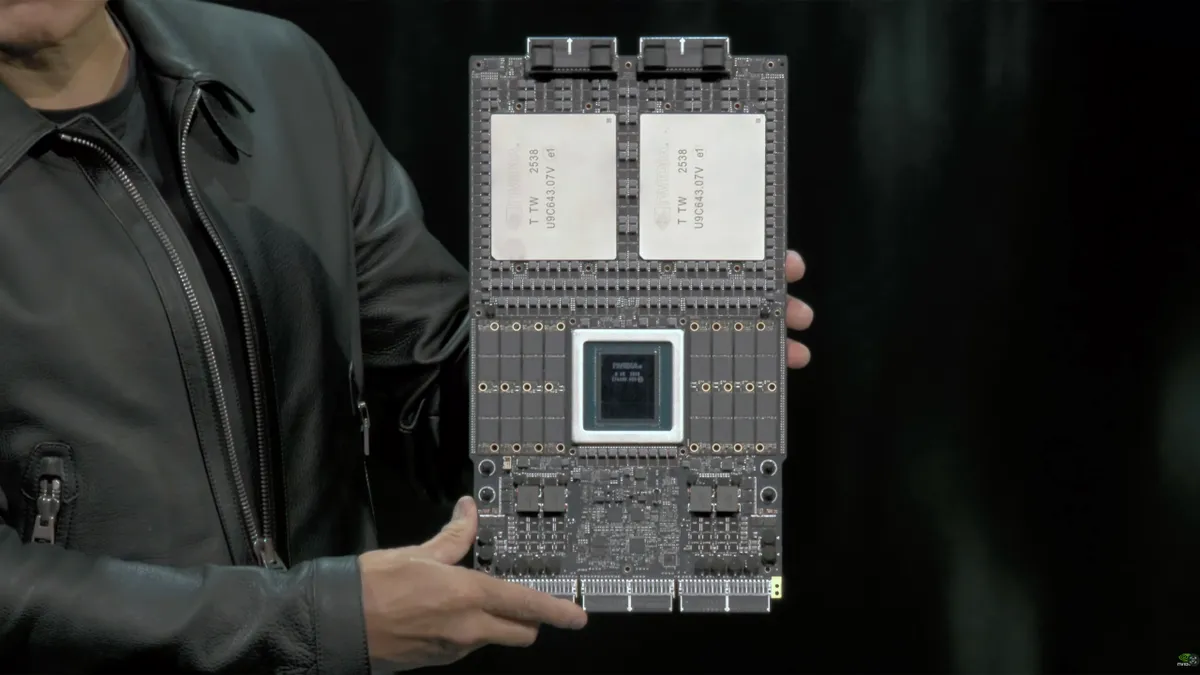

This move promises to shorten the ramp for VR200 as Nvidia's partners will not have to design everything in-house and could lower production costs due to the volume of scale ensured by a direct contract between Nvidia and an EMS (most likely Foxconn as the primary supplier and then Quanta and Wistron, but that is speculation). For example, a Vera Rubin Superchip board recently demonstrated by Jensen Huang uses a very complex design, a very thick PCB, and only solid-state components. Designing such a board takes time and costs a lot of money, so using select EMS provider(s) to build it makes a lot of sense.
J.P. Morgan reportedly mentions the increase in power consumption of one Rubin GPU from 1.4 kW (Blackwell Ultra) to 1.8 kW (R200) and even 2.3 kW (a previously unannounced TDP for an allegedly unannounced SKU (Nvidia declined a Tom's Hardware request for comment on the matter) and increased cooling requirements as one of the motivations for moving to supply the whole tray instead of individual components. However, we know from reported supply chain sources that various OEMs and ODMs, as well as hyperscalers like Microsoft, are experimenting with very advanced cooling systems, including immersion and embedded cooling, which underscores their experience.
However, Nvidia's partners will shift from being system designers to becoming system integrators, installers, and support providers. They are going to keep enterprise features, service contracts, firmware ecosystem work, and deployment logistics, but the 'heart' of the server — the compute engine — is now fixed, standardized, and produced by Nvidia rather than by OEMs or ODMs themselves.
Also, we can only wonder what will happen with Nvidia's Kyber NVL576 rack-scale solution based on the Rubin Ultra platform, which is set to launch alongside the emergence of 800V data center architecture meant to enable megawatt-class racks and beyond. Now the only question is whether Nvidia further increases its share in the supply chain to, say, rack-level integration?

Follow Tom's Hardware on Google News, or add us as a preferred source, to get our latest news, analysis, & reviews in your feeds.