CPU Performance Check: AMD & Intel 1994 To 2003

Opinions on what constitutes "adequate computing speed" vary greatly from one user to the next. While one person may be perfectly content with an old Pentium 133 system that stores stamp club membership details in a DOS program in "real-time mode", there is another group at the other end of the scale - video fans who must have the latest and greatest and who will clamor for more and more Gigahertz and gigabytes. This is an extreme comparison, it's true, but it reflects the broad spectrum of computers in use today and their users' opinions about the adequacy of their systems. With this thought in mind, we have been delving into a subject that occupies the minds of anyone buying a new PC, especially 'upgraders': what performance improvement can be expected when replacing processor X with processor Y? As the entire architecture of the PC (memory, chipset, and platform) has changed over the years, we have tried to present a uniform view under Windows XP.

Runs under Windows XP with 512 MB of RAM: Socket 7 platform with Intel Pentium 100 from 1994. Even an AGP graphics card, the Geforce 4 Ti 4600, works perfectly here.
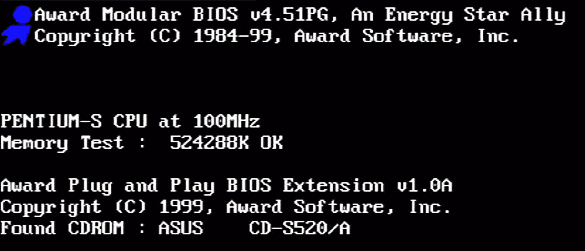
Incredible, but true: Pentium 100 with a maximum of 512 MB SDRAM and 66 MHz system clock.
