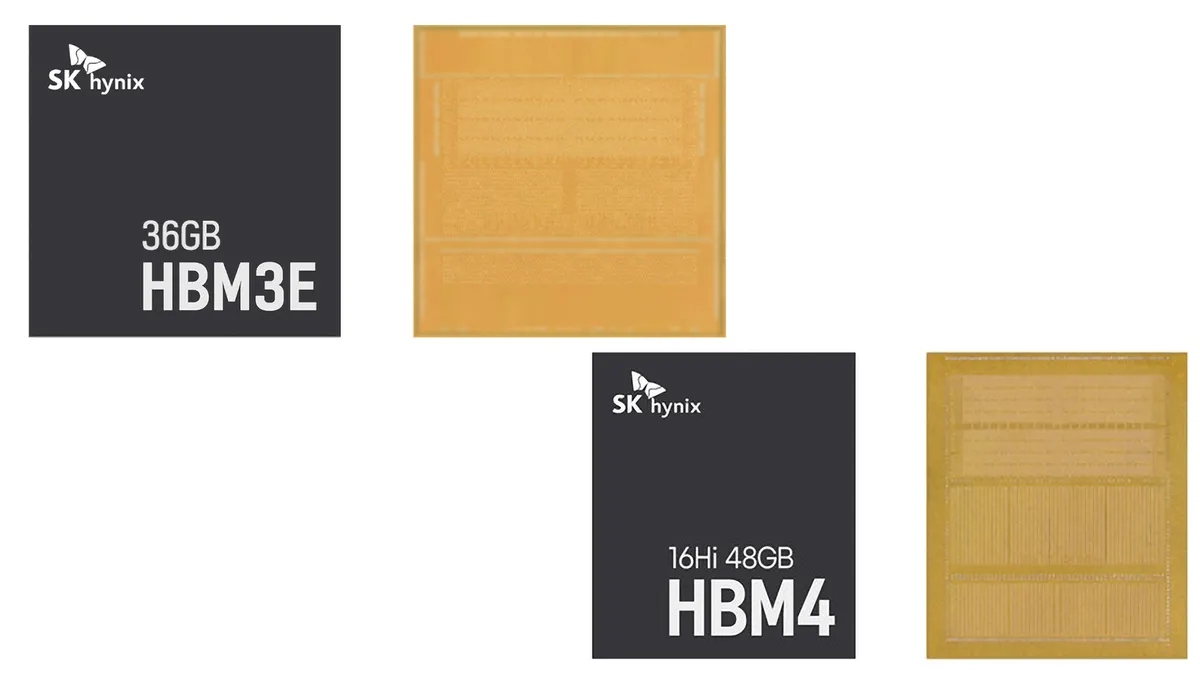
SK Group chairman Chey Tae-won told reporters at Nvidia's GTC conference in San Jose on Monday that the global memory chip shortage is likely to persist for another four to five years, with industry-wide wafer supply lagging demand by more than 20%, Bloomberg reported. Chey, whose conglomerate controls SK Hynix, said leading memory makers are expanding capacity but are unlikely to fully meet demand until around 2030 because securing additional wafers takes at least four to five years, according to The Korea Times.
Chey warned that excessive focus on high-bandwidth memory could lead to shortages in conventional DRAM, potentially affecting smartphones and PCs. SK Hynix, Samsung, and Micron have shifted production in recent years toward HBM for AI accelerators, and the resulting shortfall in conventional DRAM output has driven steep price increases across consumer electronics.
SK Hynix holds roughly 57% of the global HBM market and 32% of overall DRAM, and the company is currently building a $13 billion HBM packaging and testing facility at its Cheongju complex in South Korea, with construction scheduled to begin next month and completion targeted for the end of 2027.
Samsung, meanwhile, is expanding DRAM capacity at its Pyeongtaek campus, with its P5 facility expected online by 2028. Micron is also planning a $9.6 billion HBM facility in Hiroshima, but initial output is not expected until 2028 either. Nearly all new capex is going toward HBM lines, where margins are highest.
Chey said SK Hynix is preparing measures to help stabilize DRAM prices, and that CEO Kwak Noh-jung is expected to announce a plan soon. He didn’t elaborate on what those measures would involve, though.
Gartner on February 26 projected global PC shipments will fall 10.4% and smartphone shipments 8.4% in 2026 compared to 2025 levels, driven by what the firm estimates will be a 130% surge in combined DRAM and SSD prices by the end of the year.
This, Gartner says, will lead to price increases of 17% among PCs year-over-year, leading to PC lifetimes extending by 15% for business users and 20% for consumers by the end of 2026, with the entry-level market facing the worst of it.
Stay On the Cutting Edge: Get the Tom's Hardware Newsletter
Get Tom's Hardware's best news and in-depth reviews, straight to your inbox.
Luke James is a freelance writer and journalist. Although his background is in legal, he has a personal interest in all things tech, especially hardware and microelectronics, and anything regulatory.
Totally sane and normal and good that we live in a world where companies are allowed to just suddenly abandon consumers to focus on making maximum profit off a technology nobody really wants or has found a real use for, leaving consumers stuck to try to pick through the ashes at skyrocketing prices.
A more consumer friendly President would use the Defense Production Act to force Micron to make only DRAM instead of HBM to help
Also, an announcement like this seems like it’s designed to provoke one reaction: “Oh no! I was going to try to wait it out before buying that 64GB RAM upgrade! Looks like there’s no chance of that now. I better fork over my $1000 before things get even worse! Maybe it’ll turn out that I even got a “bargain”! Boy am I lucky!”
Just big business being its usual scummy, slimy, repulsive, disgusting self. Btw wasn’t there an article that just came out saying how the chip shortage wasn’t predicted to last as long as previously thought so the dynamic duopoly decided not to increase production?
Situations like this are what government regulations are for.
Seems like bull.
Any industry seeing exceptional demand for a long-period, immediately works to increase production. As demand tapers to a new norm, the surplus drives down prices.
Clearly, DRAM manufacturers never want to see the price driven back down, and are refusing to grow production to meet long-term demand.
Chey said SK Hynix is preparing measures to help stabilize DRAM prices, and that CEO Kwak Noh-jung is expected to announce a plan soon. He didn’t elaborate on what those measures would involve, though.
Oh, I have an idea for how to stabilize prices! How about you put a purchase cap on large orders from businesses so that you don't dedicate you entire wafer production FOR THE NEXT FOUR YEARS to one or two clients, who are using it for a technology that has still not made a profit??????
I don't get how you people get angry every time some tech product's price inflates.
Like you deserve and were promised what you want for cheap.
To me it looks like kids ranting.
You were lucky and now you're not.