AMD announced today that it has identified the source of an fTPM-induced system stuttering issue on Ryzen systems and had issued a BIOS fix to motherboard makers. However, the BIOS updates will take some time to make their way to market, with the first arriving in May 2022. In the interim, AMD has also advised using a 'workaround' that employs a discrete TPM key instead of the in-built version inside the processor. Notably, that isn't an option for all systems, especially laptops.
AMD has remained silent on this issue for months, but widespread reports indicate that AM4 Ryzen systems have long been plagued with system stuttering associated with enabling the fTPM (firmware trusted platform module) feature. As a reminder, TPM functionality is a not-strictly-enforced security requirement for Windows 11, but it is also present in Windows 10. The fTPM is a security mechanism available with AMD processors that removes the need for a separate discrete TPM device. Both the fTPM and discrete TPM are designed to accomplish the same goal — store an unchangeable security key, thus enabling a higher level of security. However, the different approaches store the key in different locations.
The fTPM key resides in the SPI flash memory that's present on the motherboard (commonly referred to as a BIOS chip). AMD says the fTPM issue involves intermittent latency introduced by fTPM-related memory transactions with the chip, leading to "temporary pauses in system interactivity or responsiveness." The issue impacts AM4 systems that run the Zen+ to Zen 3 architectures.
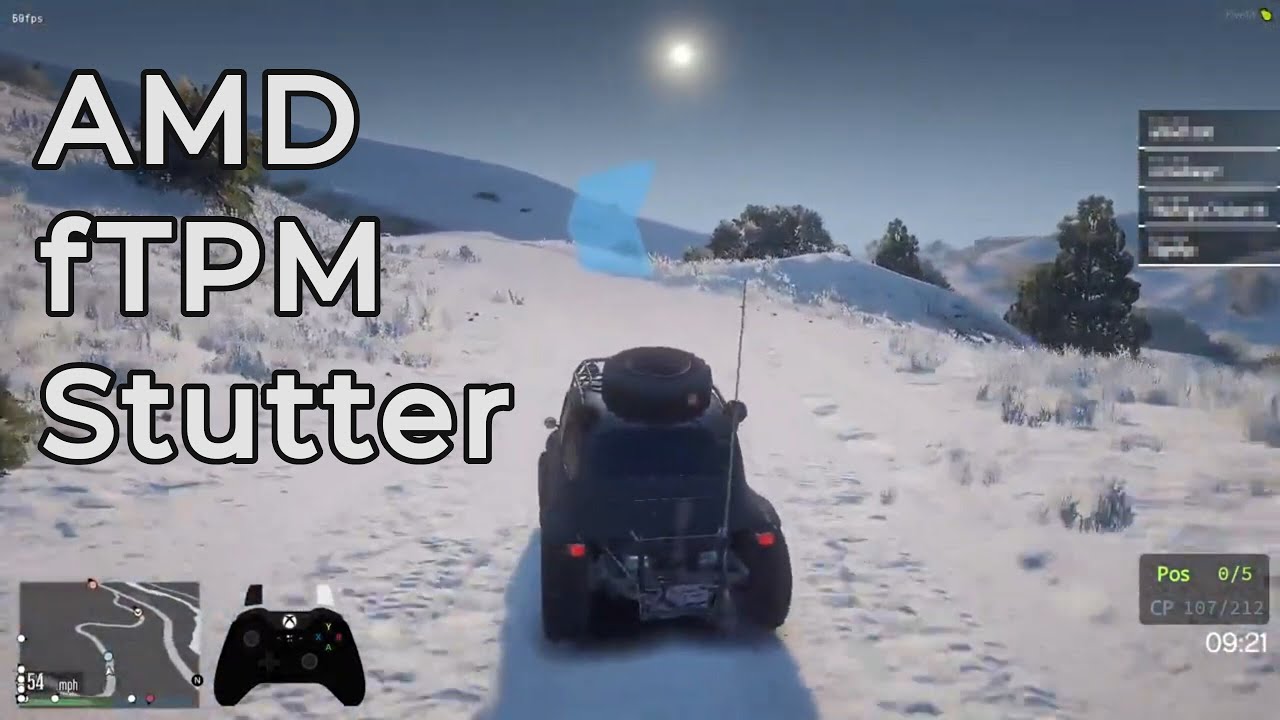
AMD's fTPM issues impact both Windows 10 and Windows 11 Ryzen systems, with the typical side effect being random stuttering and lagging that lasts one to two seconds. These periods occur multiple times per day during all manner of workloads, including gaming. They manifest as jerky performance on the screen and interrupted and garbled audio, application hangs, and mouse cursor hitching during the system stutters (you can see an example in the short clip below).
Most users have simply disabled the TPM requirement in Windows 11 to circumvent the issue, but now AMD has fixes coming via motherboard firmware updates (UEFI/BIOS). Those fixes (AGESA 1207 or newer) will take some time to arrive through the normal support channels. As such, AMD also notes that you can simply disable the fTPM feature in the processor and use a discrete TPM device instead. You will need to follow very specific measures during that process to ensure that you don't lose any encrypted data. These devices can be costly, with pricing varying between $20 and$170.
Here are the details in AMD's freshly-issued support document:
This documentation provides information on improving intermittent performance stutter(s) on select PCs running Windows 10 and 11 with Firmware Trusted Platform Module (“fTPM”) enabled.
Issue Description
AMD has determined that select AMD Ryzen system configurations may intermittently perform extended fTPM-related memory transactions in SPI flash memory (“SPIROM”) located on the motherboard, which can lead to temporary pauses in system interactivity or responsiveness until the transaction is concluded.
Update and Workaround
Update: Affected PCs will require a motherboard system BIOS (sBIOS) update containing enhanced modules for fTPM interaction with SPIROM. AMD expects that flashable customer sBIOS files to be available starting in early May, 2022. Exact BIOS availability timing for a specific motherboard depends on the testing and integration schedule of your manufacturer. Flashable updates for motherboards will be based on AMD AGESA 1207 (or newer).
Workaround: As an immediate solution, affected customers dependent on fTPM functionality for Trusted Platform Module support may instead use a hardware TPM (“dTPM”) device for trusted computing. Platform dTPM modules utilize onboard non-volatile memory (NVRAM) that supersedes the TPM/SPIROM interaction described in this article.
COMPATIBILITY: Please check with your system or motherboard manufacturer to ensure that your platform supports add-in dTPM modules before attempting or implementing this workaround.
WARNING: If switching an active system from fTPM to dTPM, it is critical that you disable TPM-backed encryption systems (e.g. BitLocker Drive Encryption) and/or back up vital system data prior to switching TPM devices. You must have full administrative access to the system, or explicit support from your IT administrator if the system is managed. For more information on transferring ownership to a new TPM device, please visit this Microsoft webpage.
We had previously reached out to both AMD and Microsoft about the fTPM matter, and both firms told us they were investigating the issues. We're following up with AMD for more information about the scope of the impacted systems. Stay tuned.
Stay On the Cutting Edge: Get the Tom's Hardware Newsletter
Get Tom's Hardware's best news and in-depth reviews, straight to your inbox.
I don't think I've noticed this with any of my systems with it enabled, but I guess it's good it's getting fixed.
On my systems a hardware TPM would not be possible, because the geniuses that designed them put the hardware TPM right below the video card slot and hardware TPMs are tall as hell.
AMD systems are pretty brutal with USB devices powering down on non high performance settings at the OS, but that's a me being power-conscious issue.
I don't think I've noticed this with any of my systems with it enabled, but I guess it's good it's getting fixed.
On my systems a hardware TPM would not be possible, because the geniuses that designed them put the hardware TPM right below the video card slot and hardware TPMs are tall as hell.
AMD systems are pretty brutal with USB devices powering down on non high performance settings at the OS, but that's a me being power-conscious issue.
I upgraded to win 11 when it went public and since i do not have a TPM module i used the fTPM and all seemed fine and no issues it was not till months later that the stuttering started and i suspect it started after a windows update that probably changed how windows interacts with the TPM, but ever since then I have been getting random stutters several times a day and when it first happened i shrugged it off as a random thing but the more it happened it started to worry me as it was ether something compromised my PC or failing hardware but yeah a long google and linked it to fTPM, its frustrating that Microsoft are enforcing it as a requirement even if you do not use drive encryption.
I might invest in a TPM module to make the issue go away as they are only about £20 as I do not think Asus will be in any hurry to push out a new bios for the ROG STRIX B350-F GAMING, also about the location of your TPM pins well thats really silly but also if i remember correctly you can get an extension cable to plug it in and relocate it
The best of the best solution now is to stick with windows 10......
I feel unless one is using Alder Lake CPU, there is little to no reasons to use Win 11. To most users, they may not see any tangible benefits from the move to Win 11 besides the cosmetic changes.
The best of the best solution now is to stick with windows 10......
Yeah, there seem to be too many people willing to beta test Microsoft's updated OS right after it launches, then wondering why things don't work properly. It's probably a good idea to wait at least a year or so after the official launch for most of the glaring issues to get ironed out before installing it on any regularly-used system.
As it is, I don't really see much benefit in using Windows 11 at this point. No software requires it. Performance improvements and regressions seem like a mixed bag. It doesn't add any must-have, or even notable features. And a lot of the changes it does make to the UI seem to be widely disliked. It's pretty much just Windows 10 mostly covered with a new coat of paint that is not quite finished and still in need of some drying time.
I suppose if someone is building a new system, and doesn't want to reinstall their OS later it might be reasonable to go with Windows 11 from the start, particularly if they are building it around the new Intel CPUs that don't support prior OSes quite as well, but it doesn't make as much sense to install it on an existing system.
Speak of the devil. I've been scratching my head with this problem last night, ended up disabling TPM altogether. The PC kept crashing, stuttering, sometimes the screen would go black when idle. And whenever that happens, Event Viewer shows something in the tune of "certificate authentication failed". The fact the fix comes later in May is somewhat of a bummer, but at least we know a fix is coming.
escksu said:
The best of the best solution now is to stick with windows 10......
I don't think I've noticed this with any of my systems with it enabled, but I guess it's good it's getting fixed.
On my systems a hardware TPM would not be possible, because the geniuses that designed them put the hardware TPM right below the video card slot and hardware TPMs are tall as hell.
AMD systems are pretty brutal with USB devices powering down on non high performance settings at the OS, but that's a me being power-conscious issue.
I've had fTPM enabled on Win 10 since I built this system in fall 2020 and haven't had any issues nor have I had any USB issues .... My wireless mouse dropped on me twice but twice in over a year seems normal Windows glitching and unplugging and plugging it back immediately resolved the issue
I've had fTPM enabled on Win 10 since I built this system in fall 2020 and haven't had any issues nor have I had any USB issues .... My wireless mouse dropped on me twice but twice in over a year seems normal Windows glitching and unplugging and plugging it back immediately resolved the issue
It's not so much a USB issue, it's just that I have balanced power settings, with turn off unused USB devices, and unlike Intel systems, it does turn off the devices when unused, which kinda surprised me, as a former long time Intel user.
I been getting this once a week for a few months, just ignoring it for most part until I recently decided to try to fix it. Now I see I just wait for a BIOS update.
Win 10 isn't finished, it never will be, so I guess all the people here saying win 11 is beta must be on win 7 still?