Back in 2021, the internet briefly lost its collective mind over a very particular headline: rats had been trained to play Doom — specifically, Doom II. Four years later, the project is back with a substantial update, and this time it's less of a novelty and more of something that actually resembles gameplay. Kind of. Especially now that an added trigger mechanism allows the rats, which see their way around the game with new wraparound AMOLED screens, to shoot.
The project, led by neuroengineer Viktor Tóth, has evolved into a second-generation setup that significantly expands what the rats can do inside the Doom engine. The original version used a clever but limited configuration: rats stood in a harness over a freely rotating ball, with forward movement mapped to movement through a simplified Doom II corridor. Rewards came in the form of sweetened water dispensed when the rat performed the desired action. It worked, but only that; there was no real interaction with the game's mechanics, so calling it "playing Doom" was overstating the case a bit.
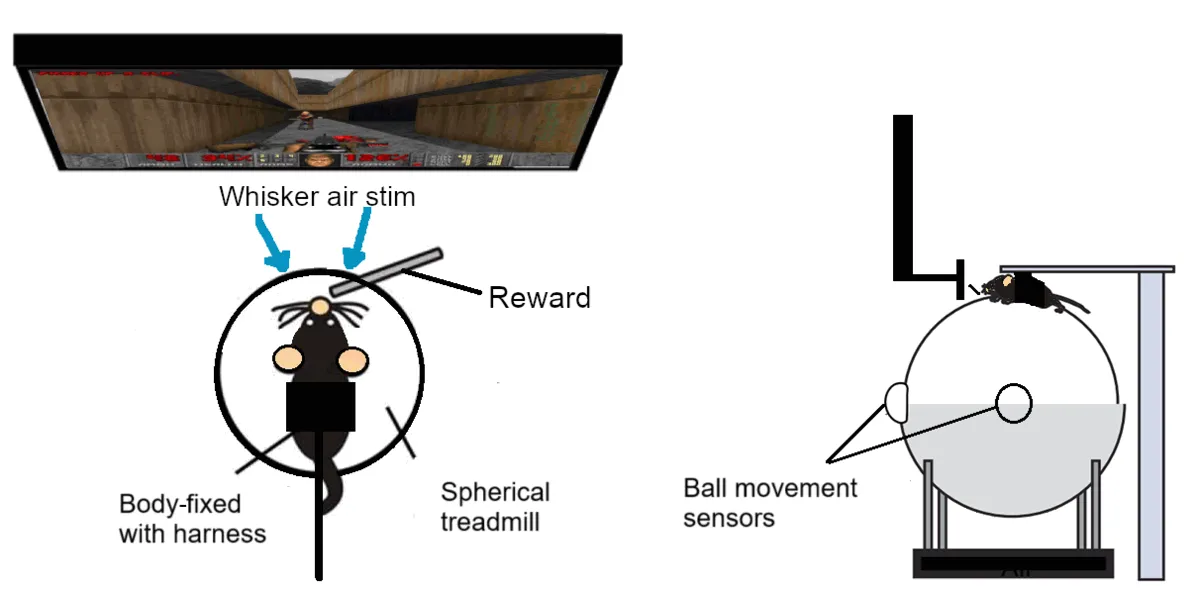
The new version changes that equation. The updated rig still maps real-world rat movement into a virtual Doom environment, but it now supports more complex navigation and additional inputs. The visual system has been upgraded to a curved AMOLED display that wraps around the rat's field of view, providing a much more immersive and consistent visual environment than the earlier flat screens. To provide the animals with spatial feedback, the system uses targeted, gentle air puffs delivered to the rat's snout to indicate wall collisions — essentially a non-invasive way to tell the rat "you walked into something" without relying on trial-and-error alone.

More importantly, the system now allows rats to shoot. A physical trigger mechanism lets the animals activate Doom's fire input, meaning they're no longer just moving through the game, but interacting with it in a way that directly maps to classic FPS controls. It's still a far cry from tactical demon slaying, but mechanically speaking, the rats are now performing multiple discrete in-game actions.
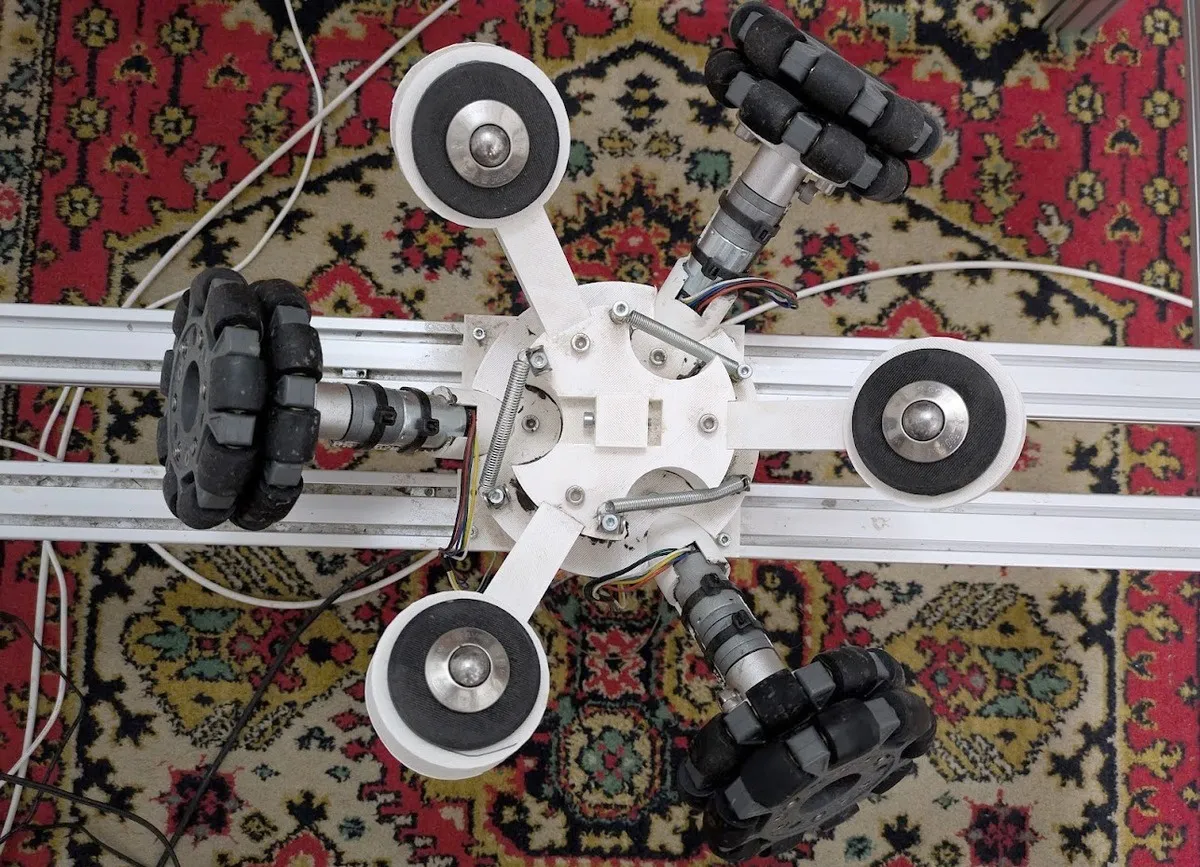
To be clear, none of this involves invasive neural interfaces. The entire system relies on external sensors, motion tracking, and reward-based learning. The rats' physical movements are translated into standard Doom inputs, and correct behaviors are reinforced through the reward system. From a hardware perspective, this remains a hacker-friendly, open-source setup rather than a sealed, bespoke lab instrument.
That distinction matters because this project has never really been about proving that rats understand Doom in any human sense. The update doesn't suddenly mean rodents grasp level design, enemy behavior, or objectives. What it demonstrates is that the technical platform has matured enough to support richer interactions. The rats can now perform multiple distinct in-game actions, and the system can reliably evaluate and reward those actions, so the limiting factor is no longer the hardware or software. Instead, it's training time and experimental design. Teaching an animal to associate specific physical behaviors with abstract outcomes inside a virtual space is slow, and scaling that training takes patience. The updated system opens the door to more ambitious experiments than the original build could support.
The rats still aren't speedrunning E1M1, but the project has clearly moved beyond a one-off stunt. The update shows real technical progress, and it hints at future experiments that could use game engines as standardized, low-cost virtual testbeds. Doom, once again, refuses to die, and indeed, the Doom engine is doing a lot of quiet heavy lifting here. Its lightweight engine, trivial moddability, and decades-long history of running on almost literally anything make it an ideal virtual environment for this kind of work. What looks like a joke on the surface is really a practical choice: Doom provides a controllable, well-understood 3D world that can be bent to experimental needs without reinventing a game engine from scratch.
Ultimately, from a scientific perspective, the appeal is less about rats fragging demons and more about what this says about accessible experimental platforms. This is consumer-grade hardware, open software, and a lot of clever engineering being used to explore how animals interact with virtual environments. That same approach should be familiar to PC hardware enthusiasts: take existing tools, push them to absurd extremes, and occasionally stumble upon something genuinely worthwhile.

Follow Tom's Hardware on Google News, or add us as a preferred source, to get our latest news, analysis, & reviews in your feeds.