With DDR5 pricing increasing seemingly daily, some gamers are flocking to older platforms that support older memory types to escape the DRAM shortage, even going as far back as rebuilding old DDR3-supported platforms. RandomGaminginHD, aware of this problem, published a video benchmarking Intel's now ancient Core i7-4790K paired with 32GB of DDR3 memory, to see how a system like this would perform in 2026. Despite its age, he found the old Haswell quad-core was capable of playing several modern AAA games today at 60 FPS.
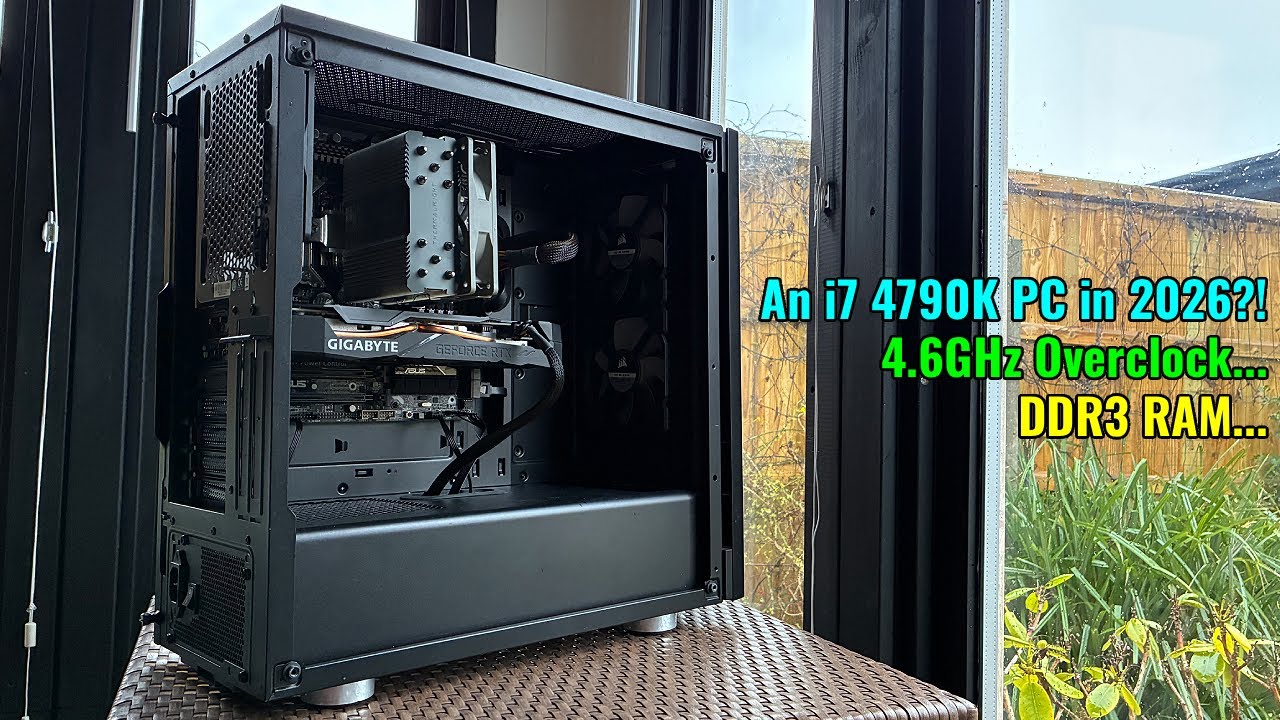
The full system included an i7-4790K overclocked to 4.6GHz, 32GB of DDR3 running at 1866 MHz, an Asus Z97 motherboard, and an RTX 2060 Super. The YouTuber claimed that he bought 32GB of DDR3 RAM for just $40 worth, which is almost a third of the price compared to what a single 4800MT/s 8GB DDR5 stick costs today.
The YouTuber ran the i7-4790K powered setup in eight modern titles: Baldur's Gate 3, Battlefield 6, Counter-Strike 2, Cyberpunk 2077, Fortnite, GTA 5 Enhanced, Kingdom Come Deliverance 2, and Red Dead Redemption 2. Baldur's Gate 3 ran at 57.9 FPS average, Battlefield 6 - 69.7 FPS average, Counter-Strike 2 - 117.9 FPS average, Cyberpunk 2077 - 59.8 FPS average, Fortnite - 115.2 FPS average, GTA 5 Enhanced - 69.6 FPS average, Kingdom Come Deliverance 2 - 72.2 FPS average, Red Dead Redemption 2 - 72.3 FPS average. All games were benchmarked at medium settings and 1080p resolution, except for a couple of the lighter games (such as GTA V Enhanced), which were run at higher settings. DLAA was also engaged for most of the games to take advantage of the extra GPU headroom available since the 4790K was bottlenecking the 2060 Super.
Article continues belowGames | FPS (avg) | FPS (1% lows) | Graphics Settings, Resolution |
Baldur's Gate 3 | 57.9 | 31.7 | High, 1080p, DLAA |
Battlefield 6 | 69.7 | 46.2 | Medium, 1080p DLAA |
Counter-Strike 2 | 117.9 | 50.4 | High, 1080p, 4x MSAA |
Cyberpunk 2077 | 59.8 | 35.4 | High preset, high textures, medium crowds, 1080p |
Fortnite | 115.2 | 41 | Medium, 1080p, TAA |
GTA V Enhanced | 69.6 | 50 | Very High RT, 1080p, DLAA |
Kingdom Come Deliverance 2 | 72.2 | 43.4 | High, 1080p, SMAA 2TX |
Red Dead Redemption 2 | 72.3 | 51.7 | Ultra Textures, all else medium, TAA medium, 1080p |
RandomGamingInHD's benchmarks prove that hardware from 12 years ago can still provide a playable gaming experience, even on modern AAA games, as long as you have an adequate GPU installed. Granted, the 1% lows leave much to be desired, but lowering graphics settings further would help alleviate this problem (at least partially).
The best part is that a system like this is relatively affordable given today's memory pricing. If you want to build a system with these specs, you can find used i7-14790Ks for as little as $60-$80, and a lower-trim RTX 2060 Super 8GB for as little as $150 on eBay. Used DDR3 memory is also ridiculously cheap on eBay, with a set of four 8GB sticks (32GB total) costing around $70 - $120. Counting a Z97 motherboard, cheap SSD, case, and PSU, you likely could build a full-blown 4790K/2060 Super gaming PC from scratch for less than $600 using used parts. For perspective, that's less money than what a 64GB DDR5 dual-channel kit costs today.
A system like this might be the only way many PC gamers on a strict budget can get into the PC gaming world if they don't already own a decent system. DDR5 prices aren't expected to go down until 2028, and even then, prices aren't guaranteed to drop quickly.