SK hynix introduces turbocharged LPDDR6, 33% faster and 20% more power efficient than LPDDR5X — 16Gb chips deliver 10.7 Gbps, uses 10nm node

SK Hynix LPDDR6
(Image credit: SK Hynix)

SK Hynix has announced the successful development of its first LPDDR6 DRAM, touting 33% greater speed and 20% better power efficiency compared to previous generation LPDDR5X memory. The memory manufacturer also announced that it has developed its LPDDR6 memory on its leading-edge 10nm-class (1c) process node that it announced in 2024.
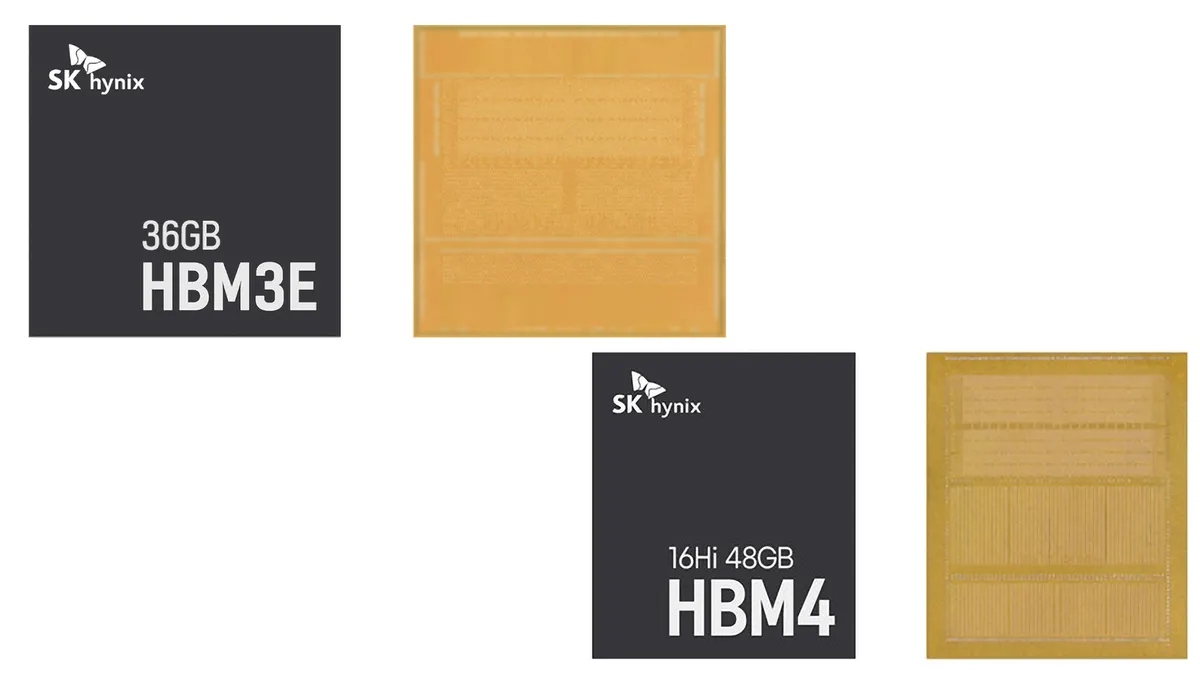
SK Hynix has announced its LPDDR6 eight months after JEDEC finalized and published the LPDDR6 standard last July. However, SK Hynix is not the first manufacturer to make LPDDR6; Samsung already announced its first LPDDR6 product and showcased it at CES 2026, with speeds up to 10.7Gbps.

Article continues below

SK Hynix has confirmed that its 1c LPDDR6 will be used in smartphones and tablets, but we can also expect LPDDR6 to be a huge boon in the datacenter market. LPDDRX has been very popular in AI servers that take advantage of SOCAMM/SOCAMM2 memory modules that only support LPDDR memory. For instance, Nvidia's GB300 Grace Blackwell Ultra Superchip uses SOCAMM, and Nvidia's latest Vera Rubin Superchip uses SOCAMM2 memory modules. Late last year, SK Hynix stated that it expects post-Vera Rubin Nvidia AI chip designs to take advantage of LPDDR6.

This is just the beginning for LPDDR6; speeds well beyond 10.7Gbps are expected to become the norm as memory makers get to grips with optimizing and improving on their LPDDR6 designs. The JEDEC group believes that LPDDR6 will have data rates of up to 14,400 MT/s, which is well beyond what the fastest DDR5 overclocking record holds.

Google Preferred Source

Follow Tom's Hardware on Google News, or add us as a preferred source, to get our latest news, analysis, & reviews in your feeds.

TOPICS
Aaron Klotz
Contributing Writer

Aaron Klotz is a contributing writer for Tom’s Hardware, covering news related to computer hardware such as CPUs, and graphics cards.

  • bit_user
    I'd love to read a deep dive on LPDDR6 by Anton! Seems like some interesting details are buried in there.

    I've noted LPDDR memories becoming a lot more relevant to mainstream & server computing as the years go by, and only expect this to continue. LPDDR5 went from hardly being on my radar to being a subject of intense interest, as Apple used it in their M-series SoCs, Nvidia is using it in Grace and Vera server CPUs, and AMD's Ryzen AI Max (Strix Halo) and Nvidia's GB10/N1X are using it in client machines.
    Reply
  • Notton
    DDR5: 2x32-bit= 64-bit
    DDR6: 4x24-bit= 96-bit

    So, if my math is right, dual channel (192-bit) LPDDR6 10700 = 256GBps?
    That would match quad channel LPDDR5 8000

    Is a 192-bit LPDDR6 memory controller smaller than a 192-bit LPDDR5 controller?
    (Snapdragon X2 Elite has a 192-bit LPDDR5X mem controller running on 9523MT/s)

    How likely are we going to see LPDDR6 10700 or faster in phones, tablets, and laptops at launch?
    I see LPDDR6 has a slower standard at 9600, barely better than LPDDR5X, and I can only hope to never see that used in mainstream and high end products.
    Reply
  • usertests
    Notton said:
    How likely are we going to see LPDDR6 10700 or faster in phones, tablets, and laptops at launch?
    I think we'll see it in phones first. And the star of the show, especially for the initial wave of products, is the increased power efficiency, even if you get "slow" LPDDR6-9600.
    Reply
  • thestryker
    Notton said:
    How likely are we going to see LPDDR6 10700 or faster in phones, tablets, and laptops at launch?
    Samsung already has LPDDR5X-10700 so I'd guess it will be depending on AI demand. I'd expect phones/tablets would want LPDDR6 immediately no matter what speed since many use 64-bit interfaces now so even LPDDR6-9600 would be ~35% more bandwidth than LPDDR5X-10700.
    Notton said:
    Is a 192-bit LPDDR6 memory controller smaller than a 192-bit LPDDR5 controller?
    (Snapdragon X2 Elite has a 192-bit LPDDR5X mem controller running on 9523MT/s)
    I wouldn't really expect a whole lot to change here because the overall width is still the same. The packaging differences are likely to be the biggest thing to impact designs. We'll have to wait and see what the memory controllers for CPUs using LPDDR6 end up looking like though.
    Notton said:
    So, if my math is right, dual channel (192-bit) LPDDR6 10700 = 256GBps?
    That would match quad channel LPDDR5 8000
    Pretty much, yes.
    Notton said:
    I see LPDDR6 has a slower standard at 9600, barely better than LPDDR5X, and I can only hope to never see that used in mainstream and high end products.
    The part that should be most concerning about LPDDR6 is the potential for getting 96-bit interfaces where we would have seen 128-bit in the past (LPDDR6-10700 @ 96-bit is roughly LPDDR5X-8000 @ 128-bit).
    Reply
  • bit_user
    Notton said:
    DDR5: 2x32-bit= 64-bit
    The LPDDR5 standard supports both 16-bit and 32-bit channels.

    Notton said:
    DDR6: 4x24-bit= 96-bit
    No, I think we don't know that. The DDR6 standard is yet to be published and you can't assume DDR5 will exactly copy what LPDDR6 did.

    Notton said:
    I see LPDDR6 has a slower standard at 9600, barely better than LPDDR5X, and I can only hope to never see that used in mainstream and high end products.
    The parties involved in these specs include the world experts in DRAM and how to scale performance, efficiently. Each new generation of DDR tends to start out at higher latencies than its predacessor, but can overcome that deficit with maturity. More importantly, each new standard version came about because the existing one ran out of gas, when it comes to bandwidth scaling, and especially if you don't want to sacrifice too much efficiency in the process.
    Reply