Overclocking III - Quad-Core Q6600 At 3.30 GHz
We hit our Core 2 Quad Q6600's limit after reaching a very respectable overclock of 37.5%. On the downside, we had to increase the core voltage even further in order to reach this speed. In the end, our CPU was being fed a core voltage that was 0.1500 Volts over its stock setting of 1.3125 V to maintain stability.
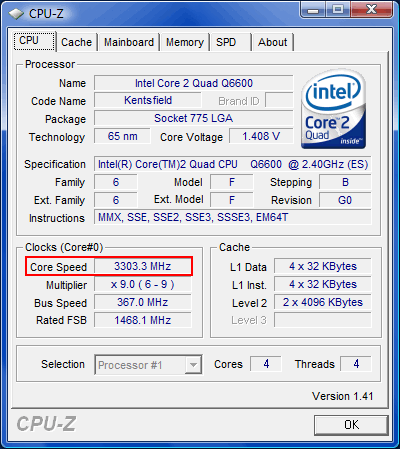
3.30 GHz is the limit for our Q6600
Compared to the E6750, there are four cores running at overclocked speeds in our system now. However, we will have to wait for the performance analysis to determine whether that also equals better value for money.
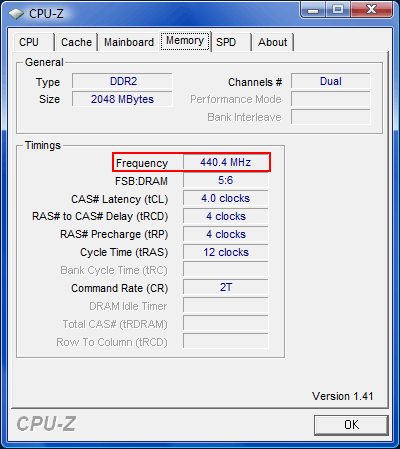
The RAM at DDR2-881
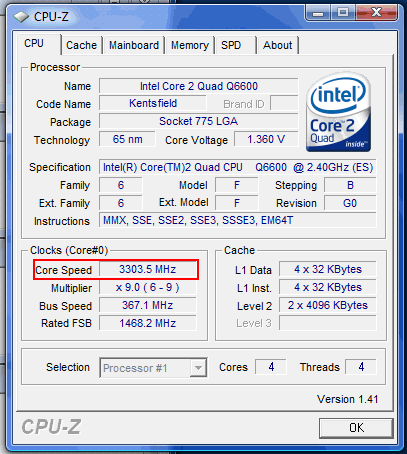
Overclocked by 37.5% and still all is well in Prime95
| Core 2 Quad Q6600 @3.30 GHz | |
|---|---|
| CPU Frequency | 3.30 GHz (+37.5%) |
| FSB | 367 MHz (1468 QDR) |
| Core Voltage | 1,46250 Volt |
| Memory Multiplier | 2.40x |
| Memory Frequency | DDR2-881 (441 MHz) |
| Memory Latency | CL 4.0-4-4-12 |
Reaching a higher frequency than 3.30 GHz was completely out of the question. We would have had to raise the voltage to a point that would in all likelihood have damaged our CPU.

The Core 2 Quad Q6600 boots at 3.30 GHz
We can't really recommend running a 65-nm processor at a voltage this high anyway, since we can't rule out the possibility that the cores could be damaged beyond repair over the course of time due to electron migration. Simply put, you run the risk that the conducting paths inside the CPU could literally be ablated and thus destroyed by ion migration. The risk is that one day the computer suddenly shuts down and will never start up again with that CPU. We only ran our CPU at these speeds for a short while to determine its performance at these settings. On the other hand, some models may very well run at such high speeds without even needing the slightest core-voltage tweak.