A New Record: 82 Watts Power Dissipation
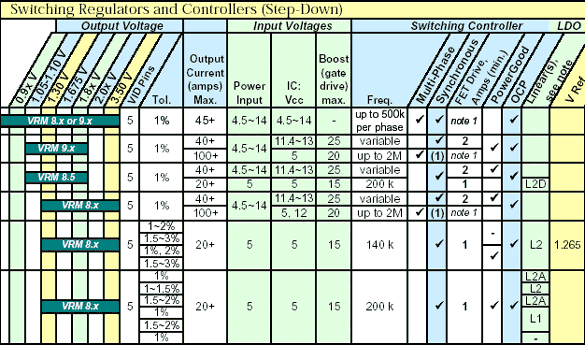
The new VRM 9.x. Its specification requires larger voltage regulators.

Simple, two-phase voltage regulator on a board.
Intel will probably be inviting everyone to a conference on global warming soon, because this chip notches up a new P4 record for power dissipation (although the 81.8 W maximum will rarely be reached in normal operation). The reason for this is the higher clock speed and the small increase in core voltage from 0.025 V to 1.550 V. Intel has therefore issued new guidelines for the motherboard manufacturers.

The precise details are contained in the VRM 9.x Specification (Voltage Regulator Module). An interesting point is that the motherboard's fixed-voltage regulator now has to be cooled with air from the CPU cooler to keep the temperature of the voltage regulator down. The second option for manufacturers involves using a four-phase regulator, which can work without any additional cooling from the CPU cooler. The overall objective is to reduce the amount of heat generated by the regulator by up to 20 percent, in order to keep the temperature inside the case to a reasonable level.

Modern, three-phase voltage regulator on one board.

Old style, three-phase voltage regulator on an Abit board.