Anthropic promises to pay for electricity price increases due to it's AI data centers — firm to pay 100% of its grid infrastructure costs, produce new power sources as sector predicted to hit 50 GW in coming years
Anthropic says that it will do its part, but the government needs to step in, too.
Get Tom's Hardware's best news and in-depth reviews, straight to your inbox.
You are now subscribed
Your newsletter sign-up was successful
Anthropic is following in the footsteps of Microsoft and OpenAI, promising that it will “pay 100% of grid upgrade costs, work to bring new power online, and invest in systems to reduce grid strain.” The company made this announcement in its blog, saying that even though the US AI sector would need at least 50 gigawatts in the coming years, it “shouldn’t leave American ratepayers to pick up the tab.”
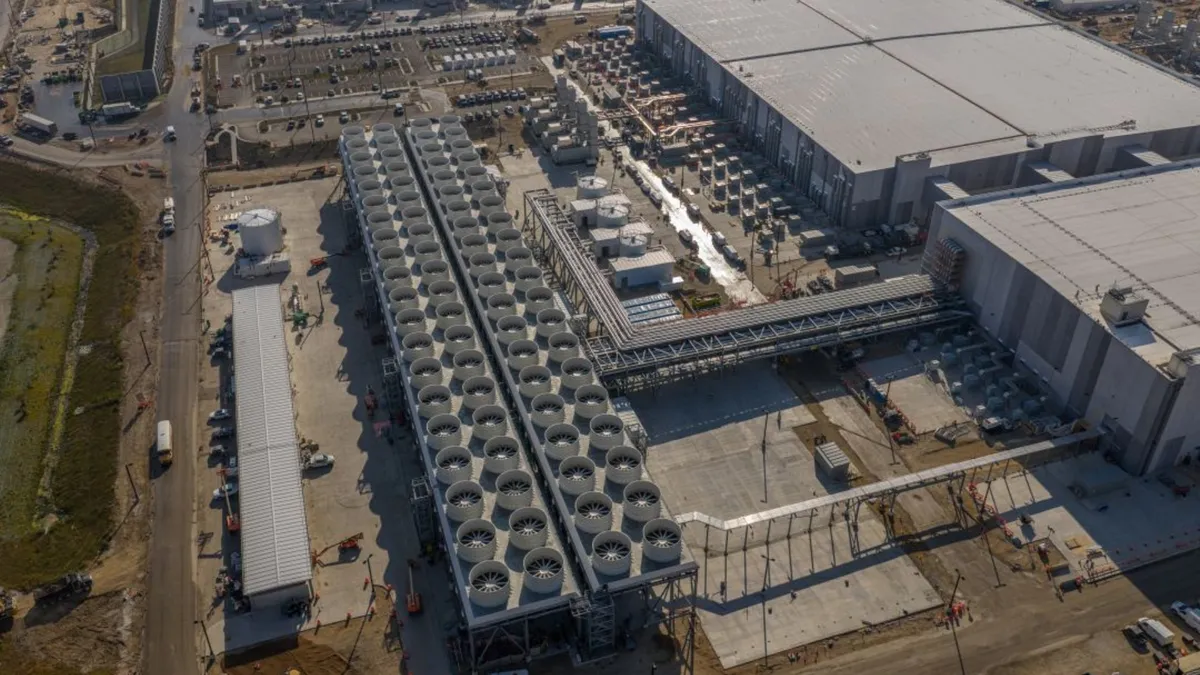
The AI infrastructure build-out has hit the average American hard, especially as the data centers’ demand for more and more power has caused wholesale electricity prices to go up by 267% in just five years in some places. Aside from the spike in demand pushing up prices, this increase is also driven by the need of power and distribution companies to upgrade the grid to accommodate the additional demand put on it by AI servers. These institutions then pass on their capital costs to the consumer, resulting in massively increased electricity costs.
It has gotten so bad that politicians from both sides of the aisle have started to take notice. Three Democratic U.S. senators have sent demand letters to Amazon, Google, Meta, and other AI hyperscalers, asking for an explanation on the situation. President Donald Trump also said that these companies should “pay their own way” in electricity consumption.
Article continues belowOn the same day as Trump’s announcement, Microsoft released a statement promising to “be a good neighbor” to the communities near its data centers and releasing its “Community-First AI Infrastructure” framework to reassure the people that it will leave a long-lasting positive impact on the people surrounding them. OpenAI followed suit a little over a week later, saying that it will fund grid upgrades and have flexible loads to reduce the stress on the energy supply.
Power is the biggest constraint that many AI companies are facing in the U.S. right now. Unlike China, which has an abundance of power for the numerous AI data centers being built within its borders, the U.S. is already near or at capacity. This means that data centers cannot get the electricity needed to run their power-hungry chips, with Microsoft CEO Satya Nadella even saying that it does not have enough electricity to run all the AI GPUs in its inventory.
Many AI companies are looking at other power sources to solve this problem, but the solution seems to be several years away. These include small modular reactors, with Amazon, Meta, Microsoft, Oracle, and more investing billions of dollars into the research and development of this technology. Microsoft is even looking at superconductors to reduce energy loss during transmission, while Elon Musk is envisioning an orbiting AI data center. The billionaire has even started to make his move on this, merging SpaceX with xAI and formalizing his plan for the million-satellite Orbital Data Center System with the FCC.
But even as Anthropic promises that it won’t burden the American consumer for its electricity demands, it also said that the government needs to do its part. It said that affordable power requires “systemic change” and that permitting, transmission development, and grid interconnection need to be faster and cheaper “to bring new energy online for everyone.”

Get Tom's Hardware's best news and in-depth reviews, straight to your inbox.
Follow Tom's Hardware on Google News, or add us as a preferred source, to get our latest news, analysis, & reviews in your feeds.

Jowi Morales is a tech enthusiast with years of experience working in the industry. He’s been writing with several tech publications since 2021, where he’s been interested in tech hardware and consumer electronics.
-
-Fran- Ah, yes. A corporation promising things without law or regulation backing that up to punish them right away. Even then you could be a cynical person (like me) and still not believe them, since they'll barely get a slap on the wrist in any case.Reply
What could go wrong, right?
Time to push back harder.
Regards. -
watzupken What could go wrong right? Hmmm... This situation sounds familiar. Isn't it the same with NAND and RAM and all the shortages that big tech created? Big tech pay more, so consumer have nothing. Let's be real. Resources are finite and these power companies are also profit seeking. So of course when big tech says they will pay more, who do you think power companies will prioritize?Reply -
Shiznizzle I am worried about the attempts to loosen restrictions on nuclear power. The want mini nukes in every neighborhood.Reply -
SkyBill40 Reminds me of a song from Naked Eyes back in the 80's called "Promises Promises." The chorus:Reply
You made me promises (promises), promises
I knew you'd never keep
Promises (promises), promises
Why do I believe? -
qwertymac93 The truth is these AI companies cannot continue to expand capacity if they don't get more power. It's likely faster for them to build their own than it is to wait for the power companies to build out, so they were always going to "pay their own way" in a sense. In fact, they'd probably like to be fully independent of the wider power infrastructure but that would take a lot more time and space than they have right now. Nuclear would probably be their go-to if there wasn't so much red-tape and lead-time around it.Reply -
bigdragon This is great news! I live in Maryland where PJM jacked up our utility bills by 37% last year due to data centers (I don't know the full amount of this year's increase yet). When are my utility bills going to go back down? Can I expect checks in the mail from Microsoft and Anthropic and Google? Are the risks of rolling residential blackouts during summer due to insufficient PJM energy capacity going away?Reply
Oh wait, these are just corporate promises...
I'm way more comfortable with little nuclear reactors than armies of diesel generators. I think my opinion would be reversed if I liked fishing, but I don't.Shiznizzle said:I am worried about the attempts to loosen restrictions on nuclear power. The want mini nukes in every neighborhood. -
qwertymac93 Reply
I think much of the research is in molten salt reactors rather than light water reactors. Would that not reduce the impact on local wildlife?bigdragon said:This is great news! I live in Maryland where PJM jacked up our utility bills by 37% last year due to data centers (I don't know the full amount of this year's increase yet). When are my utility bills going to go back down? Can I expect checks in the mail from Microsoft and Anthropic and Google? Are the risks of rolling residential blackouts during summer due to insufficient PJM energy capacity going away?
Oh wait, these are just corporate promises...
I'm way more comfortable with little nuclear reactors than armies of diesel generators. I think my opinion would be reversed if I liked fishing, but I don't. -
DS426 Reply
That and gas-cooled reactors, part of several innovations of the advanced nuclear reactor family.qwertymac93 said:I think much of the research is in molten salt reactors rather than light water reactors. Would that not reduce the impact on local wildlife?
https://en.wikipedia.org/wiki/Gas-cooled_reactor
Being able to conduct fission on naturally-occurring uranium is one big advantage, not to mention they are considered safer. I'd also rather have a handful of these scattered around rather than 10's of GigaWatts of gas generators littered across everyone's neighborhoods. -
DS426 Reply
Most of the versatile stand-up gas generators are running on natural gas, but to be fair, your point still stands.bigdragon said:...
I'm way more comfortable with little nuclear reactors than armies of diesel generators. I think my opinion would be reversed if I liked fishing, but I don't.
But even as Anthropic promises that it won’t burden the American consumer for its electricity demands, it also said that the government needs to do its part. It said that affordable power requires “systemic change” and that permitting, transmission development, and grid interconnection need to be faster and cheaper “to bring new energy online for everyone.” - this article
That's true in general, but Texas has sped up permitting and has a crazy amount of nat gas generation coming online this year for datacenters. This is one way that DC's get so concentrated -- SLTT regulations, permitting req's and speed, and incentives vary greatly across the U.S.
I'm personally a fan of smaller, more decentralized and distributed compute, but I'm also just some rando online dude. :P -
Why_Me Reply
Montgomery County, Maryland recently banned gas heating and appliances in all new buildings so obviously Maryland doesn't have a shortage of electricity.bigdragon said:This is great news! I live in Maryland where PJM jacked up our utility bills by 37% last year due to data centers (I don't know the full amount of this year's increase yet). When are my utility bills going to go back down? Can I expect checks in the mail from Microsoft and Anthropic and Google? Are the risks of rolling residential blackouts during summer due to insufficient PJM energy capacity going away?
Oh wait, these are just corporate promises...
I'm way more comfortable with little nuclear reactors than armies of diesel generators. I think my opinion would be reversed if I liked fishing, but I don't.