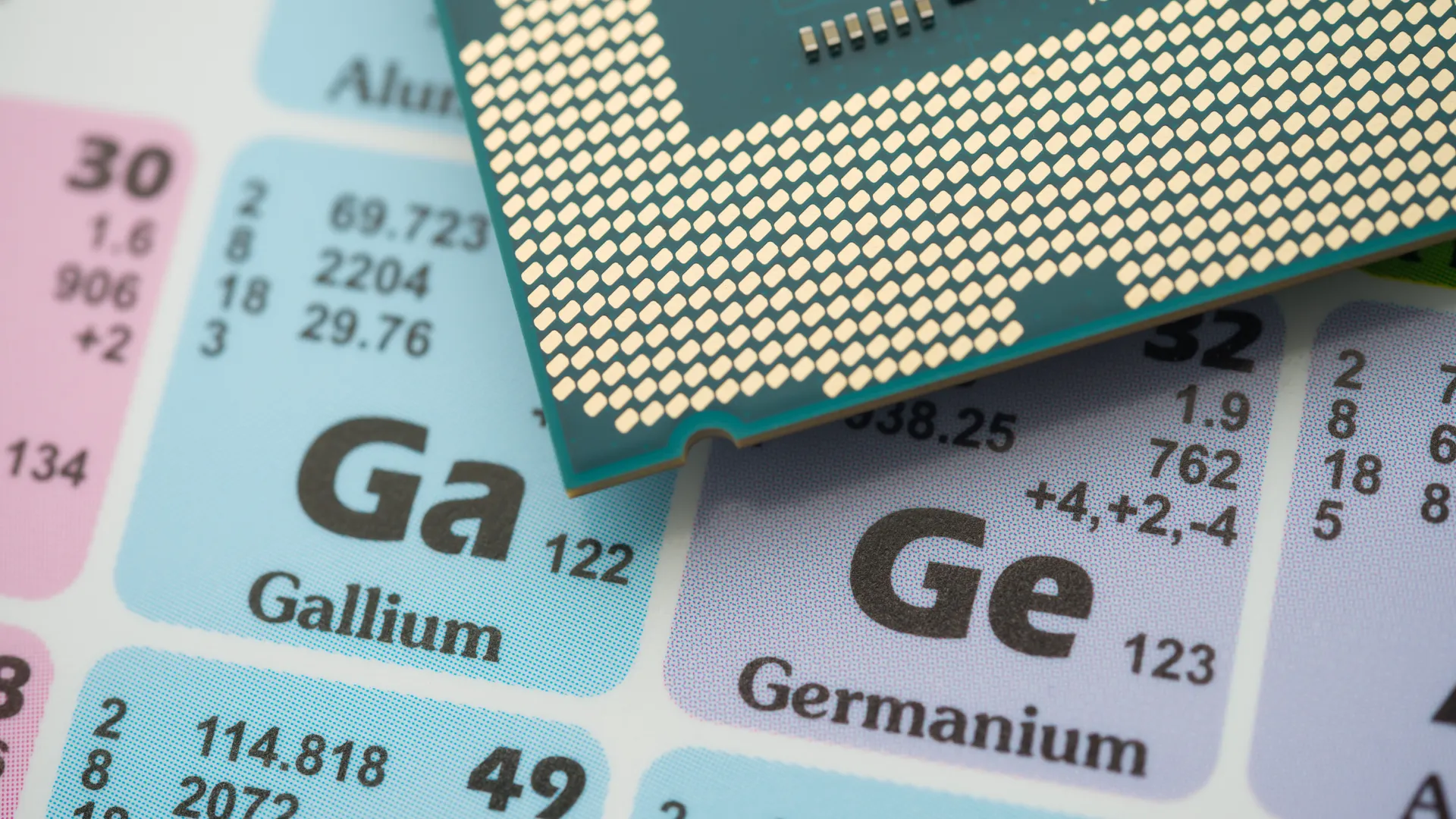
Trump secures deal with Korea Zinc to build rare earths processing facility in Tennessee — facility expected to have annual output of 540,000 tons of gallium, germanium, indium, and other resources
Get Tom's Hardware's best news and in-depth reviews, straight to your inbox.
You are now subscribed
Your newsletter sign-up was successful
An account already exists for this email address, please log in.
Subscribe to our newsletter
U.S. Commerce Secretary Howard Lutnick has released a statement praising U.S. President Donald Trump for securing a deal that will see a critical minerals processing facility built in the United States. According to the X post, Korea Zinc will build the facility in Tennessee, which will have an annual output capacity of 540,000 tons of various materials, including gallium, germanium, indium, and other resources that are crucial for Washington’s push to bring back semiconductor manufacturing within its borders.
The U.S. is mostly dependent on China for its rare earth materials, especially as the East Asian nation supplies the majority of both raw and processed resources across the globe. However, the rivalry between the two powers has highlighted the United States’ vulnerability to decisions made in Beijing, especially as its export controls in retaliation to Trump’s tariffs have impacted the semiconductor industry. While China has eased some of its restrictions and have started issuing export licenses, the White House knows that it remains at the mercy of its rival.
Because of this, the U.S. is keen on developing its own sources for rare earth minerals. Despite being called rare earths, these minerals are actually abundant in the Earth’s crust. However, their concentration is usually pretty low, meaning they’re often not economically viable to extract unless mined alongside other materials that have higher levels. But because China has invested heavily in the mining and processing of these elements, it’s able to dominate the industry today, supplying nearly 90% of the processed and refined rare earths in the world while everyone else plays catch-up.
Article continues below
Aside from this announced investment, Trump is also considering allocating $2 billion of the CHIPS Act funds to bolster its critical mineral supply chain. These moves will help ensure that the U.S. will always have its own supply of these resources. These materials are used beyond chips and semiconductors — they’re also needed for defense systems, jet engines, satellites, and other forms of advanced manufacturing.
Besides rare earths, the U.S. is also looking for lithium, which is the current basis of modern battery technology. A $1.5 trillion deposit has been found on the Nevada – Oregon border, which should be enough to supply the country’s battery needs for the next several decades. Much like how oil became a strategic asset in the 20th century, these minerals are now one of the major resources that countries are fighting for to gain access to, as they serve as the backbone for advanced technology.
Jowi Morales is a tech enthusiast with years of experience working in the industry. He’s been writing with several tech publications since 2021, where he’s been interested in tech hardware and consumer electronics.
The only thing I can say is good luck. I doubt that Korea has expertise to extract the rare earths efficiently as the Chinese.
You can doubt all you like but the company in question has been doing it longer than the Chinese industry has existed. The real concern should be the ability to build that much capacity and staff the business in the US.
The article could use a little context. The USA only consumes about 400 tons of the metal's listed in the article per year, so quoting 540,000 tons is confusing without highlighting what the bulk of that material is.
"The real concern should be the ability to build that much capacity and staff the business in the US."
After the ICE raid on the Korean Battery plant under construction, it may be hard to recruit the Koreans necessary to oversee the construction and startup of the rare earth metals refinery.
https://www.tennessean.com/story/money/cars/2025/09/12/south-korean-factory-workers-flee-spring-hill-tennessee-hyundai-raid/86096234007/
Korean equipment engineers are often sent to the U.S. to “help set up and fine-tune production equipment” and train local employees, the unnamed source told Reuters. They often spend months at the company’s U.S. factories helping ramp up production, according to the source.
Many of the Georgia detainees held Electronic System for Travel Authorization visa waivers or B-1 temporary business traveler visas, according to Reuters. Those documents do not allow non-citizens to work in the U.S. in construction or equipment installation.
In the aftermath of the Sept. 4 raid, Korean employees at the company’s Spring Hill, Tenn. operation left the U.S., citing growing concerns over visa status and legal uncertainty, according to a Reuters report.
The article could use a little context. The USA only consumes about 400 tons of the metal's listed in the article per year, so quoting 540,000 tons is confusing without highlighting what the bulk of that material is.
Rather, it will be able to process so much concentrate from ground ore. How many pure elements will be extracted is not an interesting number. It is too little to advertise the factory.
Rather, it will be able to process so much concentrate from ground ore. How many pure elements will be extracted is not an interesting number. It is too little to advertise the factory.
That 540,000 tons figure from the article is the output though, so presumable commercially pure grade elements.
I ended up finding another article about the deal and the vast vast majority of the output is zinc, lead and copper; which makes sense now that I think about it since the "rare earths" mentioned in the Toms article are basically only produced as byproducts of refinement of those three metals.
With the new battery tech set for production next year by the time this comes out lithium will be a thing of the past. We will still need other metals for other production but the writing is on the wall for lithium.