









Valve's Lessons Learned: Porting Source Engine to Linux
Valve moves away from its Microsoft roots to OpenGL.
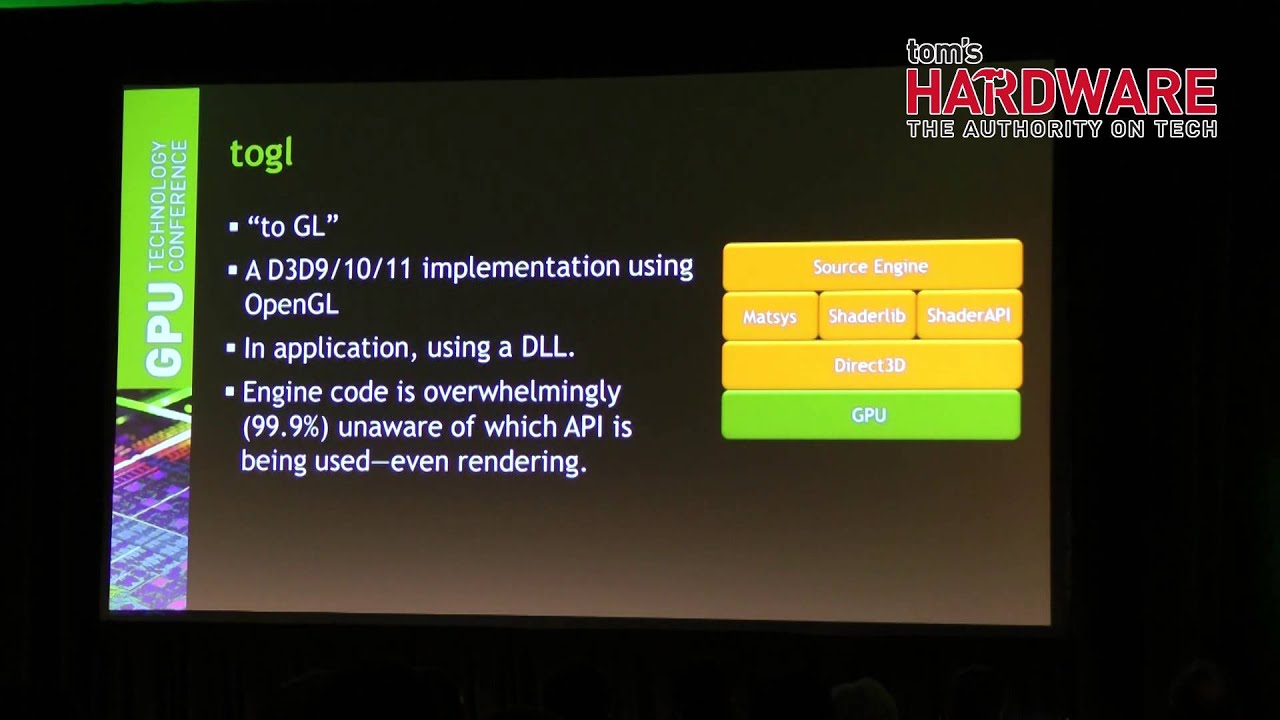
Representatives from the team at Valve take a look at the difficulties they went through in porting the Source game engine to Linux. They discuss various tools they used to do the port, and how switching from DirectX to OpenGL was difficult but may be a hidden gem for game developers.
They state, unequivocally, that OpenGL has most if not all of the capabilities of the current versions of DirectX, and yet newer versions of OpenGL are fully functional on older computers- like the 38.73% of computers still running Windows XP. Someone running a newer GPU on an older OS would still be able to experience the benefits of a modern gaming engine, but wouldn't have to go through the trials and travails of upgrading their operating system and reinstalling all of their software in order to merely upgrade their game visuals. Using OpenGL instead of DirectX will also make it easier to port to other platforms (like OSX and Linux), and further down the road, porting to mobile.
Contact Us for News Tips, Corrections and Feedback
Get Tom's Hardware's best news and in-depth reviews, straight to your inbox.
-
edogawa I think people hype Linux to much, it's great, but it's terrible for normal consumer use and fragmented. I still see no benefit to using Linux over windows except for commercial uses.Reply
Gotta give Valve credit for their work though, it's a step in the right direction.
-
kentlowt LOL why not just turn off the video and make it just audio...Reply
This story really isn't about linux as it is making a product that is easier to port to different platforms and that is something the openGL gives them. -
slomo4sho Maybe this is the beginning of cross-platform gaming? Steam cloud saves and multi-platform support are the steps in the right direction.Reply -
utroz The hell is the camera mans issue.. It's worse than the blair witch project.... My 5 year old can hold a camera steadier than that..... Would have been nice to actually see the data slides and not have to pause the video so i could see what the said.. Looks like it gets better after a few minutes but it really ruined the first part of it..Reply -
dark_knight33 The real issue is there needs to be a de-facto "gaming" dedicated O/S for PCs. Likely linux based due to Windows licensing fees. I use linux & I use Windows (XP, Vista & 7) on different PCs during the week. By far, I like 7 the best, but it's not perfect. Linux is very complicated in comparison to accomplish basic tasks. It can be intentionally unintuitive to a windows user, and questions are often met with "RTFM!". That's why Linux is so far from becoming a daily driver for PC users, nobody likes that attitude. There is definitely a tone of "Do it MSFTs way, or don't do it at all" with Windows based O/Ss that also doesn't work in an environment of choice. Their attitude towards customers with W8, just proves the point. You aren't Apple, we aren't sheeple. Stop telling us what we (the consumer) want, we already know better.Reply -
anfunny The thing is you have to see open source program for what they will be not what they are. The fact that Linux and Windows 7 are even close is astounding. The potential will only increase and the ease of use is easily adjusted with a GUI. Unbuntu is even being funded by China now. People need to stop being so short sighted or there won't be any growth anywhere.Reply -
dark_knight33 anfunnyThe thing is you have to see open source program for what they will be not what they are. The fact that Linux and Windows 7 are even close is astounding. The potential will only increase and the ease of use is easily adjusted with a GUI. Unbuntu is even being funded by China now. People need to stop being so short sighted or there won't be any growth anywhere.Reply
It's not a matter of being short sighted. It's a matter of, I've used different flavors of linux both personally and professionally since 2000, and while MSFT has moved on from dos over a decade ago, Linux still ties itself to an antiquated command line. MSFT is working on 3D holo interfaces using technologies like kinect. Meanwhile you have these elitest douchbags who will always mutter "I can do it faster in a shell". So the f**k what? All that matters is "What can I do with it today?" When you invest in projects for things you want to do now, for stuff they promise will happen later, all you get is disappointment. Adopt linux for the things it's good at today; e.g. webserving.
The fact that China is investing in Ubuntu is *not* a positive deciding factor for me. I'm not an Anti-China nut, but I understand the 'behind closed doors' competition China is in with US on technology. Believe me, if China is investing in Ubuntu, it's not for the greater global good of OSS. It's so China can stop relying on pirating software from US companies. If you think China won't just take what they want and give little in return, you are short sighted.