OpenAI shows clear compute and revenue scaling to soothe investor worries as company preps for IPO — expenditure continues to outweigh income as 10GW buildout continues


This week, a blog post went up on the OpenAI website, broadly discussing the company's financial outlook. The write-up is authored by Sarah Friar, OpenAI's Chief Financial Officer, where she claims that there's a direct relationship between available computing power and revenue generation, and thus, adding more AI accelerators equals more money coming into the firm's coffers.
Not only does Friar conclude that this growth pattern was never witnessed before at this scale, but she also goes on to state that if OpenAI had had even more computing power available, it would have "led to faster customer adoption and monetization," a strong claim in the face of the company's current finances. In the famous words of Jensen Huang: "the more you buy, the more you save."
Compute becomes currency

Friar goes on to make the point that in this scenario, compute ultimately transforms from a "fixed constraint" to a portfolio, or de facto currency. That assessment aligns with similar assertions from other executives highly invested in the field, such as Nvidia's Jensen Huang, former Stability AI CEO Emad Mostaque, Microsoft's Satya Nadella, and, of course, Sam Altman himself.
The missive proceeds to make predictions, remarking on the evolution of AI usage patterns over time and describing how agent-based workflows "move from novelty to habit." For Friar, this shows a pattern of predictability that "strengthens the economics of the platform and supports long-term investment." The firm also expects that "new economic models will emerge" as AI becomes entrenched in research-heavy fields. However, over half of CEOs currently report seeing little benefit from AI deployed in the workforce.
OpenAI's words may sound reassuring at face value, but there's no shortage of virtual ink spilled on how the AI market is, at least for now, somewhat comprised of a circular economy. One company's investment feeds the next one in a cycle that tends to have comparatively little external revenue entering the loop. Many analysts predict that OpenAI is a particularly high spender, as its current burn rate is billions per month.
The company's blog post, on the contrary, makes it sound like OpenAI is actually playing it really safe. In its own words, "capital is committed in tranches against real demand signals", letting the company "lean forward when growth is there without locking in more of the future than the market has earned." Those are strong statements, but ripe for analysis.
OpenAI and expenditure
According to investor data shared with the Financial Times last November, OpenAI's estimated 2025 expenditure was of $22 billion, or an average of $1.83 billion every 30 days. That wouldn't be of concern if revenue were in the same ballpark, except that sales for the period were reportedly $9 billion, meaning OpenAI actually lost $0.69 on every incoming dollar. Altman's planned IPO cannot come soon enough, then.
A cynical reader can argue that OpenAI's post exists to assuage investor fears — a form of damage control, or at the very least, reframing the situation as a controlled burn for future crops rather than a raging wildfire. The current AI economy is so tightly woven together that a loss of confidence in its largest player could bring down the house altogether.
Profitability for the firm is expected in 2030, but many analysts believe the money well will run dry well before that happens. Not only do expenditures still far outweigh income, but OpenAI's consumer market share saw a drop from around 90% in 2024 to 60-70% in 2025, a chunk seized by Google Gemini and Perplexity.
It's worth keeping in mind that none of the pure-play AI firms are known to be profitable yet — and that, unlike traditional companies, they have no other ventures to fall back on. Should one go bust, usually it'll have only data centers and IP for creditors to repossess. In November, JP Morgan called out climbing spend on the ongoing AI buildout, which Jensen Huang says might take up to 50 years.
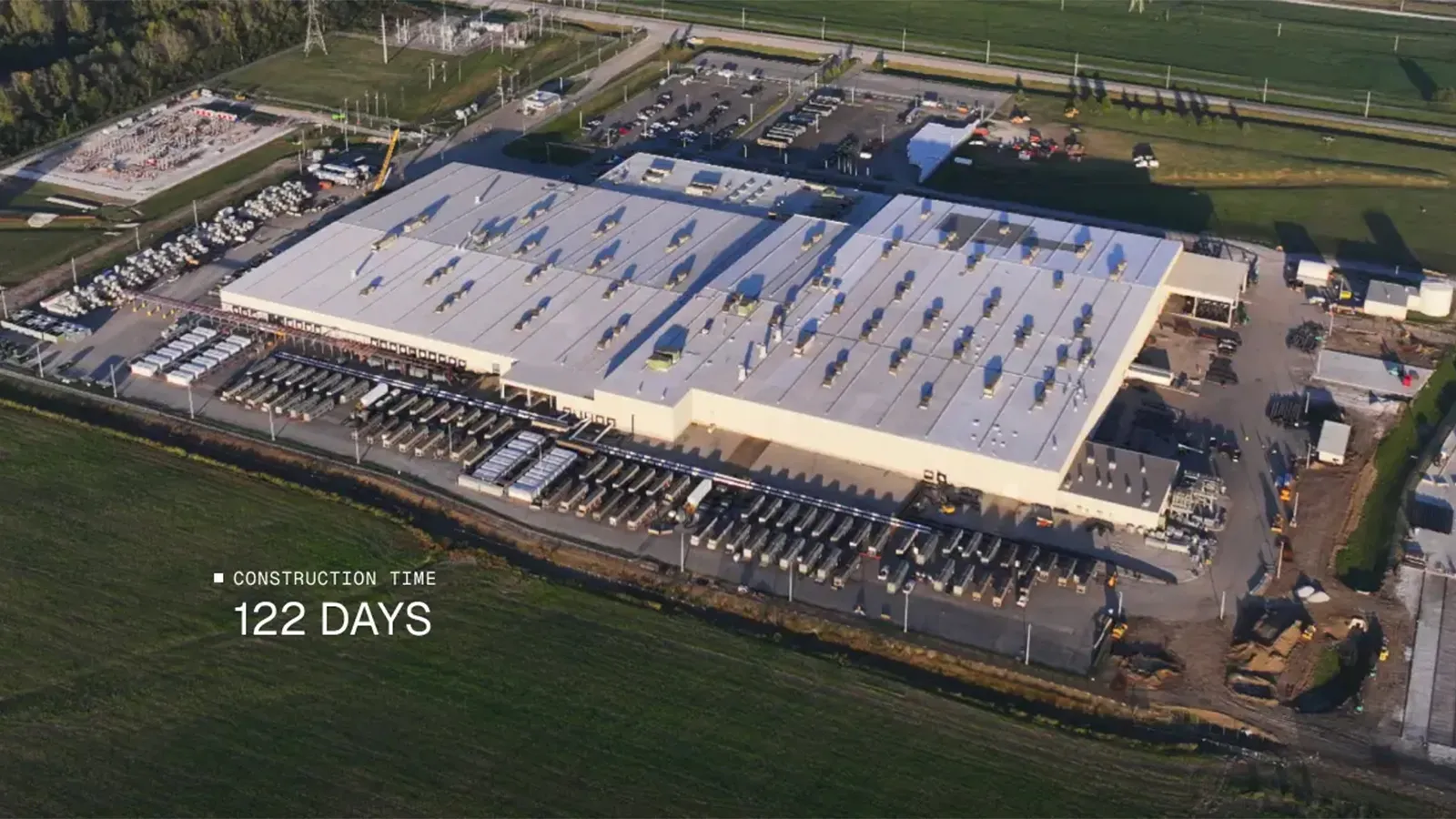
Elon Musk's xAI is burning close to $1 billion a month, with only around $500 million in 2025 income to show for it. Anthropic (makers of Claude) seems to be playing the game more conservatively, expecting profitability in 2028. This displays a stark difference in financial approaches, with OpenAI and xAI clearly betting the proverbial server farm on future gains, while Anthropic moves in a comparatively steady manner.
To the AI firms' credit, though, it's not like any of this has happened in history, or at least in this manner. Estimates put the amount of money already earmarked up for AI datacenters up to 2030 at $7 trillion, a figure that's difficult to picture but can be put into words: enough to run the entire U.S. government for one full year, the combined valuation of Microsoft and Amazon, or 1.5 times the entire GDP of Germany.
With the number of players in the game, it's hard to make the argument that absolutely everyone is wrong about the viability of their investments. While it can be argued that OpenAI might be flying too close to the sun, there's also no precedent for such explosive growth; what appears to be extremely long-term bets now may well prove to be the highest-risk, highest-reward scenario in the tech industry.