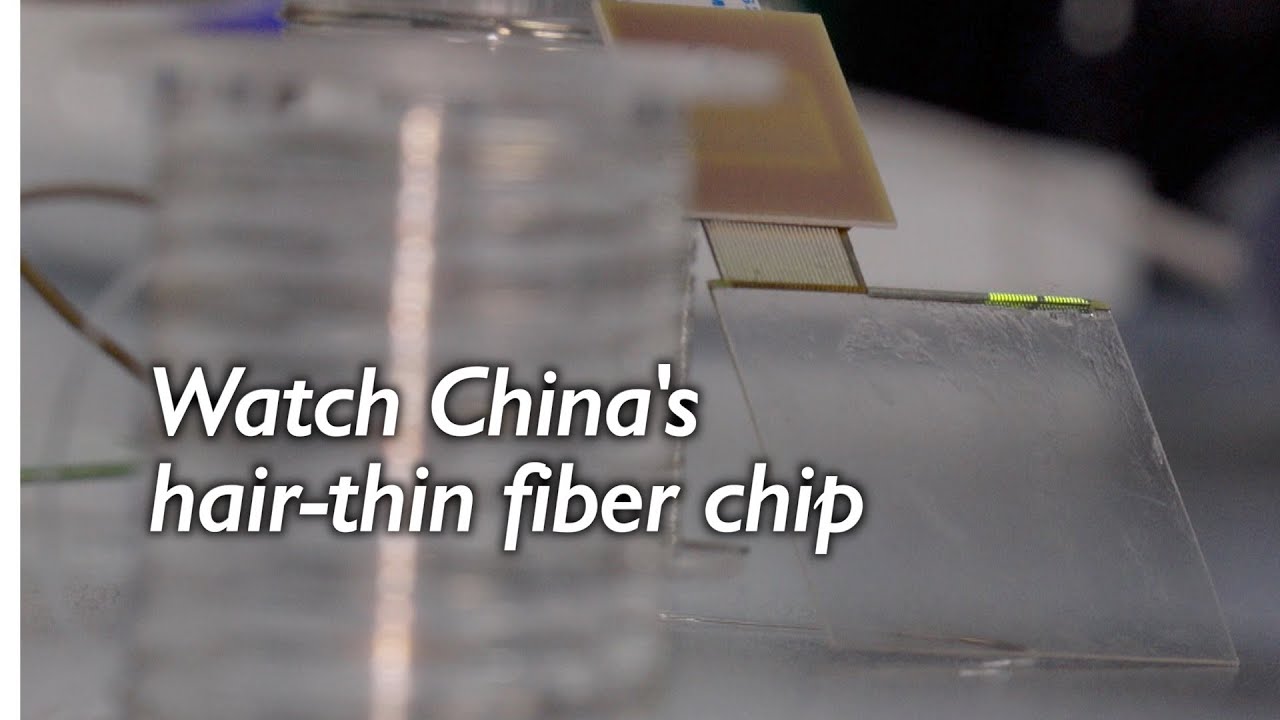
A group of researchers has built a computer chip in a flexible fiber thinner than an average human hair. The team from Fudan University in Shanghai says that their Fiber Integrated Circuit (FIC) design can process information like a computer, yet is durable enough to be “stretched, twisted, and woven into everyday clothing.” Use cases touted by the authors of the paper include advancements in the fields of brain-computer interfaces, VR devices, and smart textiles. This cutting-edge FIC design was apparently inspired by the construction of the humble sushi roll.
Flexible electronics have come a long way in recent years, with malleable components for power, sensing, and display readily available. However, so-called flexible electronic devices and the wearables made from them still usually contain components fabricated from rigid silicon wafers, limiting their applications and comfort. The Fudan team says that their FIC can remove the last vestiges of electronic rigidity “by creating a fiber integrated circuit (FIC) with unprecedented microdevice density and multimodal processing capacity.”
How did they do it?
Like a sushi roll, the Fudan researchers build their complex electronic circuits in thin layers on flexible substrates, then roll them up tightly. According to the news and scientific paper releases, the FIC takes the form of a “multilayered spiral architecture.” The finished fiber has a tiny diameter, measuring about 50um.
Fudan FIC features and capabilities
In the research paper, it is claimed that the integration density of the prepared samples reaches 100,000 transistors per centimeter (10 million per meter). That’s enough for in-fiber digital and analog signal processing capabilities on a par with “typical commercial arithmetic chips,” and is good enough for “high-recognition-accuracy neural computing,” reckon the Fudan team.
Enthusiastic claims by the university blog assert that a 1-meter fiber “could hold millions of transistors, reaching the power levels of a standard desktop computer processor.” But, we had to go back as far as the Intel Pentium III or AMD K6-2 to find PC CPUs with so few transistors. Both those legendary CPUs launched in the late 1990s, and they feature a smidgen under 10 million transistors each.

Some of the durability test results shared by the Chinese researchers seem impressive. In the paper published by Nature, they claim that the FIC they produced could withstand harsh conditions “such as repeated bending and abrasion for 10,000 cycles, stretching to 30%, twisting at an angle of 180° cm−1, and even crushing by a container truck weighing 15.6 tons.” The research figures include an image of a truck parked on one of the FIC test fibers...
What’s next for this FIC technology?
Cannily, the Chinese say that they have already found a viable method for mass-producing these FICs. As we mentioned in the intro, the scientists foresee device makers in fields such as brain-computer interfaces being interested in their tech. With the FICs being so thin and “as flexible as brain tissue,” they should work well. They also assert that FICs will be useful in VR gloves, which look and feel “indistinguishable from ordinary fabric.”

Follow Tom's Hardware on Google News, or add us as a preferred source, to get our latest news, analysis, & reviews in your feeds.