









Samsung preps PCIe 5.0 QLC SSD with a controller based on open-source RISC-V architecture — BM9K1 delivers speeds up to 11.4 GB/s for 'personal AI workloads'
Samsung's next QLC drive targets personal AI workloads with a 2027 launch.

As reported by BigGo Finance, Samsung has unveiled the company's next-generation BM9K1 SSD at the China Flash Market Summit 2026 (CFMS 2026). The BM9K1, which will rival the best SSDs, is a PCIe 5.0 drive with QLC NAND and features an SSD controller built around the open-source RISC-V architecture.
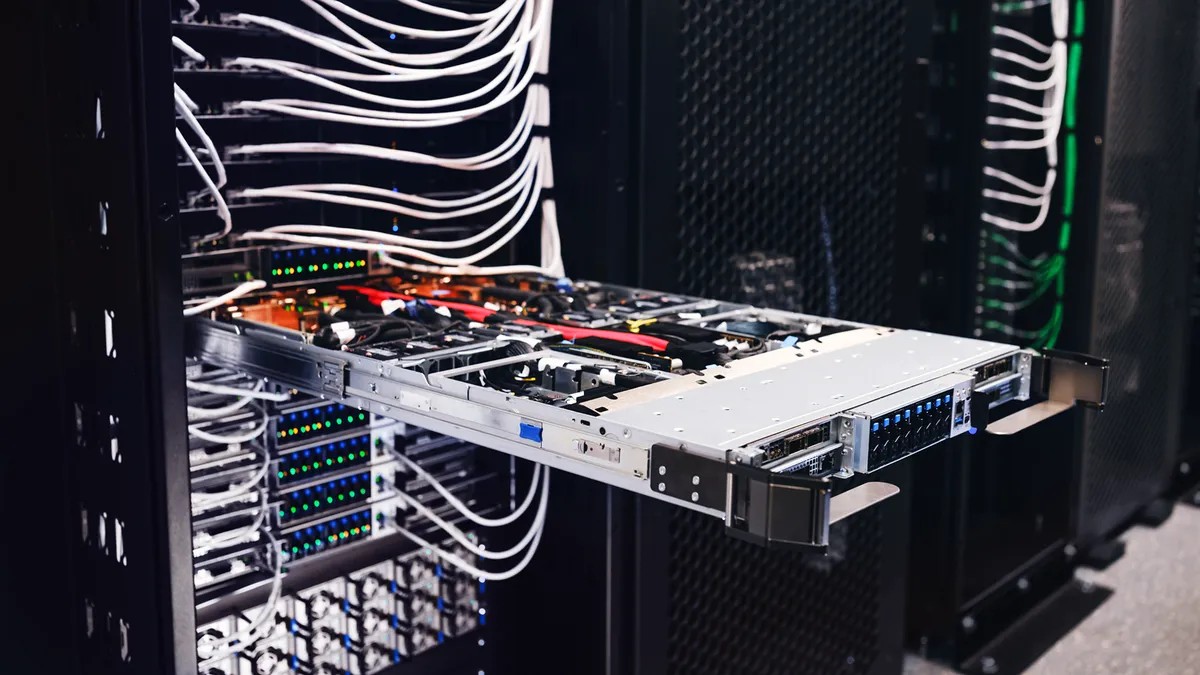
The BM9K1 reportedly delivers sequential read speeds of up to 11.4 GB/s, which Samsung said is 1.6 times faster than its predecessor, the PCIe 4.0 BM9C1. Samsung is targeting a 2027 launch in 512GB, 1TB, and 2TB capacities and positioning the drive for what the company calls “personal AI computing” workloads on desktops and laptops.
Notable with the BM9K1 is Samsung’s departure from an Arm-based controller to a proprietary one built in-house using the open-source RISC-V instruction set architecture. The company said the RISC-V design enables more granular firmware optimization for QLC NAND management and AI-specific I/O patterns, resulting in a 23% improvement in energy efficiency over the BM9C1. That gain in efficiency is naturally going to make a big difference in thermally constrained, small-form-factor applications focused on AI.
Samsung BM9K1 SSD Specifications
| Row 0 - Cell 0 | Samsung BM9K1 |
Samsung BM9C1 |
Micron 3610 |
Samsung 9100 Pro |
Interface |
PCIe 5.0 (NVMe) |
PCIe 4.0 (NVMe) |
PCIe 5.0 (NVMe 2.0) |
2.0)PCIe 5.0 (NVMe) |
NAND |
QLC |
QLC |
QLC (G9 276-layer) |
TLC (V8) |
Seq. read |
11.4 GB/s |
5 GB/s |
11 GB/s |
14.8 GB/s |
Seq. write |
Not disclosed |
4.5 GB/s |
9.3 GB/s |
13.4 GB/s |
Controller |
Samsung RISC-V |
Samsung 5nm |
- |
Samsung 5nm Presto |
Capacities |
512GB, 1TB, 2TB |
2TB512GB, 1TB, 2TB |
1TB, 2TB, 4TB |
512GB, 1TB, 2TB, 4TB, 8TB |
With its introduction, the BM9K1 also enters a small category of similar drives. Micron’s 3610, announced at CES back in January, is the only other PCIe 5.0 QLC client SSD announced so far. The 3610 reaches 11 GB/s sequential reads and 9.3 GB/s writes, and Micron is already sampling it to OEM partners in capacities up to 4TB. Samsung's drive edges ahead in raw sequential read throughput at 11.4 GB/s, but tops out at 2TB and has not disclosed write speeds.
Both QLC drives sit well below Samsung's own TLC-based 9100 Pro and its OEM counterpart, the PM9E1, which delivers up to 14.8 GB/s of read speed using V8 TLC NAND and the 5nm Presto controller. There’s a cost trade-off, though, with QLC packing four bits per cell versus TLC's three, yielding higher density and lower per-gigabyte pricing at the expense of write endurance and sustained write performance.
Samsung plans to bring the BM9K1 to market in 2027, but hasn’t disclosed any information on pricing or form factor.

Follow Tom's Hardware on Google News, or add us as a preferred source, to get our latest news, analysis, & reviews in your feeds.
Get Tom's Hardware's best news and in-depth reviews, straight to your inbox.

Luke James is a freelance writer and journalist. Although his background is in legal, he has a personal interest in all things tech, especially hardware and microelectronics, and anything regulatory.
-
Kindaian Sorry but that has nothing to do with AI. It's just a plain SSD of generation 5. Market-speak abuse...Reply -
thisisaname Reply
Samsung plans to bring the BM9K1 to market in 2027, but hasn’t disclosed any information on pricing or form factor.
I am quite sure no one has any idea what pricing on storage is going to be at the end of 2026 let alone some time in 2027. -
qxp Reply
I think what they mean is that if you memory-map AI models stored on it, you will have faster data access than on previous model. I.e. it has higher read bandwidth then before, hopefully random access.Kindaian said:Sorry but that has nothing to do with AI. It's just a plain SSD of generation 5. Market-speak abuse... -
usertests Reply
Are they lying?Kindaian said:Sorry but that has nothing to do with AI. It's just a plain SSD of generation 5. Market-speak abuse...
The company said the RISC-V design enables more granular firmware optimization for QLC NAND management and AI-specific I/O patterns, resulting in a 23% improvement in energy efficiency over the BM9C1.
-
derekullo Reply
Random access doesn't really matter in this context for the storage device.qxp said:I think what they mean is that if you memory-map AI models stored on it, you will have faster data access than on previous model. I.e. it has higher read bandwidth then before, hopefully random access.
Let's say you had a Geforce 5090, a raid 1 of 2 - 16 terabyte sata hard drives and a 20 gigabyte model on that raid.
2 sata drives in a raid 1 might give you a read speed of 300 megabytes per second.
With a 20 gigabyte model it would take around 66 seconds to load the model into Geforce 5090's VRAM.
Once the model is loaded into VRAM or normal ram if you don't want to use your GPU, the hard drives aren't used anymore until you want to load another model.
If for whatever reason you switch models often a drive rated for super high read performance, 11.4 gigabytes per second easily qualifying, that same 20 gigabyte model takes about 2-3 seconds to load. -
derekullo Reply
AI-specific I/O patterns quite literally means sequential reads ... at least for loading the model into whatever type of ram you are using.usertests said:Are they lying?
In that way it is a little of Market-speak abuse.
In the same way it could also be advertised as Optimized For Loading 40 Gigabyte 4k MKV's. -
bit_user Reply
I think they're talking about models that are too big to fit in whatever RAM you have.derekullo said:Random access doesn't really matter in this context for the storage device.
With at least some LLMs, I believe you don't need to read all of the weights, for every inference.
According to what I said, it could actually involve lots of small random reads.derekullo said:AI-specific I/O patterns quite literally means sequential reads ... at least for loading the model into whatever type of ram you are using.
How RISC-V might play into that is by allowing them to add specialize instructions to accelerate block error correction, since a random access pattern will be touching a lot more blocks. -
qxp Replyderekullo said:Random access doesn't really matter in this context for the storage device.
Let's say you had a Geforce 5090, a raid 1 of 2 - 16 terabyte sata hard drives and a 20 gigabyte model on that raid.
2 sata drives in a raid 1 might give you a read speed of 300 megabytes per second.
With a 20 gigabyte model it would take around 66 seconds to load the model into Geforce 5090's VRAM.
Once the model is loaded into VRAM or normal ram if you don't want to use your GPU, the hard drives aren't used anymore until you want to load another model.
If for whatever reason you switch models often a drive rated for super high read performance, 11.4 gigabytes per second easily qualifying, that same 20 gigabyte model takes about 2-3 seconds to load.
If you are using llama.cpp, for example, it memory maps model weights so that you can run 70 GB model on a computer with only 32 GB RAM. In that case solid state drive bandwidth is rather important.