
Steam to add hardware specs to reviews — optional feature could help you dodge poorly optimized games
You can also use this to flex that monster gaming PC you're hiding in your basement.
Get Tom's Hardware's best news and in-depth reviews, straight to your inbox.
You are now subscribed
Your newsletter sign-up was successful
Steam just released its Client Beta patch notes, and it’s adding a major new feature designed to make game reviews better. According to the company announcement, users will now have the ability to include their system specifications in any new or updated review they write. This would make it easier for potential game buyers looking at reviews to see how the reviewer’s hardware might have influenced their feedback.
At the moment, the only way you can see the specs of a reviewer’s system is if they intentionally add it into the review or into their profile. However, only a few people do that, so if a reviewer criticizes or praises a game, especially based on its performance, you’re unsure if you’ll get the same experience. But if you can see the specs of the reviewer’s system, you can then gauge if the issue they encountered is truly a problem with the game or if it’s only caused by a mismatch with their system and the minimum specifications listed on Steam.
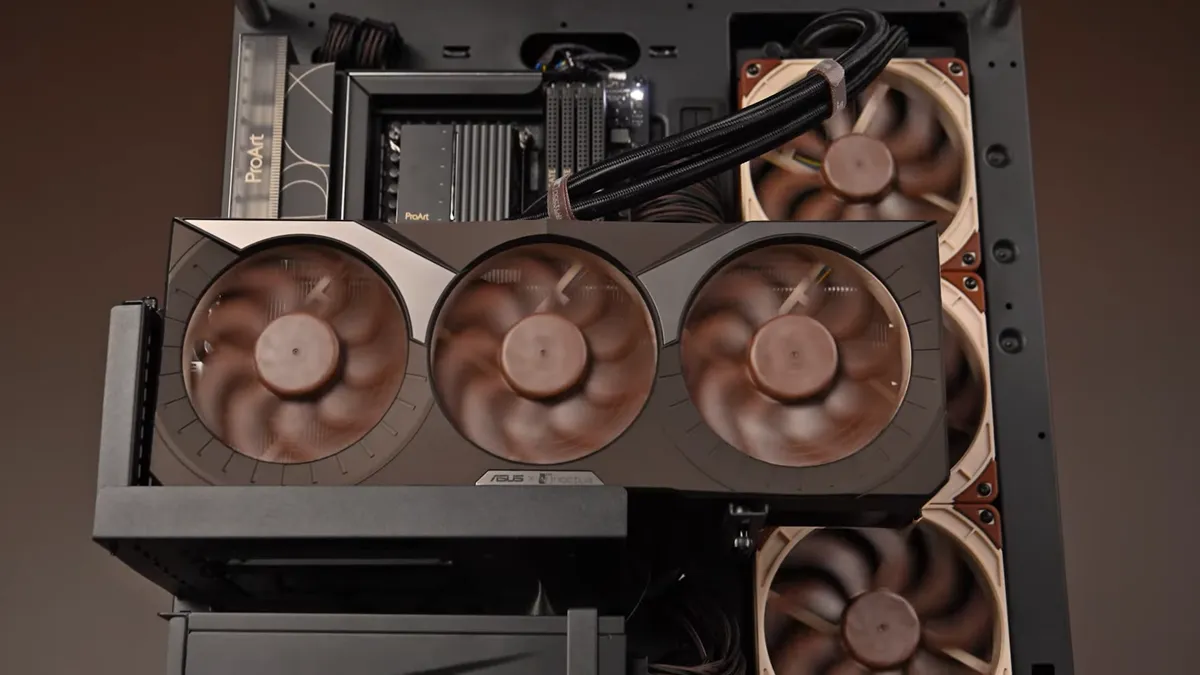
Alternatively, a person saying that the game runs smoothly and without any problems might be running an AMD Ryzen 7 9800X3D, which offers devastating gaming performance, that’s paired with a powerful (and definitely expensive) MSI RTX 5090 Lightning Z. This is especially true in some modern AAA titles like Indiana Jones and the Great Circle, which demands a ray-tracing GPU and an Intel Core i7-10700K for its minimum requirements. So, if you’re only driving a modest AMD Ryzen 5 5500 and an old GTX graphics card, then your experience will be completely different from what you read.

It’s unclear if Steam will automatically get your specifications, like how it extracts data for the Steam Hardware Survey, or if gamers will need to manually input their components into their profile. The former would make it far easier to implement this feature, although this would definitely raise some privacy concerns regarding the client. On the other hand, the latter could be problematic, as users could lie and skew the data. But whichever route Valve takes, this is an optional feature, and you can keep it turned off if you don’t want the world to know that you’re keeping a monster PC stowed in your basement.

Follow Tom's Hardware on Google News, or add us as a preferred source, to get our latest news, analysis, & reviews in your feeds.

Get Tom's Hardware's best news and in-depth reviews, straight to your inbox.

Jowi Morales is a tech enthusiast with years of experience working in the industry. He’s been writing with several tech publications since 2021, where he’s been interested in tech hardware and consumer electronics.
-
toffty Reply
Care to elaborate instead of just saying something vague and unsupported?LordVile said:Would be nice for them to stop the anti consumer practices however -
LordVile Reply
Publishing agreement where you agree to not sell the game cheaper elsewhere or the game will either be removed, buried or ineligible for sales. Also only allowing steam keys to be sold at the same price to steam so if you wanted to charge say 40 rather than 50 on your own site you must also price it at 40 on steam. Or if you wanted to sell on another site and price it so your own income is the same after platform fees you can’t.toffty said:Care to elaborate instead of just saying something vague and unsupported?
Quote from valve:
“We basically see any selling of the game on PC, Steam key or not, as a part of the same shared PC market- so even if you weren’t using Steam keys, we’d just choose to stop selling a game if it was always running discounts of 75% off on one store but 50% off on ours. . . .” -
rluker5 I like it.Reply
It could be used to better expose issues with specific hardware or combinations of hardware and maybe even software and help people enjoy stuff better.
Like as a hypothetical example AMD CPU and Nvidia GPU with REBAR on in a particular game is more stutter prone than it being off. Without specifics you would just get "game stutters". -
Konomi Should be: grab current system specs by default, have a toggle that allows opt out as you post the review but the review would automatically have a disclaimer that the user declined to share their system specs.Reply -
emike09 Love this. Too many negative reviews based purely off trying to run a AAA game at 4K and all settings maxed on a Radeon iGPU and blaming the devs. Maybe people will see their specs in their review and consider that it might be time to step things up and upgrade.Reply -
ezst036 Reply
Valve has very few of those practices.LordVile said:Would be nice for them to stop the anti consumer practices however
The most anti consumer companies out there in consumer tech are Google, Microsoft, and Apple. And Nvidia with its melting power connectors. And I bet there's others I forgot to name who deserved to be. -
TerryLaze ReplyLordVile said:Would be nice for them to stop the anti consumer practices however
So making sure that the consumer will get the games at the best, or at least same lowest price, on steam is anti-consumer?!LordVile said:“We basically see any selling of the game on PC, Steam key or not, as a part of the same shared PC market- so even if you weren’t using Steam keys, we’d just choose to stop selling a game if it was always running discounts of 75% off on one store but 50% off on ours. . . .”
Anti-competition maybe, but for the consumer getting lower prices is a good thing. -
LordVile Reply
Actually it’s increasing prices for consumers as steam has a rather large cut compared to other stores. So for example if you want to make $40 per sale you have to charge $60~ on steam to make that. If you want to sell it on a store with 10% commission you have to sell it at $45~ to make the 40. Because steam says you need to sell it at the same price everywhere you must now charge 60 everywhere meaning the consumer has to pay more.TerryLaze said:So making sure that the consumer will get the games at the best, or at least same lowest price, on steam is anti-consumer?!
Anti-competition maybe, but for the consumer getting lower prices is a good thing.
It’s engineered so steam do not have to compete in terms of commission rates and because they’re so large with so much of the market publishers cannot afford to not list the game on steam. -
Deadward84 Reply
I think you've got it backwards. Your quote from Valve says they'd choose to stop selling a game, "if it was always running discounts of 75% off on one store but 50% off on" Steam. That's describing anti-competetive practices by a publisher. The 'if' makes a big difference. It's not saying that you can never sell it for less elsewhere, it's saying you can't consistently and intentionally undercut Valve. And that's likely with the caveat it's during simultaneous sales on two different stores.LordVile said:Publishing agreement where you agree to not sell the game cheaper elsewhere or the game will either be removed, buried or ineligible for sales. Also only allowing steam keys to be sold at the same price to steam so if you wanted to charge say 40 rather than 50 on your own site you must also price it at 40 on steam. Or if you wanted to sell on another site and price it so your own income is the same after platform fees you can’t.
Quote from valve:
“We basically see any selling of the game on PC, Steam key or not, as a part of the same shared PC market- so even if you weren’t using Steam keys, we’d just choose to stop selling a game if it was always running discounts of 75% off on one store but 50% off on ours. . . .”
If anything, Valve is being PRO-consumer here. They would want the same 75% off for Steam users purchasing directly. You can argue they want their cut, and of course they do, but it's also just obvious. Why would they allow you to advertise and promote your game on Steam if you're going to actively sabotage your sales on the platform, then still want access to the resources Steam provides