A diligent British citizen has successfully converted his archaic telephone wiring into high-speed networking that gives him gigabit speeds basically anywhere in his house. For our amusement, he documented the entire process — from contemplative dilemma to victorious outcome — on his "The HFT Guy" blog.
Like most American homes, older houses in the UK aren't built with ethernet in mind; they have telephone lines running throughout the walls. Our tinkerer was using powerline adapters previously to cope with this, using the home's existing electrical wiring to distribute internet.
Article continues below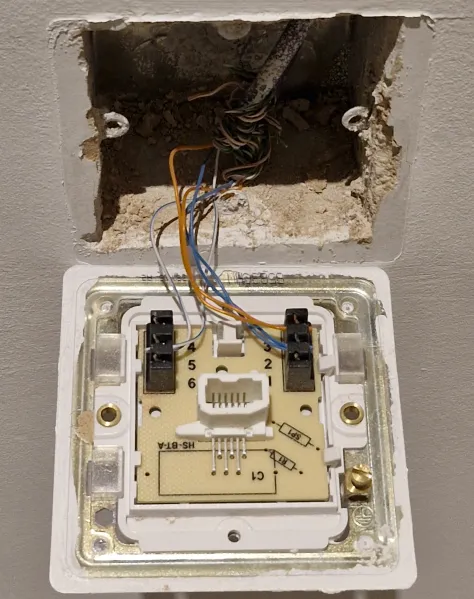
Image credit: The HFT Guy
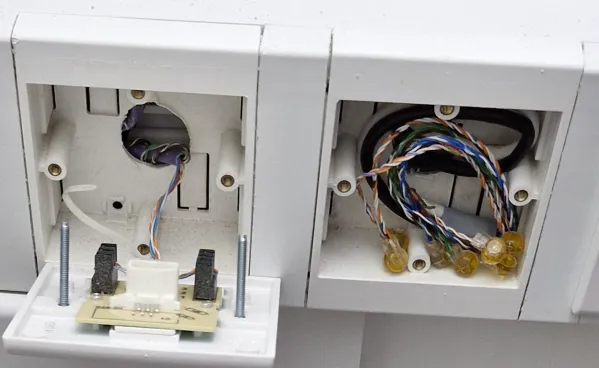
Image credit: The HFT Guy
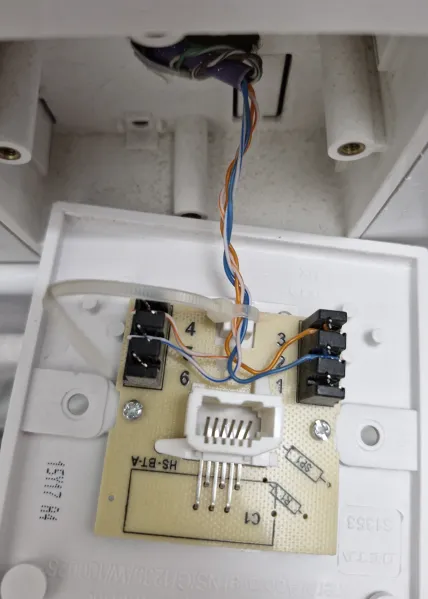
Image credit: The HFT Guy
Ethernet uses the RJ45 connector and all eight wires inside the bundle, while land-line is limited to only two wires and employs an RJ11 connector, so the solution isn't as simple as just converting the plugs. Moreover, British households, including this one, have daisy-chained telephone lines, which means a single central point branching off into several sockets, whereas ethernet requires a star topology where every end needs to be directly connected to the mains.
Therefore, you need a powerful device that does the conversion, so a modem, while maintaining the signal properly, is the special part. Our guy chose the GIGA Copper G4201TM which uses G.hn modulation to break the signal into lots of tiny sub-carriers spread across a wide frequency band. Then, it basically plays a game of tug of war, balancing bit-loading in real time with robust error correction.

You connect the tool to your modem/router using a standard RJ45 ethernet cable, then an RJ11 cable goes into the telephone line wall socket. Homes in the UK have the BT631A connector so an RJ11 to BT631A cable was used here. Once set up, your internet connection is now in your walls. All you need is to "pull" it out the other side.
Let's say, across the house you have your office where you need gigabit connection. The telephone port in that room would then be set up the same way, acting as a bridge. The land-line coming from the wall, going into the adapter and the ethernet coming out from the same device, finally being plugged into your computer. Voila, the link has been established and you have wired gigabit ethernet potentially throughout your house.

The HFT Guy then tests the connection and shows near-gigabit speeds on his phone, so the project was a success. The original blog includes a lot more details like the ordering and shipping process, which was a bit of a nightmare for the Englishman. He also breaks down the differences between the "InHome" and client-server variant; you need the former.
He also describes the dire state of his telephone wiring, arranged incompetently by an "idiot" that basically necessitated the use of this method. "The gigacopper device to do gigabit Ethernet over phone line is a miracle," he wrote while ending his blog with an open-ended suggestion to companies to tap into this lucrative market.

Follow Tom's Hardware on Google News, or add us as a preferred source, to get our latest news, analysis, & reviews in your feeds.