Active Directory Implementation
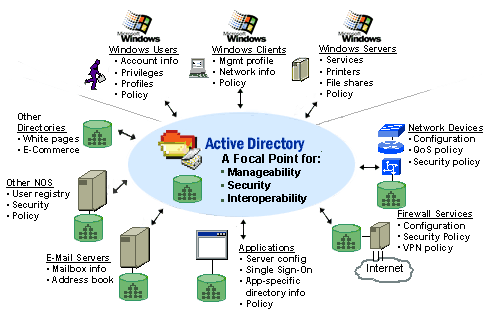
The Active Directory (AD) of Windows 2000 Server and Windows Server 2003 basically manages all the information that is relevant in the network's operation. This includes connections, applications, databases, printers, users and groups. Microsoft's text describes it concisely: Active Directory provides a standard way to name, describe, localize, manage, secure and access these resources.
Active Directory is not installed by default because it isn't necessary for simple server services. As the server takes on more responsibility, however, AD makes more and more sense. Additional components like the Exchange Server from Microsoft, for example, require a functioning Active Directory.

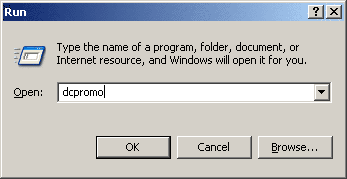
The dcpromo command is used to raise the level of the server to become an Active Directory controller. The process takes approximately ten minutes and is described briefly in the following.
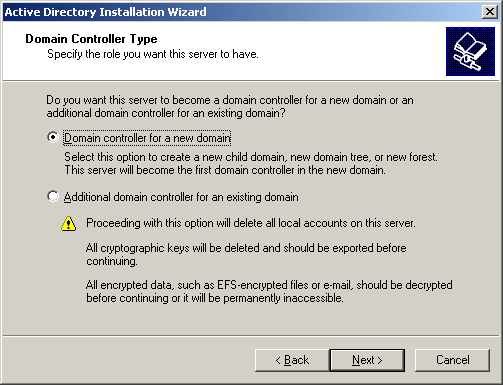
We assume that there are no other servers in your network and therefore, we want a controller for a new Active Directory infrastructure.
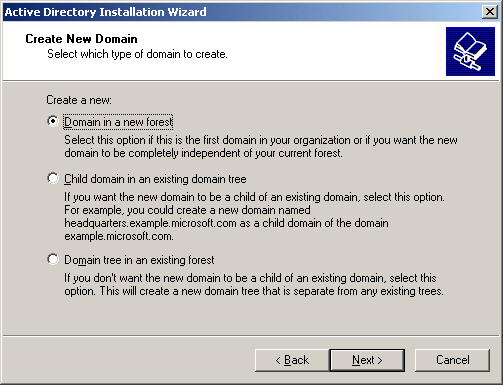
Afterwards, we define whether the new AD domain is to be integrated into an existing system.
