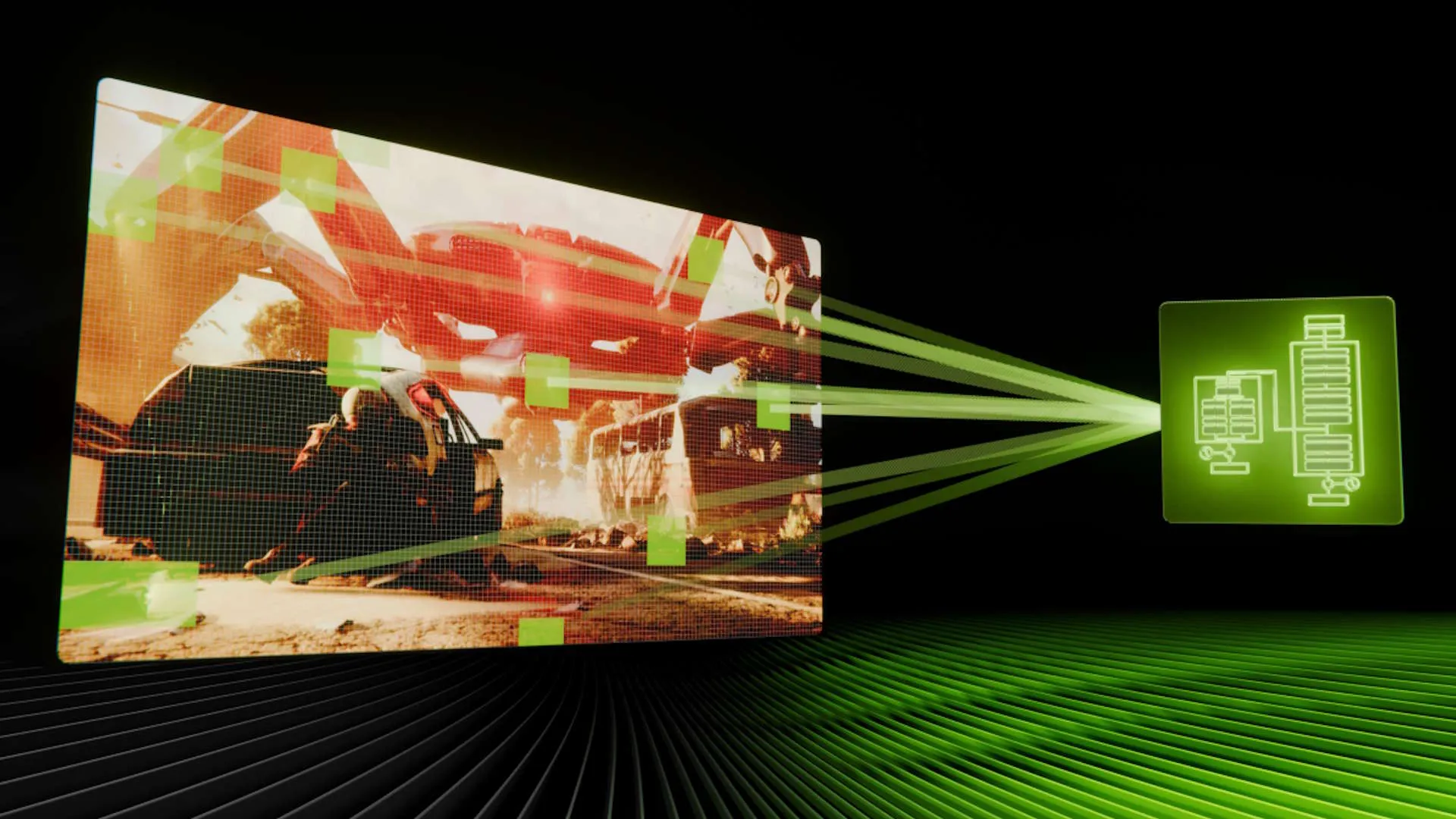
At CES 2026, Nvidia's gaming updates lean heavily on AI. The company is making its DLSS suite of tech even better with the new version 4.5 of its upscaling, or "Super Resolution" model, as well as an enhanced version of its Multi Frame Generation model that can support even more aggressive multipliers than the current 4x version.
The DLSS upscaler kicked off a revolution in gaming performance when its second version arrived in 2020, and the company has held a lead in upscaling quality ever since. In addition, Nvidia's introduction of Tensor Cores on RTX 20-series GPUs dating all the way back to 2018 means that the most recent DLSS 4 Super Resolution model, powered by a transformer architecture, still works with those products. At CES 2026, DLSS 4.5 marks the arrival of the second generation of the transformer architecture model.
Nvidia says it's constantly training DLSS to address edge cases where it might produce undesirable artifacts. The first case the company highlighted is highly distracting "shimmering" or flicker on static surfaces. DLSS 4.5 claims to improve temporal stability in these situations, resulting in a more solid-looking image.

Second, ghostly trails or after-images can form behind objects close to the player, like guns or swords. This is another case that Nvidia has spent training time refining in DLSS 4.5, and we should see reduced instances of this ghosting with the new model.
Finally, the company says that DLSS 4.5 should deliver better anti-aliasing performance in some titles, such as Indiana Jones and the Great Circle.
We had a chance to go hands-on with DLSS 4.5 across several games before the company's announcement this evening, and our experience suggests that DLSS 4.5 will indeed be an impressive improvement over the existing transformer model. What we didn't expect is that DLSS 4.5 actually makes certain lighting and particle effects look richer and more natural, too. We'll go into these points in more depth with DLSS 4.5 once we're home from CES and back at the test bench.
Nvidia says that DLSS 4.5 is more computationally intense than past models, but the increased resource demand will be offset to some degree by support for accelerated FP8 processing in the Tensor Cores of RTX 40-series and RTX 50-series graphics cards.
The company says that RTX 20- and 30-series cards will still be able to run the new model despite their lack of Tensor Core FP8 acceleration, but it doesn't make any guarantees about performance on that older hardware.
Even so, if DLSS 4.5 incurs a large increase in a relatively small portion of overall frame time, it might still result in a relatively small hit to performance, as upscaling models have to be relatively lightweight by design in order to provide their performance-boosting magic.
DLSS 4 and its transformer architecture already incurred a small but measurable performance loss on Turing and Ampere, so it's likely we'll see a larger dip with the new model on those cards. We'll need to do some testing and see whether the image quality refinements this model offers are worth the performance tradeoff on older hardware.
As with past DLSS Super Resolution updates, gamers will be able to pick and choose among model versions using the Nvidia App on Windows to pick the one that offers the best balance of performance and image quality for a given application. DLSS 4.5 should be available right away as an Nvidia App override, so check for updates and see whether new models become available in those override options (you'll see choices for models L and M in the selection dropdown.)

DLSS Multi-Frame Generation is also getting a couple of major improvements this year, although they're coming later than the updated Super Resolution model.
First off, DLSS MFG will now have multipliers ranging up to a whopping 6x, versus the current model's 4x. In part, Nvidia says this is possible thanks to the improved image quality provided by the DLSS 4.5 super resolution model, as well as the smooth frame pacing measures it's built into its hardware and software stack. Giving the MFG model better input data should in theory result in better image quality across generated frames, although we'll have to see how well stretching a single native frame out into 4 or 5 generated frames works in practice.
It's also worth remembering, as we've long cautioned and proven through dedicated testing, that DLSS MFG isn't a way of making unplayable frame rates into playable ones. If you're trying to boost average frame rates of just 30 FPS or below with MFG, your experience will still feel as laggy and unresponsive as it's likely to at 30 FPS.
Instead, MFG 5x and 6x will likely work best as tools for making the most of the ultra-high-refresh-rate monitors coming out this year and into the future. Frame rate isn't a perfect proxy for input lag, but if you have a solid 90 FPS to work with, MFG 5x and 6x could make it practical to use 360Hz or 480Hz+ monitors in tandem with DLSS Performance or Ultra Performance without crushing graphical fidelity in exchange.
Nvidia is also introducing a new dynamic mode for MFG that will automatically adjust the frame gen multiplier to maintain a target frame rate that's set in the Nvidia App. As long as the mode switch doesn't cause stutter or other perceptible issues in exchange for maintaining that target frame rate, a dynamic MFG could be a handy feature, but we'll need to try it out to see how quickly and smoothly it can handle the transitions between multipliers.
DLSS MFG with dynamic mode and extended multipliers will arrive in spring 2026, and as with the original MFG, it'll be an RTX 50-series exclusive.
For all that, some elements of DLSS 4 remain in the oven even a year after this family of features was first announced. Nvidia says that its Reflex 2 lag reduction technology with Frame Warp reprojection, which could further improve perceived responsiveness, remains targeted for a future release.

Follow Tom's Hardware on Google News, or add us as a preferred source, to get our latest news, analysis, & reviews in your feeds.