Stay On the Cutting Edge: Get the Tom's Hardware Newsletter
Get Tom's Hardware's best news and in-depth reviews, straight to your inbox.
You are now subscribed
Your newsletter sign-up was successful
Join the club
Get full access to premium articles, exclusive features and a growing list of member rewards.
An account already exists for this email address, please log in.
Micron's $24 billion Singapore fab could need 500 transformers, more than double the output of any single manufacturer — heavy electrical infrastructure the latest AI buildout bottleneck
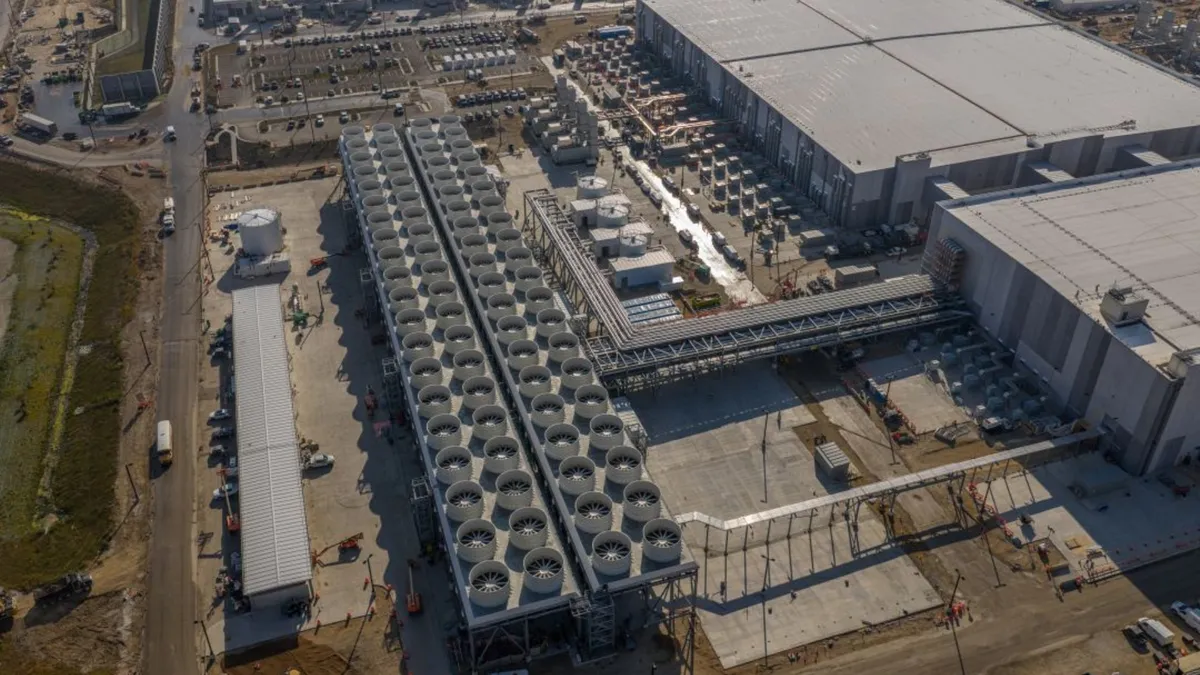
Micron’s planned $24 billion NAND flash expansion in Singapore will require 400 to 500 power transformers, which is more than double the 100 to 150 units a standard wafer fab typically needs, according to industry sources as reported by DigiTimes. The scale exceeds the annual output capacity of any single Taiwanese transformer manufacturer, turning heavy electrical equipment into a bottleneck for AI-driven semiconductor buildouts.
This level of demand from Micron reflects the power intensity of modern memory fabs tied to AI. HBM production for AI servers has driven every major memory maker into simultaneous expansion, and the electrical infrastructure required to support those fabs is now outpacing the supply chain built to serve it.
Micron's Singapore project, where production is targeted for late 2028, is one piece of a broader global buildout. The company has acquired PSMC's Miaoli Tongluo fab in Taiwan for $1.8 billion, with that facility slated for 2026, while new plants in Idaho and New York are underway, and a Hiroshima facility is expected to begin operations in the second half of 2026.
Samsung Electronics and SK hynix have also announced their own capacity expansions, all driven by the same demand curve: AI server deployments consuming HBM at volumes that existing production lines cannot satisfy. We’re now seeing a synchronized wave of fab construction across three continents as a result, with each project competing for the same pool of heavy electrical equipment and raw materials.
The toll this is taking is already visible in pricing and availability, with major heavy electrical equipment suppliers Fortune Electric and Allis Electric both having implemented price increases of 20% to 30%, driven by the surge in orders and rising costs of copper and other raw materials. Meanwhile, some transformer manufacturers have declined to quote on large-scale semiconductor projects entirely, citing an inability to meet the tight timelines and volume requirements. Industry sources say no single maker can absorb the scale of orders now flowing from the AI and semiconductor sectors.
International transformer brands, despite commanding higher prices, are gaining ground because their larger overseas factories can push out more units. Domestic Taiwanese manufacturers have responded by collaborating with secondary suppliers, dividing specifications and capacity across multiple firms to meet individual customer demands.
Transformers are also shared infrastructure, and, beyond fabs, the same equipment is needed for AI data center construction, utility-scale energy storage, and grid expansion projects. A supply chain that was already stretched before the AI buildout wave is now absorbing orders measured in the hundreds of units per project.
Stay On the Cutting Edge: Get the Tom's Hardware Newsletter
Get Tom's Hardware's best news and in-depth reviews, straight to your inbox.
Unfortunately, delayed transformer deliveries will likely translate into delayed fabs, which in turn will push back the timelines for memory production that AI buyers are counting on. Data center operators planning new facilities are in the same queue, competing with semiconductor companies for equipment that takes months to manufacture and deliver.
Luke James is a freelance writer and journalist. Although his background is in legal, he has a personal interest in all things tech, especially hardware and microelectronics, and anything regulatory.
Hmm, not an aspect I had considered as a bottleneck for fabs. I would have been thinking more about all the high-end production machines and such, materials supply etc.
I sure hope Micron isn't overdoing the capex. They are betting that this AI buildout is going to actually complete everything proposed. That's a big bet.
I sure hope Micron isn't overdoing the capex. They are betting that this AI buildout is going to actually complete everything proposed. That's a big bet.
On the flip side, if they over produce, thats cheaper memory for us.
On the flip side, if they over produce, thats cheaper memory for us.
They'll try every trick in the book to prevent it. Like fabs they could shut off or halt construction on without wasting too much money. Switch to NAND production, encourage some new use cases that require zettabytes, whatever.
I love cheap memory but the reliable way to get it will be increased density at lower cost per bit. So the push for 3D DRAM in the mid-2030s will be great for us if it succeeds.