









Best of Computex 2026: Innovating despite disruptions
A strange mix of affordability and excess, old tech and new ideas not quite realized


Each spring, leading PC hardware vendors gather in Taiwan for Computex, a massive showcase of everything from svelte new laptops to brighter and faster monitors, cooling, storage, CPUs, and motherboards. If you love PCs and related tech as much as we do, this show is the most important one of the year.
This year’s show was dubbed “AI Together," so there was, of course, plenty of focus on that monstrous marketing term and all-consuming tech trend. But because of AI’s continuing hardware demands, which have driven up prices while driving down general availability of things like RAM and storage, we saw a strange mix of products. Some companies were aiming to make things more affordable, while others launched future-looking hardware aimed at new paradigms of personal computing and using new kinds of manufacturing, which definitely won’t come cheap.
We even saw AMD re-release a CPU from four years ago, which will likely push more PC builders back to old – but more affordable – DDR4. Combine that with the recent listings for new SATA SSDs, and your next new PC might be decidedly retro.
This year’s standout products include handheld gaming PCs that may break AMD’s dominance, the best Windows-based answer to Apple’s MacBook Neo we’ve seen so far, and a motherboard wrapped in 3D-printed metal with 64 power phases and a max current rating that’s not usually seen outside of industrial machinery.
Intel Arc G3 Extreme
Intel Arc G3 Extreme
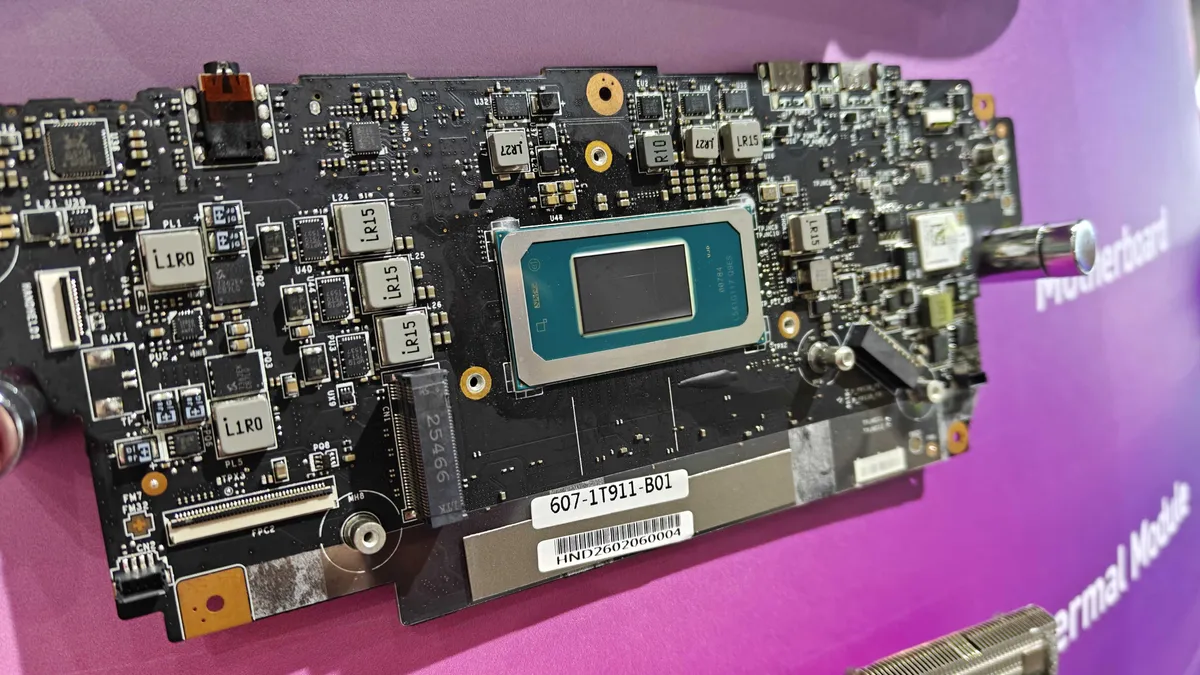

Intel has tried to break into the handheld market previously, but the new Arc G3 range is its bid to finally make a mark. Intel describes the two SoCs as GPUs with integrated CPUs, hence the Arc branding, and that’s actually a good way to think about them. The company cut two P-cores, as well as slimmed down the Thunderbolt and display engine, specifically to target the handheld form factor. It’s really the first time we’re seeing purpose-built SoCs for handhelds, rather than rebranded versions of existing laptop designs.
But the idea of an iCPU really comes to life with what Intel calls Intelligent Bias Control. It allows, at lower powers, the SoC to completely shut off the P-cores and run games exclusively on the E-cores. It’s a smart move, as most games are bound by GPU performance, and running high-power P-cores at all times leads to big spikes in frame time and far worse battery life. IBC, as Intel calls it, should offer both better battery life and more consistent performance at lower operating power.
The performance is already looking great, as well. We saw Forza Horizon 6 running on the Acer Predator Atlas 8 at native 1920 x 1200 with the High preset at above 60 fps. Again, that’s without any upscaling or frame generation. We saw similar performance in Clair Obscur: Expedition 33, which is still a fairly demanding Unreal Engine 5 game. We’ll have to evaluate the Arc G3 range in different handhelds and gaming scenarios to see how it holds up, but from our first impressions (and Intel’s bold 42% uplift claim versus the Ryzen Z2 Extreme), the range is shaping up nicely. — Jake Roach
Get Tom's Hardware's best news and in-depth reviews, straight to your inbox.
Read more: Intel challenges AMD’s handheld dominance with new Arc G3 chips
Nvidia RTX Spark Superchip
Nvidia RTX Spark Superchip
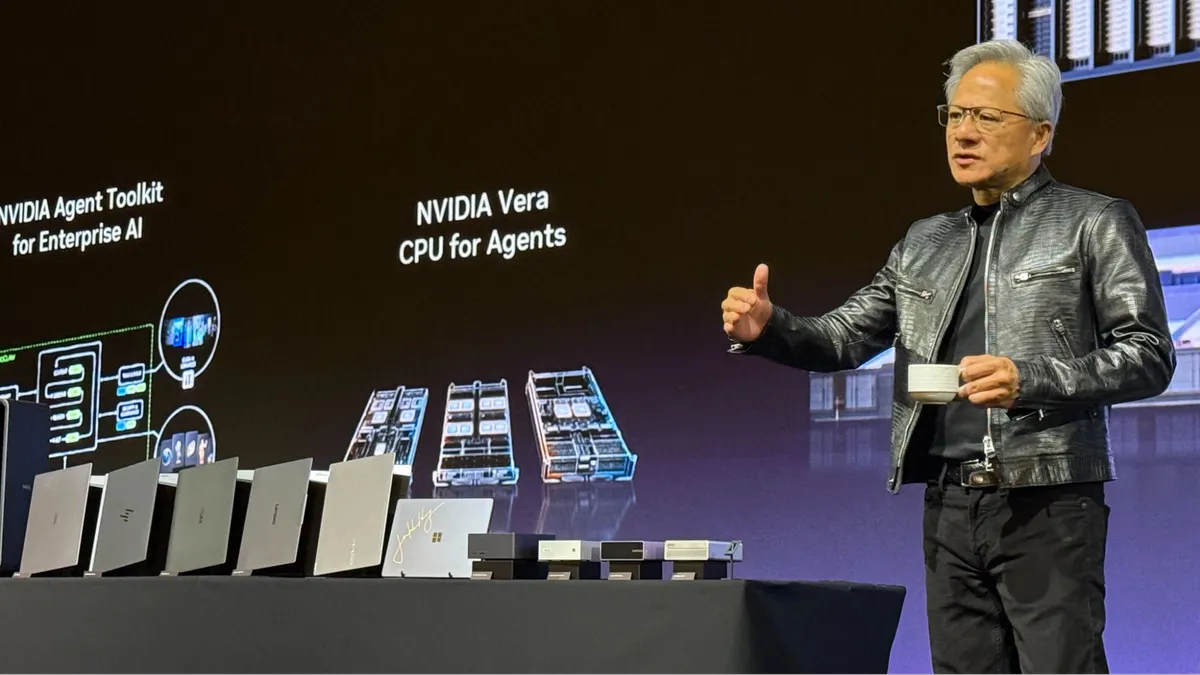
It’s a rare trade show where a company flexes its all of its silicon and software muscles at once and tries to shift the entire direction of personal computing, but that’s what Nvidia did this week with the RTX Spark Superchip and its broad roster of hardware and software partners as it drives the industry toward its vision for an agentic AI PC future.
It’s one thing to ship a new chip and take an “if you build it, they will come” approach. From what we’ve seen this week, Nvidia has already built the whole damn hardware and software stack necessary to make RTX Spark PCs useful, both as local AI powerhouses and as high-end laptops that run the Windows experience and software that so many already know and love. That’s a monumental task, but Nvidia has already proven that it can execute multiple historic feats of silicon and software engineering in the data center, all at once and at a breakneck pace. Why not try to reinvent the PC while you’re at it?
From close cooperation with Microsoft to integrate its OpenShell agent harness directly into Windows and to improve the Prism x86 emulator, to its work with Adobe and other ISVs to ensure software compatibility, accelerate their applications on the RTX Spark, and ready them for AI agents, to its work with anti-cheat providers to ensure that all of the most popular games run on the Spark from day one, it’s clear that Nvidia is dead serious about making RTX Spark a first-class PC platform.
Six laptop and desktop partners are already on board with Nvidia’s vision, and with a multi-generational silicon roadmap already laid out for future Spark chips, this platform is likely to be with us for many years to come.
We still need to get our hands on these systems to see whether life in the agentic future is everything it’s cracked up to be, but the fall launch for these systems isn’t far away. That the RTX Spark platform is already as mature, broadly adopted, and complete as it is at Computex is a remarkable achievement – even if we just get some really nice Windows on Arm PCs out of the deal. – Jeff Kampman
Read more: Nvidia unveils RTX Spark Superchip for laptops and desktop PCs at Computex 2026
Noctua NL-LC1 liquid cooler
Noctua NL-LC1 liquid cooler
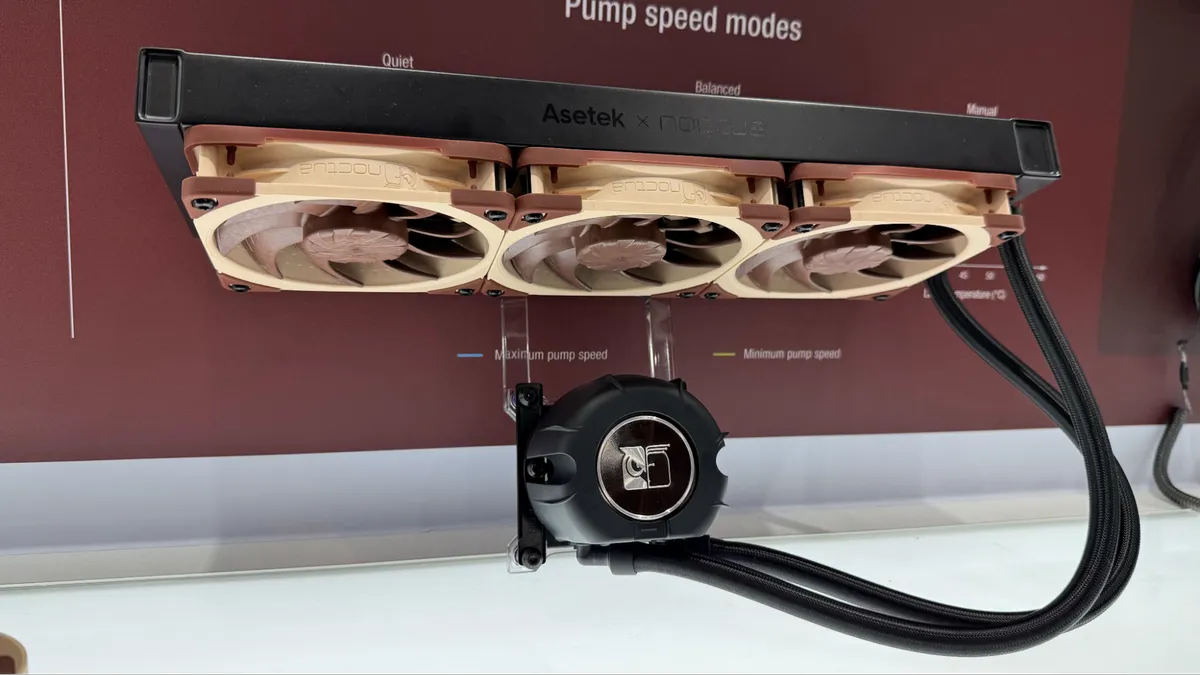
All-in-one liquid coolers and quiet computing don’t traditionally play well together. The small, high-RPM pump that drives liquid through the cooling loop tends to have a prominent sound signature, even at idle, and it always has to be running. But if anybody was going to tame this problem, it’s the engineers at Noctua, which has already made its name by selecting stubborn PC cooling problems and then running them down over years of refinement, testing, measurement, and iteration.
The NL-LC1 cooler embodies every bit of the obsessiveness we’ve come to expect from Noctua. The pump cover assembly is meant to behave as a tuned mass damper that smooths out potential roughness from the frequency components of the pump’s sound, and a multi-layer foam stack underneath the outer shell helps to absorb some of the acoustic energy it produces for lower dBA levels. Two different pump speed profiles and a fully manual mode let PC builders choose their preferred balance between noise levels and performance.
And because it’s built on Asetek’s premium Emma Gen 8 v2 pump design and uses cutting-edge NF-A14x25 G2 and NF-A12x25 G2 fans on its 240mm, 360mm, or 420mm radiators, the baseline performance and sound signature of the NL-LC1 should be strong all around, and it might finally be the liquid cooler that quiet computing obsessives can live with. – Jeff Kampman
Read more: Noctua shows off improved thermosiphon prototype
Dell XPS 13
Dell XPS 13
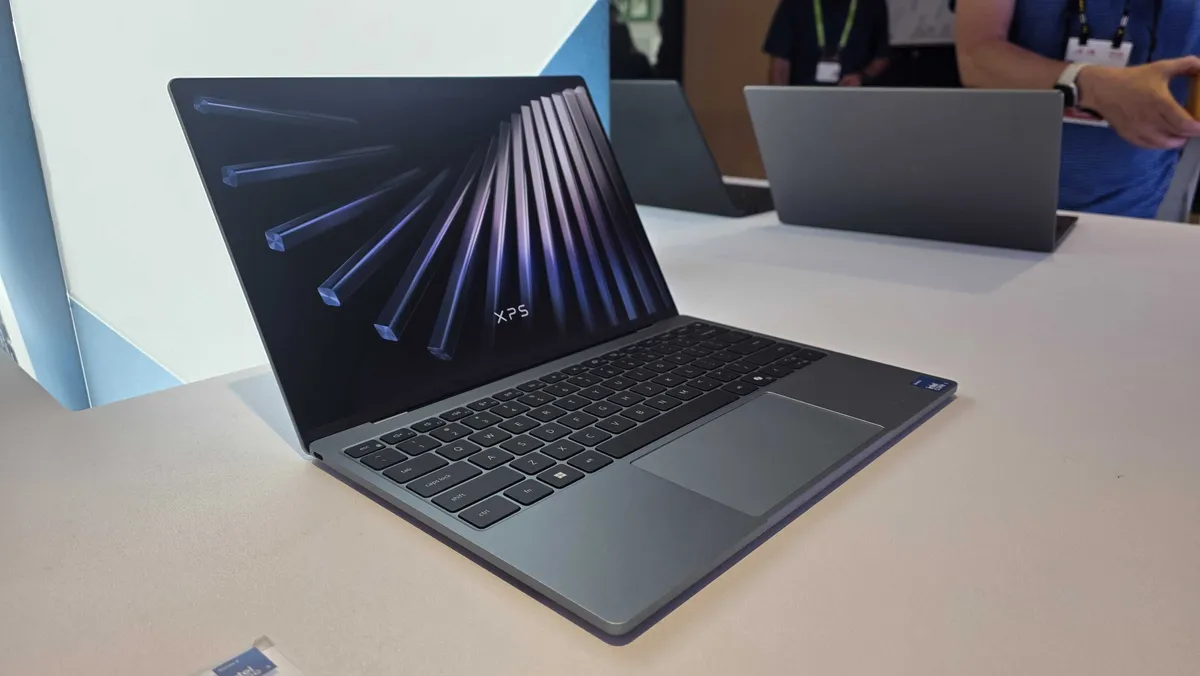
The Dell XPS 13, once a flagship, top-of-the-line notebook, is back in a new capacity as a champion of the affordable laptop renaissance and a competitor to Apple's MacBook Neo. The system will start at $699, though a temporary sale during the back-to-school season will bring it down to $599.
In some areas, Dell has exceeded the Neo's specs. Its 13.4-inch, 2560 x 1600 screen is larger, higher-resolution, and comes with touch capabilities and a variable 30 - 120 Hz variable refresh rate. The XPS, at 2.2 pounds, is half a pound lighter than Apple's laptop. And Dell has faster USB ports. That's all while keeping the aluminum chassis. We'll still need to test the system to see how its "Wildcat Lake" Intel Core 5 320 processor performs.
Dell is scaling the XPS 13 up, with options for a Core Ultra processor, up to 1TB of storage and up to 32GB of memory, which will surely push prices far higher. But it's the cheapest models that are the most interesting, where Dell may help to reinvigorate interest in Windows laptops under $1,000 with something that looks more like a flagship. — Andrew E. Freedman
Read more: Dell XPS 13 targets MacBook Neo with Intel's Wildcat Lake
MSI Claw 8 EX AI+
MSI Claw 8 EX AI+
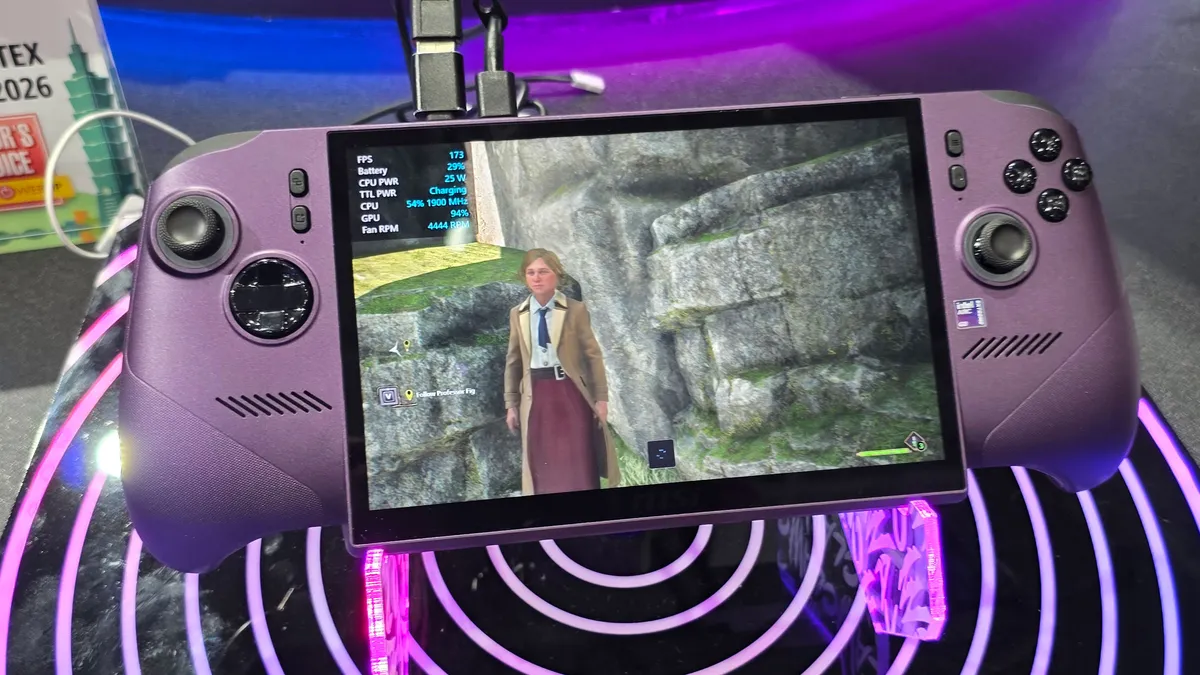
Intel took a few tries, but it finally has silicon for a gaming handheld that we're excited about (see above).
While the Intel Arc G3 Extreme processor with B390 iGPU gave us a good first impression, we were also wowed by how it felt to hold, with comfortable grips that are easy to hold and good at distributing the system's 1.7-pound weight. This premium system might just be the one to break out.
The 8-inch, 1920 x 1200 touchscreen has a variable refresh rate up to 120 HZ, and MSI claims it can reach 500 nits of brightness. That's not an OLED, but it looked nice enough in person. The whole system is powered by an 80 WHr battery, matching the Asus Xbox ROG Ally X. Let's just hope it's not too expensive. — Andrew E. Freedman
Read more: MSI Claw 8 EX AI+ brings Intel Arc G3 Extreme to handhelds
Phison E37T
Phison E37T
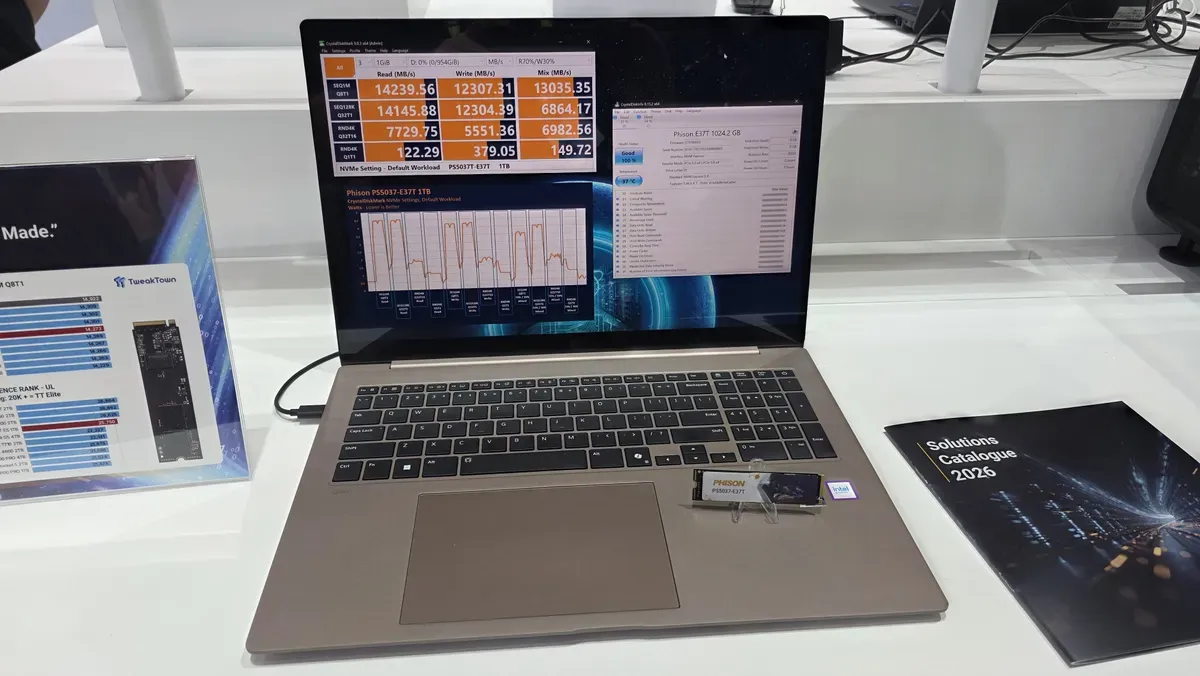
Crushing NAND shortages have sent prices to stratospheric levels with no end in sight, so any new products that can help bring down SSD prices are a win in our book. Enter Phison’s new E37T SSD controller. This DRAM-less controller reduces the cost of SSDs by stripping out the costly memory required for high-performance models, but through solid engineering and firmware magic, it delivers nearly the same performance as the company’s flagship controller, all while reducing power consumption by nearly half, setting the stage for a new wave of power-efficient SSDs that will run cool without massive heatsinks.
The firm demoed its new silicon running in a laptop, with 14Gb/s of sequential read throughput and 12 GB/s of sequential write performance, along with 3 million random read/write IOPS, all of which comes courtesy of cutting-=edge 4800 MT/s BiCS NAND. The controller also sips a mere 4.5W, a full 2.5W less than its flagship DRAM-equipped E28. Naturally, the DRAM-less design will also have cost savings attached, given that the price of any kind of DRAM is currently apocalyptic. The E37T will begin shipping this year. — Paul Alcorn
Asus ROG Strix OLED XG259QWPG Ace
Asus ROG Strix OLED XG259QWPG Ace
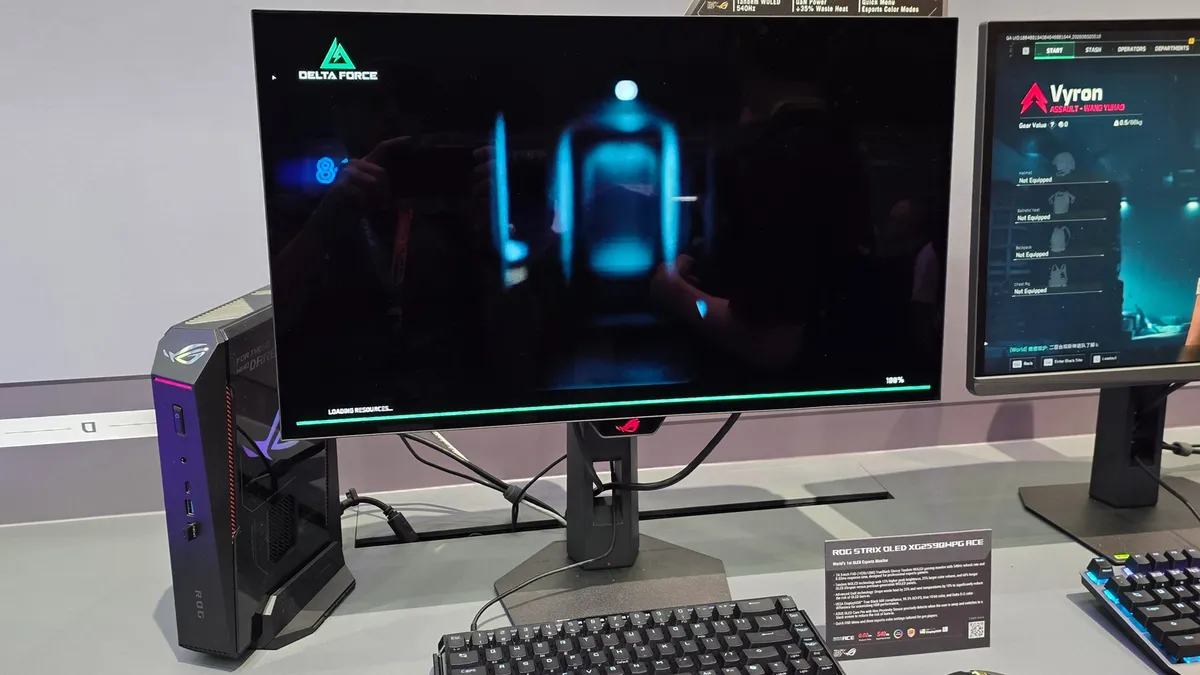
If you're a member of the eSports community, Asus has a new gaming monitor for you. Asus claims that the ROG Strix OLED XG259QWPG Ace is the world's first OLED eSports monitor. In terms of response times and color reproduction, OLEDs are on a higher echelon than the typical TN or IPS panels that you'd see in the eSports sector. In this case, Asus is using an LG Display Tandem WOLED panel.
The 540 Hz refresh rate is no slouch either at the monitor's native 1920 x 1080 resolution. Asus says that the 25-inch monitor offers 99.5 percent DCI-P3 coverage, has a typical brightness of 350 nits (1,700 nits peak), and supports VESA DisplayHDR 600 True Black.— Brandon Hill
Read more: Asus' world-first OLED esports monitor can hit 540Hz at 1080p
Asus ROG Rapture GT-BN98 Pro
Asus ROG Rapture GT-BN98 Pro
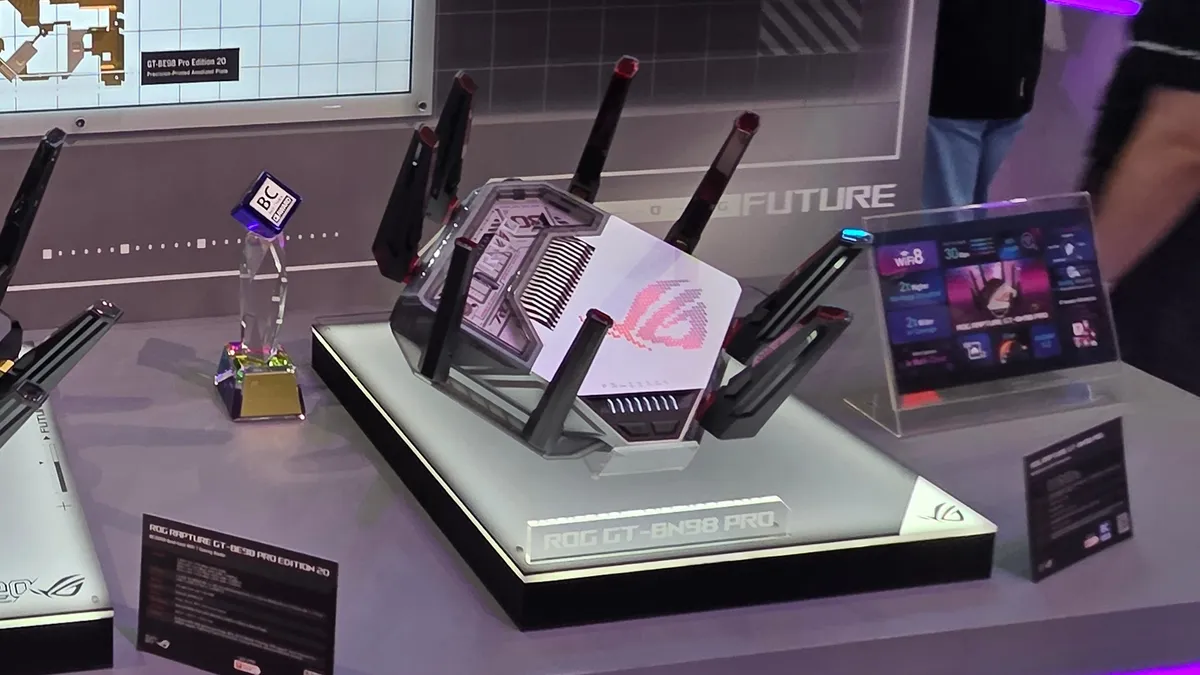
Asus is among the first manufacturers to show off a production Wi-Fi 8 router, not just teasers of what it will eventually launch. The ROG Rapture GT-BN98 Pro is on track to deliver (or at least come closer to delivering) on the performance promises of Wi-Fi 7.
The ROG Rapture GT-BN98 Pro is a tri-band (2.4 GHz, 5 GHz, 6 GHz) Wi-Fi 8 router that promises up to a 2x increase in median throughput compared to its Wi-Fi 7 counterparts. In addition, IoT devices operating at the outer edges of your router's wireless coverage should also see huge performance gains. The router will also make strides in improving performance and latency in crowded environments.
Aside from the wireless enhancements, the ROG Rapture GT-BN98 Pro also includes two 10 GbE ports along with four 2.5 GbE ports. It also includes a couple of USB-A ports for storage or sharing an internet connection from your phone. — Brandon Hill
Read more: Asus unveils its first Wi-Fi 8 router
Corsair Nightsword v2 Wireless
Corsair Nightsword v2 Wireless
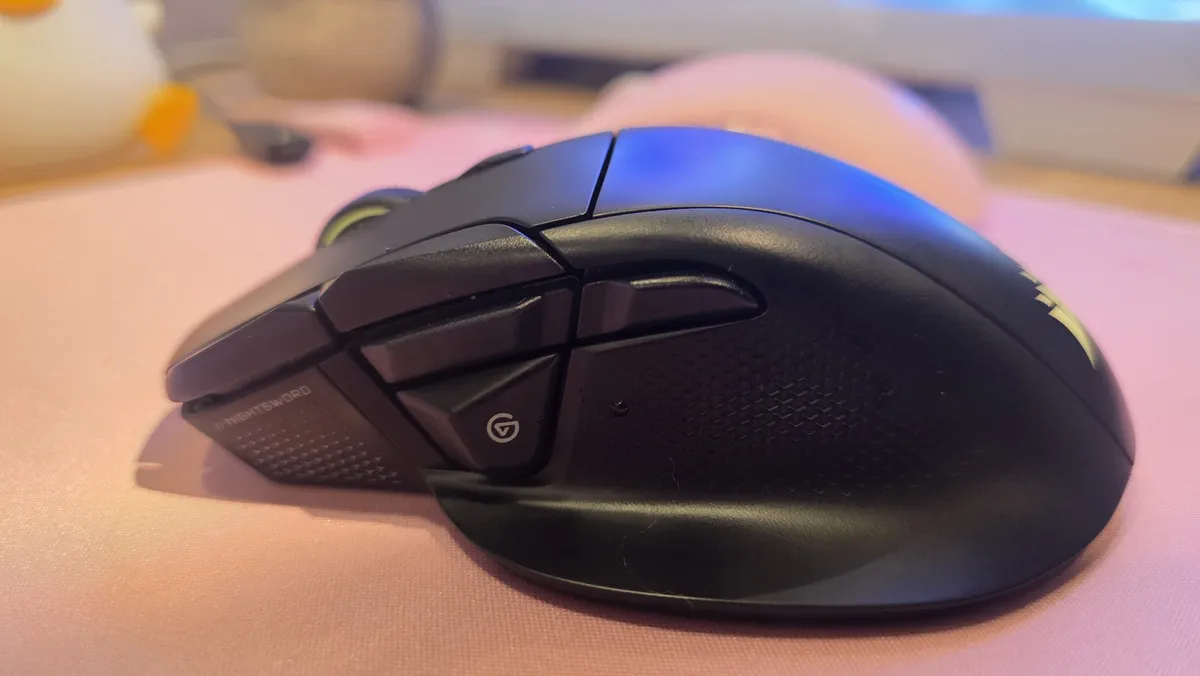
Corsair's Nightsword v2 Wireless SD is a Stream Deck-integrated gaming mouse with a dedicated Stream Deck launch button. It's part of Elgato's Stream Deck ecosystem, which means you can map Stream Deck features directly to the mouse's 8 programmable buttons, or you can use the Stream Deck launch button to open up a "virtual" Stream Deck and activate Stream Deck features from your desktop.
The Nightsword v2 Wireless SD also features Corsair's Marksman S optical sensor, which has a maximum sensitivity of 33,000 DPI and a maximum speed of 750 IPS, and can handle up to 50 G's of force. It sports a right-handed ergonomic design with a sculpted thumb rest and 11 buttons (8 of which are programmable), and weighs 3.14 ounces (89g). Tom's Hardware's Matt Safford had a chance to take a look at it on the show floor, and he said it felt pretty good when he played around with it.
The mouse has 2.4GHz wireless, Bluetooth, and wired connectivity, and gets up to 170 hours of battery life over its 2.4GHz wireless connection with a 1,000 Hz polling rate. It can get up to an 8,000 Hz wireless polling rate, however, but the battery life drops to (a still fairly impressive) 47 hours. — Sarah Jacobsson Purewal
Read more: Corsair shows off gaming mouse with dedicated Stream Deck launch button
Cherry XTRFY K63W Pro
Cherry XTRFY K63W Pro
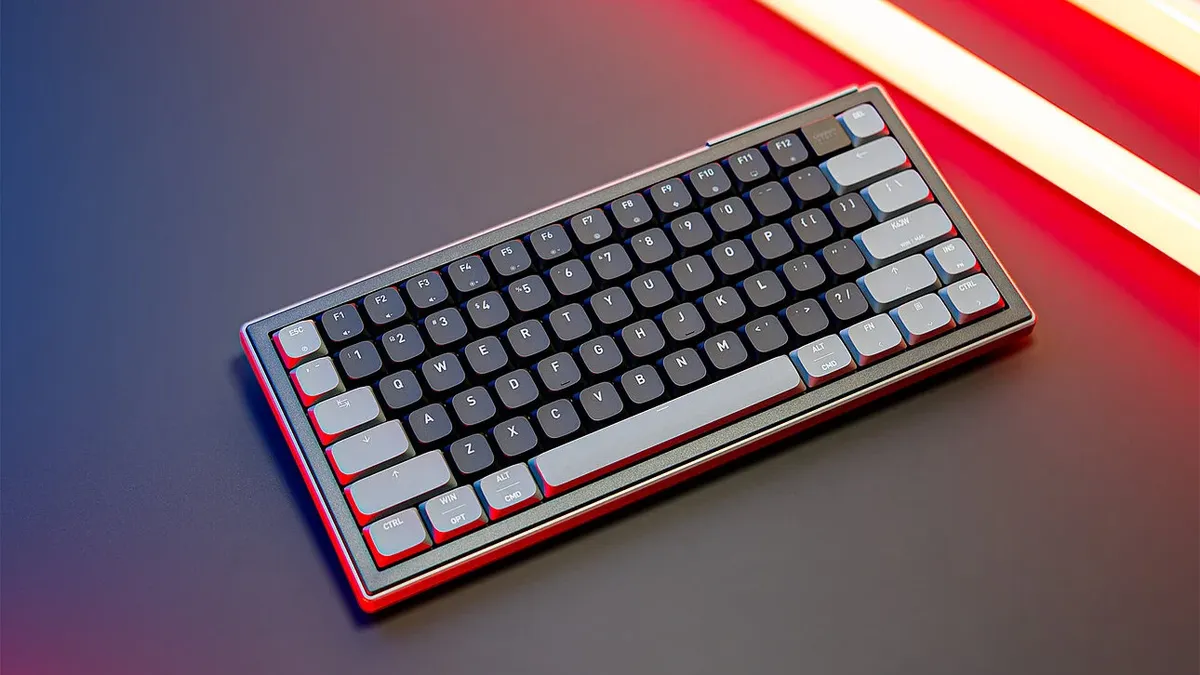
The Cherry XTRFY K63W Pro is the first 8K gaming keyboard with ultra-wideband technology — a short-range, high-frequency wireless technology that's less prone to signal interference than the more traditional 2.4GHz wireless connection most wireless gaming peripherals use. The keyboard gets true 8,000 Hz polling over both its wired and wireless connections, which means it should be the fastest and most responsive gaming keyboard around when it launches in the U.S. this August.
The K63W Pro also sports a more compact 70-percent layout, which means it keeps the full function row and arrow keys, but drops the navigation row normally seen on 75-percent layouts. This layout is, according to Cherry, "optimized for gaming" as it reduces side bulk to "maximize space for mouse movement." The keyboard also features Cherry's MX Low Profile 2.0 switches and has a gasket mount design for a comfortable typing experience. It will get up to 1,100 hours of battery life over its ultra-wideband connection, "depending on polling rate and RGB intensity" — it's not likely to get this with an 8,000 Hz polling rate, but it's an impressive number nonetheless.
The keyboard launches in the EU in July and hits shelves in the U.S. in August, for €179.99 and $169.99, respectively. — Sarah Jacobsson Purewal
Read more: Cherry XTRFY launches first 8K ultra-wideband gaming keyboard
Gigabyte Aorus X870E Infinity Next
Gigabyte Aorus X870E Infinity Next
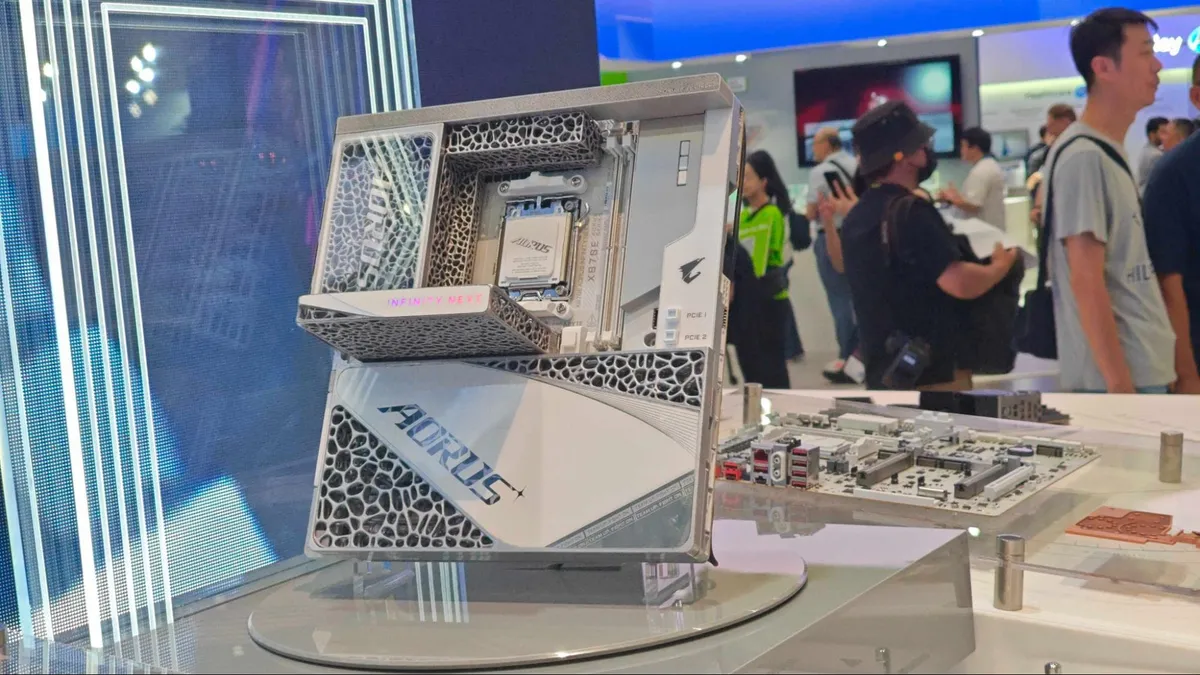
Motherboards have, for all intents and purposes, been built the same for what feels like decades. Although the appearance and some hardware features are constantly evolving, the technology used to cool them hasn’t changed much. Slap on a hunk of aluminum and make sure it has enough mass and surface area to do the job. With today’s processors consuming more power than ever, robust power delivery and proper cooling are a must, especially if you plan to overclock. Fast-forward to Computex 2026, where Gigabyte showcased an absolute beast of a motherboard, the Aorus X870E Infinity Next, packed with never-before-used space-grade thermal engineering and a never-before-seen aesthetic.
This E-ATX masterpiece isn’t just your run-of-the-mill Halo motherboard. Gigabyte uses space-grade thermal engineering and rocket-thruster-grade thermal materials, and is the first to use 3D metal printing technology. The VRMs use a 3D metal-printed vapor chamber with an ‘ultra-dense’ omnidirectional Fin Wick and cooling capacity said to exceed 100W. On top of that is an almost alien-like structure that resembles a porous lava rock or even a sponge, which Gigabyte says increases surface area by 44%. Hiding underneath the VRM heatsinks are 16 data-center-class quad OptiMOS MOSFETs (Infineon OptiMOS TDM22544D) for a total of 64 phases (16x4) with a maximum current of 5,120A, nearly doubling the highest value we’ve seen on any consumer-class motherboard. Gigabyte describes it as “limitless power through space-grade and data center-class cooling surface area.” This new tech even makes its way to the primary M.2 heatsink, an AI-Gyroid-designed heatsink with 44% greater cooling area.
Not only does it use cutting-edge materials and processes, but it is, in my opinion, one of the most unique and best-looking motherboards around, with space-age materials on all the parts that get hot (and then some). A full list of specifications isn’t available at this time, but we can glean that it supports a two-slot memory configuration for high-capacity, high-speed CQ-DIMMs, five M.2 sockets, three PCIe slots, and a whole lot more. Availability was not discussed at the Giga event (though they did say it would be produced), nor was pricing mentioned. You can bet your bottom dollar this will not be cheap at all, given all the space-age technology used. It may not be practical for many. It will be affordable for even fewer. But regardless of those details, this is one of the most unique motherboards I’ve ever seen, possibly ever, pushing beyond traditional limits and earning my nod for Best Motherboard of Computex 2026. — Joe Shields

Follow Tom's Hardware on Google News, or add us as a preferred source, to get our latest news, analysis, & reviews in your feeds.

Tom's Hardware is the leading destination for hardcore computer enthusiasts. We cover everything from processors to 3D printers, single-board computers, SSDs and high-end gaming rigs, empowering readers to make the most of the tech they love, keep up on the latest developments and buy the right gear. Our staff has more than 100 years of combined experience covering news, solving tech problems and reviewing components and systems.
- Sarah Jacobsson Purewal Senior Editor, Peripherals
- Joe Shields Staff Writer, Components
- Jake Roach Senior Analyst, CPUs
- Paul Alcorn Editor-in-Chief
- Jeffrey Kampman Senior Analyst, Graphics
- Andrew E. Freedman Senior Editor
- Matt Safford Managing Editor
- Brandon Hill Senior Editor
-
thisisaname Hard to judge affordability when only one item listed the price and that was only the starting price.Reply -
dwd999 A disappointment for me. I'm a firm believer in back connect motherboards with BTF gpu sockets; I have 2 already. Although back connect seems to be getting more support from case manufacturers the gpu use of BTF sockets seems to have died off.Reply -
bit_user I think the coolest looking thing was Amiiba's FerroFluid tech. I can certainly imagine ways to use that for visualizing system health & activity.Reply
BTW, I missed InWin, this year. They usually have some striking cases on display:
https://www.tomshardware.com/pc-components/pc-cases/inwin-celebrates-40-years-with-the-chronomancy-futuristic-1-1m-case-opens-with-the-wave-of-a-wand